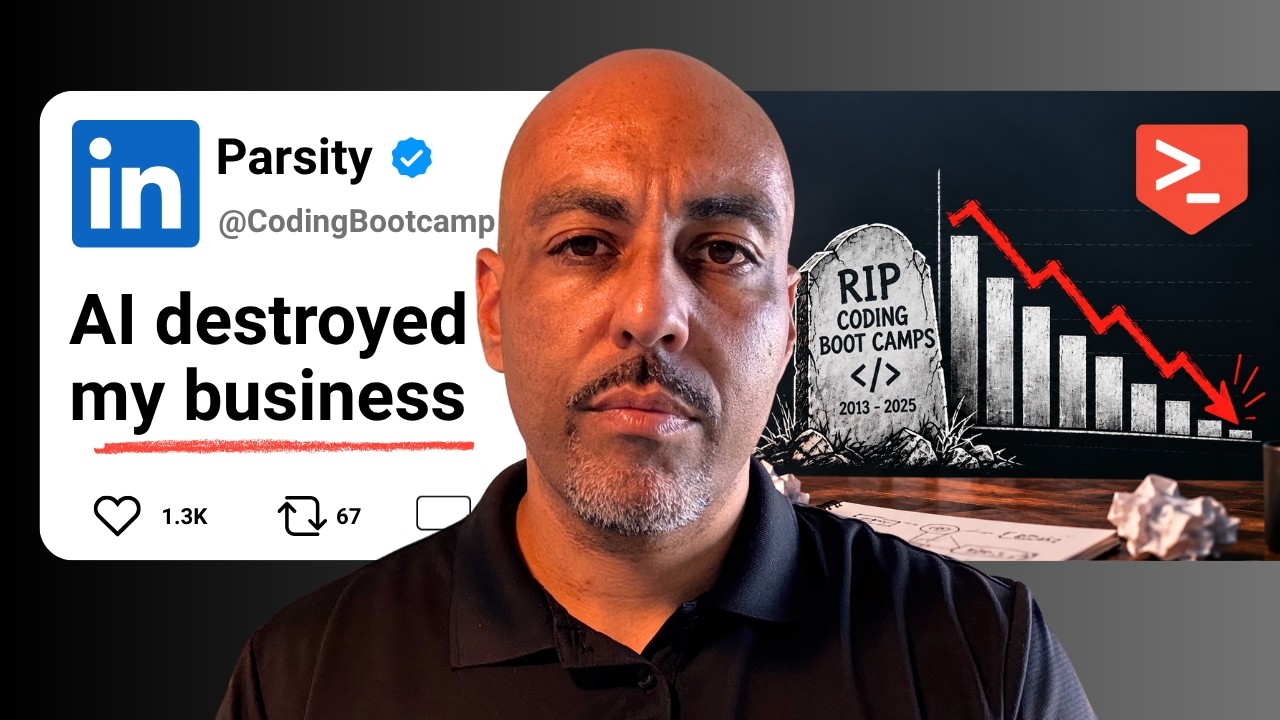
The speaker shares a candid reflection on how AI and market changes severely impacted their coding boot camp business, Parsity, which they took over in 2023. Parsity was known for its affordability, ethical approach, and high success rate in placing graduates into software engineering jobs. However, the emergence of AI tools like ChatGPT led many prospective students to believe they could learn coding independently, reducing demand for boot camps. Additionally, rising interest rates and the withdrawal of loan providers from supporting boot camp students further strained the business, alongside a significant decline in junior developer hiring that showed no signs of recovery.
After being laid off and facing the decline of Parsity, the speaker pivoted towards AI engineering, a field they were introduced to while working at a startup. They quickly learned advanced AI concepts such as vector databases, retrieval augmented generation (RAG), and building intelligent agents. This new expertise dramatically increased their job opportunities, highlighting the growing demand for AI skills in the tech industry. Motivated by this, they developed a six-week program to teach software developers how to become AI engineers, focusing on practical skills that are highly relevant in today’s market.
The speaker emphasizes that despite the challenges in traditional software engineering roles, there is a burgeoning opportunity in supporting non-technical entrepreneurs and domain experts who are creating “vibe coded” or low-code/no-code applications. These individuals often lack the technical skills to build scalable, maintainable software and need developers who can bridge that gap. The speaker is actively working on projects that connect developers with these clients, who are typically found in online communities rather than traditional job platforms like LinkedIn. This niche offers developers a chance to charge premium rates and build sustainable freelance or consulting businesses.
A key insight shared is that software developers are often poor customers for software products because they tend to build their own solutions and are reluctant to spend money. In contrast, non-developer entrepreneurs with domain expertise represent a more lucrative market. The speaker advises developers to hone skills in agentic engineering—building AI-powered agents and scalable systems—while maintaining solid software engineering practices. This combination will position developers as indispensable partners for businesses looking to leverage AI and automation without becoming developers themselves.
In closing, the speaker reflects on the constant evolution of their career and business, from front-end development to full-stack, engineering management, and now AI engineering and B2B services. They stress that change is inevitable and encourage developers to adapt by learning new skills like agentic engineering. While traditional job markets may be tough, new opportunities abound for those willing to pivot and engage with emerging trends. The speaker offers to personally discuss these ideas with interested viewers, underscoring a hopeful message that setbacks can lead to better opportunities in the evolving tech landscape.
Useful Links