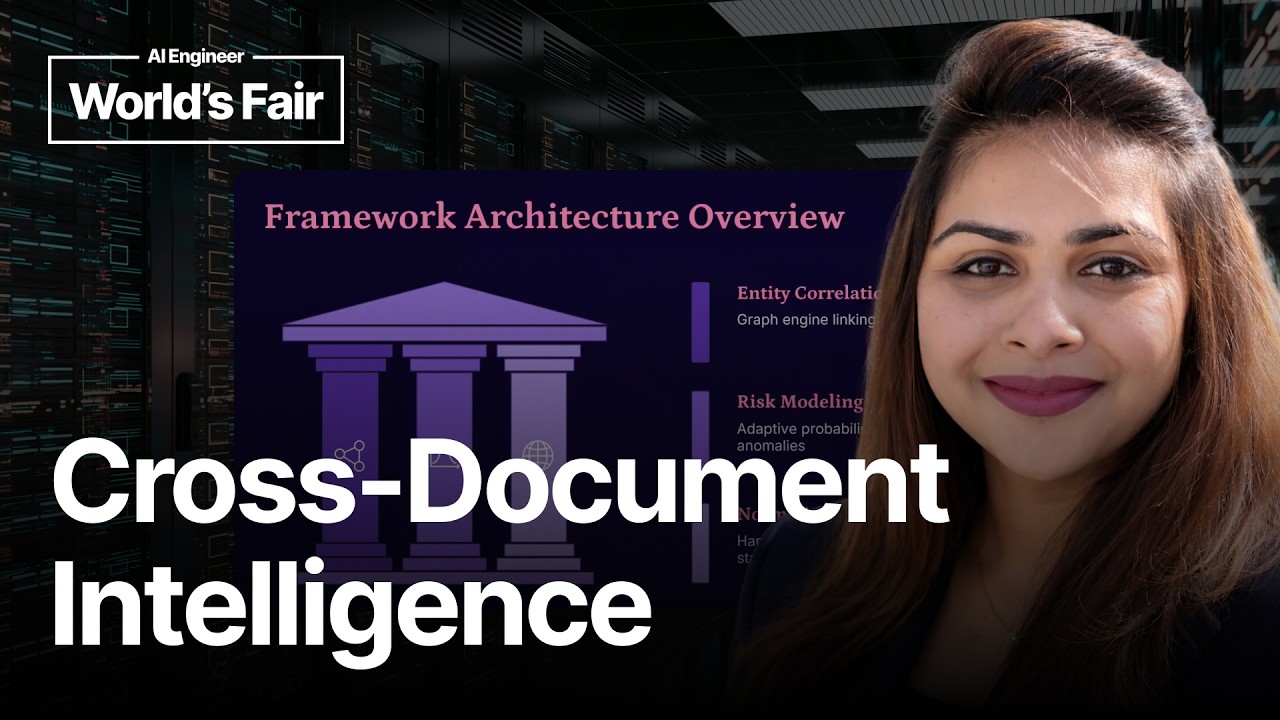
Varsha Shah, an enterprise technical architect at Tata Consultancy Services working with Microsoft, presents her research on AI-driven multi-document correlation for enterprise financial compliance and fraud detection. She highlights the growing complexity of compliance due to the exponential increase in financial data generated across payroll, tax, procurement, and transaction systems, especially as organizations operate across multiple jurisdictions with varying regulations. Traditional compliance systems analyze documents independently, which often misses sophisticated fraud patterns that only become apparent when data from multiple documents and systems are correlated.
To address this gap, Shah introduces a novel framework that integrates three key components: a graph-based entity correlation engine, an adaptive probabilistic risk model, and a cross-jurisdictional normalization layer. The entity correlation engine connects related entities across different financial systems to create a unified network, revealing hidden relationships and anomalies. The probabilistic risk model evaluates these connections by combining multiple risk indicators to prioritize cases based on their likelihood of representing genuine compliance risks. The normalization layer standardizes data across different regulatory environments to ensure consistent risk interpretation regardless of jurisdiction.
The framework was evaluated using approximately three million financial records spanning five years and four regulatory jurisdictions. The results demonstrated strong detection performance, achieving 91% precision and 87% recall, with an overall F1 score of 0.89. Beyond accuracy, the framework significantly improved operational efficiency by reducing false positives by 76% and cutting manual audit efforts by 40%, enabling compliance teams to focus on high-risk cases and conduct faster investigations. Compared to traditional rule-based systems, this AI-driven approach offers superior detection of complex fraud patterns and delivers more actionable compliance intelligence.
A key advantage of the framework is its continuous learning capability. It adapts and improves over time by incorporating feedback from completed audits and investigations, refining risk scoring, and reducing unnecessary alerts. This dynamic learning shifts compliance from a reactive process—where issues are identified post-audit—to a proactive, predictive governance model that anticipates risks before they materialize. Consequently, compliance becomes an ongoing intelligence function rather than a periodic review, allowing organizations to better prioritize investigations and make informed decisions.
Finally, Shah emphasizes practical considerations for enterprise deployment, including seamless integration with existing systems, jurisdiction-specific configurations, alignment with audit frameworks, and scalability to handle large data volumes. She concludes with four key takeaways: significant compliance risks exist between documents rather than within them; combining entity correlation, probabilistic modeling, and normalization offers a scalable compliance solution; the framework improves detection accuracy while reducing false positives and audit efforts; and continuous learning enables a shift toward predictive, intelligence-driven risk management. This research represents a significant step forward in leveraging AI to enhance enterprise financial governance.