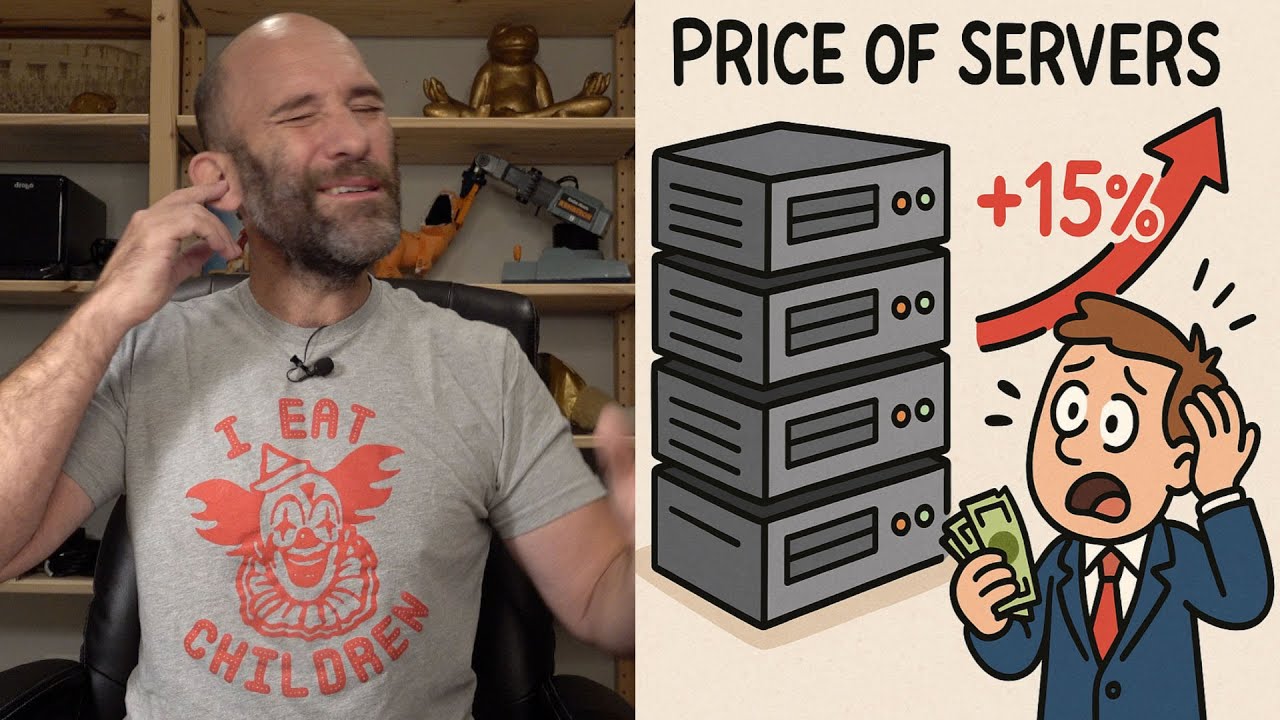
In this video, Eli, the computer guy, discusses the rising costs and supply challenges in the technology hardware sector, particularly focusing on servers and PCs. He highlights that server prices are expected to increase by about 15%, largely due to soaring memory costs, while PC prices may rise by around 5%. This price hike translates to significant additional expenses, especially for organizations purchasing servers at scale, such as entire racks of servers. Eli emphasizes that for technology decision-makers, this shift will require careful budgeting and planning as hardware costs, which have been relatively stable for over a decade, are now sharply increasing.
Eli explains that technology professionals usually have a good sense of hardware costs based on experience, allowing them to quickly estimate project budgets. However, the current market disruption is making it difficult not only to predict prices but also to secure hardware supplies. He points out that major manufacturers like Dell, Lenovo, HP, and HPE are facing memory shortages and supply constraints, with some brands like Crucial RAM being discontinued soon. This scarcity means that even if budgets are approved, organizations might struggle to obtain the exact hardware they need, complicating infrastructure planning and deployment.
The video also touches on the broader economic context, noting that the current hardware supply issues are part of a larger economic instability exacerbated by factors such as government spending and unresolved economic problems dating back to before the COVID-19 pandemic. Eli suggests that the AI boom has led to massive spending, which is contributing to resource constraints and price increases. He warns that these trends could worsen, with hardware vendors potentially pushing customers toward more expensive, higher-end products simply because lower-cost options are unavailable, effectively causing price increases beyond the stated 15%.
Eli advises technology professionals to rethink their infrastructure strategies, including considering virtualized environments and alternative technologies like Proxmox or Docker, to adapt to the changing hardware landscape. He stresses the importance of building institutional expertise to manage these new environments efficiently, especially as traditional hardware purchasing and deployment models become less predictable. Additionally, he criticizes some industry players, such as Broadcom, for poor management and pricing practices that further complicate the situation for IT departments.
In conclusion, Eli urges viewers to prepare for ongoing economic and technological challenges by focusing on efficiency, cost reduction, and resilience in their organizations. He acknowledges the uncertainty about when the current AI and economic bubbles will burst but emphasizes the need for proactive planning to navigate the “crap show” ahead. The video ends with a call for viewers to share their thoughts on the rising hardware costs and supply issues and encourages support for his educational platform, Silicon Dojo.