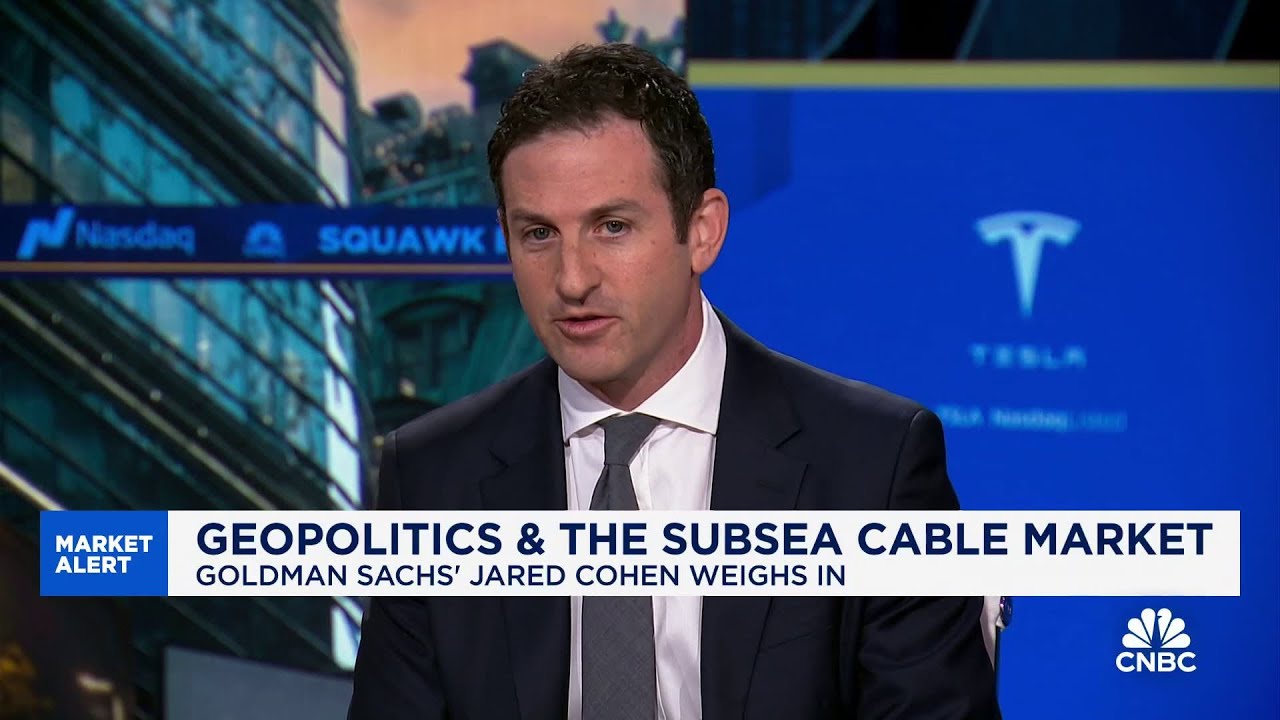
In a recent segment on CNBC’s Squawk Box, Jared Cohen, president of global affairs at Goldman Sachs, discussed the vulnerabilities of the AI economy, particularly focusing on the critical role of subsea cables. These cables, which span approximately 750,000 miles beneath the ocean, are essential for global data transmission and power distribution, handling 95% of data flow and facilitating $10 trillion in daily financial transactions. Cohen emphasized that the increasing geopolitical tensions and state-sponsored activities pose significant risks to these cables, which are already experiencing around 150 breaks annually.
Cohen provided examples of recent incidents involving cable damage, highlighting a Chinese vessel that severed a cable in the Baltic Sea and a Russian vessel that did the same in the Baltic region. He suggested that such occurrences are unlikely to be mere accidents, raising concerns about intentional disruptions. The discussion also touched on the potential for satellite technology to serve as an alternative to subsea cables, but Cohen noted that current satellite capabilities are insufficient due to latency issues, meaning that reliance on undersea cables will continue for the foreseeable future.
The conversation also delved into the complexities of repairing these cables, which can be located as deep as five miles underwater. Cohen explained that the maintenance of these cables is governed by a multilateral framework, where repair responsibilities are assigned based on the ownership of the cable and the geographical zone in which it is located. This arrangement raises concerns about the potential for espionage, as repair vessels from rival nations could have access to sensitive infrastructure.
From an investment perspective, Cohen identified a few key players in the subsea cable market, including Subcom, NEC, and Alcatel, which collectively hold a significant market share. He noted that while there is potential for investment in this infrastructure, the high capital costs and geopolitical challenges make it a less attractive option for venture capitalists. Instead, major tech companies like Google are forming consortiums with telecom firms to invest in and operate these cables, indicating a shift towards collaborative ownership models.
Finally, Cohen addressed the broader implications of the AI economy, highlighting the cascading bottlenecks that have emerged in recent years. Initially, the focus was on semiconductor shortages, followed by concerns about data availability and power supply. Currently, he believes that the primary limitations are related to the availability of power, land, and specialized data centers capable of supporting AI workloads. This evolving landscape suggests that while investment in AI infrastructure remains critical, stakeholders must navigate a complex interplay of technological, geopolitical, and economic factors.