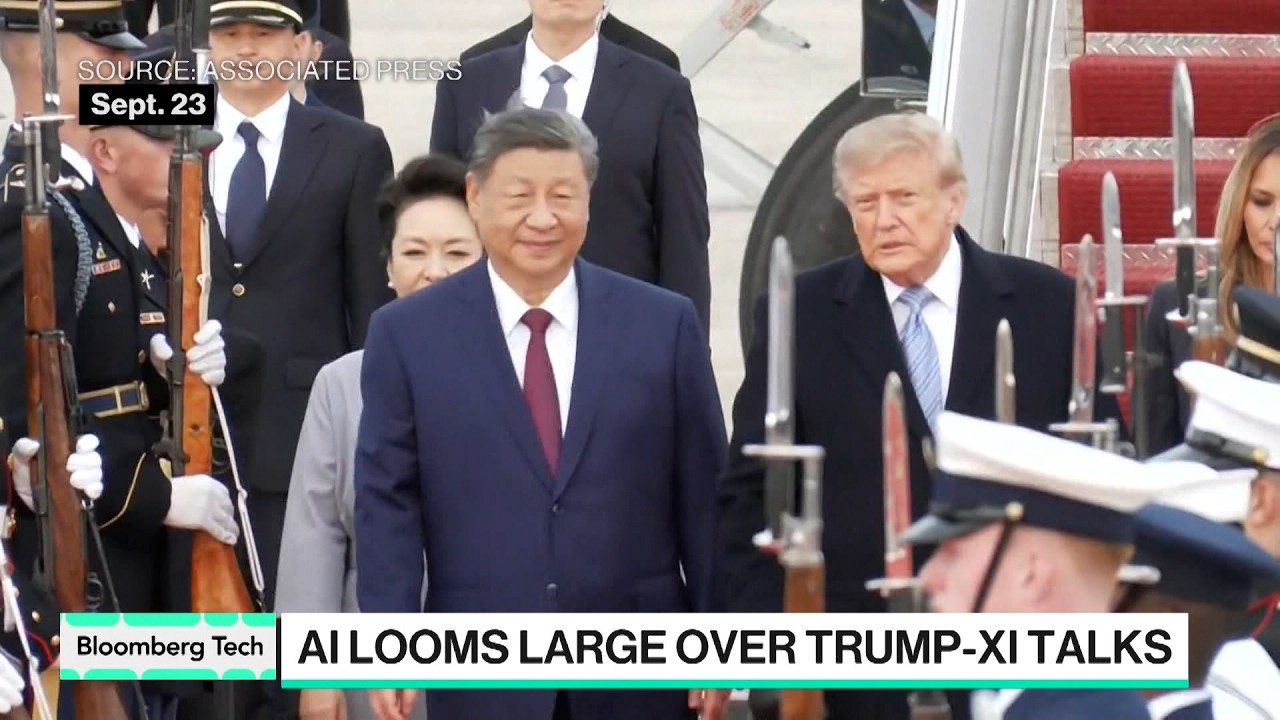
The recent discussions between the US and China highlight AI as a significant point of contention, reflecting broader economic and technological competition. While China remains an economic adversary, the comparison between Chinese and US AI models is frequent, fueling tensions. Although there is a commitment to establish a regular dialogue on AI, the talks remain preliminary and fraught with anxiety, especially as Chinese open-weight models closely follow advancements from US frontier labs. This competition intertwines with debates on pacing AI development and export controls, underscoring the complexity of managing technological rivalry.
Within the US, there is a clear divide in approaches to AI regulation. Frontier Labs advocate for pacing AI development with global cooperation, government involvement, and independent evaluation to ensure safety. In contrast, the US President favors a laissez-faire approach, emphasizing growth and innovation without imposing restrictive global controls. He supports encouraging superintelligence while monitoring it through the Department of Justice but opposes international schemes to control AI. This divergence between government policy and private industry perspectives creates a dynamic tension in shaping AI governance.
The US administration’s stance on AI policy is further complicated by multiple influential figures holding overlapping responsibilities. Scott Bessent, Treasury Secretary, has taken a prominent role in AI policy, especially in dialogues with China and in vetting AI models. Since the departure of the previous AI czar, Bessent has been a key player in balancing AI safety concerns with economic and security interests. The administration is expected to appoint a new AI czar or task force leader, likely someone without direct company affiliations, to navigate these complex issues and potentially implement pragmatic guardrails.
Beyond AI, the summit also addresses broader geopolitical and economic issues, including tariffs, global security, and Taiwan. There is consensus on maintaining current tariff rates on Chinese goods, which hover around 20%. Taiwan remains a sensitive topic, with China seeking US restraint in exchange for cooperation on Iran-related matters. However, US arms deliveries to Taiwan are delayed due to logistical challenges, which may ease tensions temporarily. The summit thus serves as a platform to manage these interconnected strategic concerns alongside technological competition.
The most contentious area remains technology-related measures, particularly export controls and semiconductor policies. The US is considering punitive tariffs on Chinese chips and imposing import restrictions through agencies like the FCC and Commerce Department. These measures are part of a broader package linked to the National Defense Authorization Act, which China aims to neutralize during the summit. The ongoing “mini truce” extension until January 10 will test the durability of these negotiations, as both sides navigate the delicate balance between competition, cooperation, and national security interests.
Useful Links