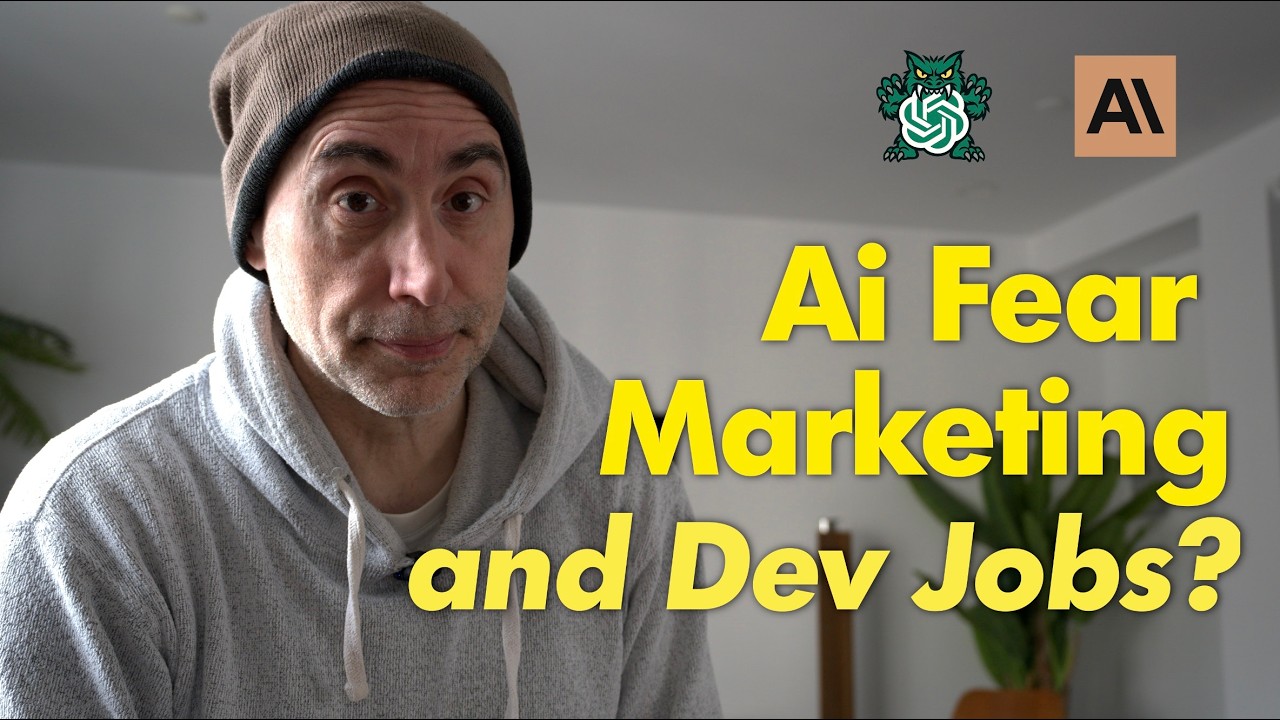
The video addresses the ongoing AI hype and fear cycle, emphasizing that AI is not replacing software developers. The current slowdown in hiring, especially for junior developers, is attributed to overhiring during the software boom from around 2018 to 2024, rather than AI advancements. The speaker, a seasoned developer with three decades of experience, explains that the software industry, like many others, experiences spikes and plateaus in demand, and the recent market changes are a natural correction rather than a result of AI.
The speaker critiques the fear-based marketing strategies used by some AI companies, comparing them to past tech scares like Y2K. He warns viewers to be cautious of fear-driven narratives, as fear is a powerful but cynical motivator. While AI is capable and useful, it lacks logical reasoning and operates primarily through associative thinking, similar to the human brain’s system one thinking. This explains why AI can produce impressive results but also makes obvious mistakes or “hallucinations.”
A key point made is the “80% problem” where non-developers using AI can achieve about 80% of a project but then struggle to complete it due to messy, unstructured code generated by AI. Experienced developers, however, can leverage AI as a powerful tool to increase productivity by five to ten times. The speaker stresses the importance of good software development principles, such as separation of concerns, to effectively harness AI capabilities and avoid overloading AI models with too many tasks at once.
The video also shares a practical example of using AI workflows to automate tasks like generating article summaries from video transcripts. By breaking down the process into smaller, manageable steps and layering AI tasks, the speaker achieves high-quality results efficiently. This illustrates how developers who understand both AI and software architecture can create effective AI-powered solutions, while non-experts may struggle with the complexity and produce subpar outcomes.
Finally, the speaker highlights the significant opportunity for developers to build AI-powered tools that enhance business workflows, increasing productivity rather than replacing jobs. He encourages developers to learn AI technologies and integrate them with traditional software skills to offer valuable consulting or freelance services. Despite the hype and fear, the software development field remains vital, and adapting to AI as a complementary tool presents a promising path forward for professionals in the industry.