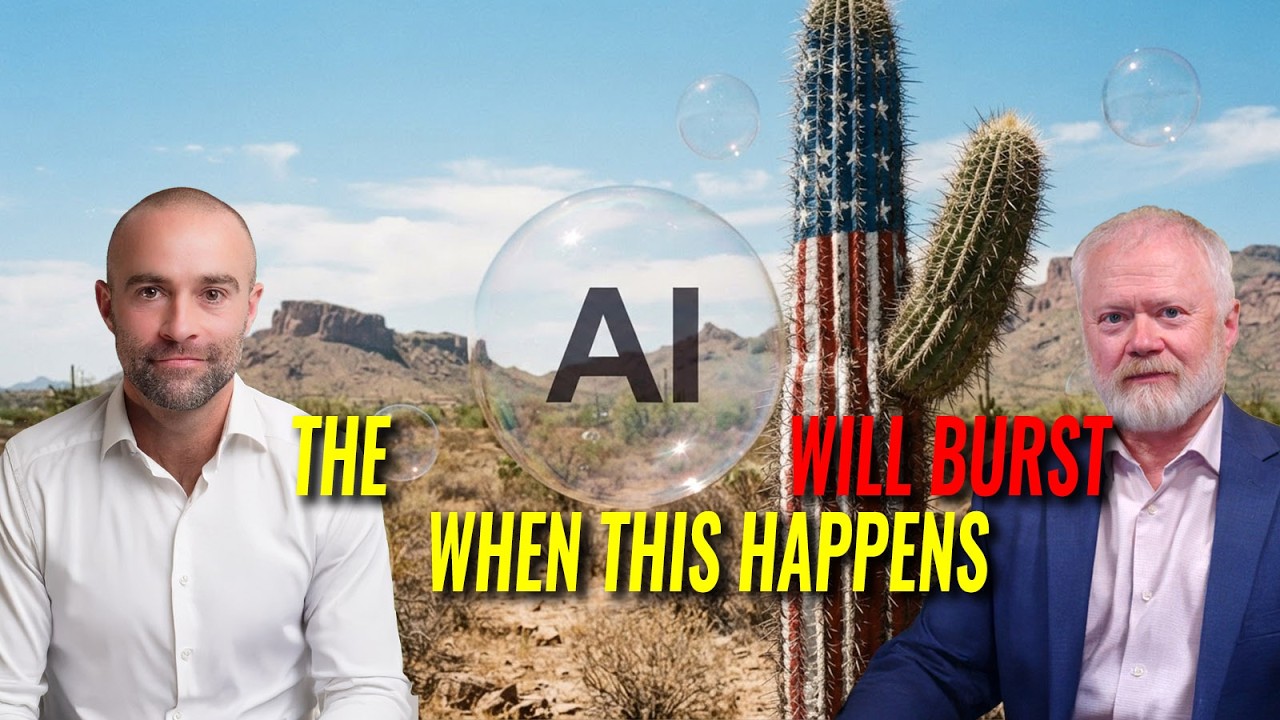
The video features a detailed discussion between Chris Martinson and Jay Martin about the current AI financial bubble, drawing parallels to the 2006 housing market crash. Jay explains how the AI industry is currently reliant on massive debt and future promises, similar to the zero-down, interest-only mortgages that fueled the housing bubble. AI companies like OpenAI and Anthropic have committed to purchasing trillions in compute power on a “take or pay” basis, financing these commitments by continually raising new capital. This cycle depends heavily on ever-increasing valuations, and any slowdown could trigger defaults and a broader market crash, with significant ripple effects given the AI sector’s weight in the S&P 500.
The conversation then shifts to the broader economic and geopolitical context, highlighting the fragility of the US Treasury market and the global reliance on US debt. Jay and Chris discuss how the US government is employing creative financial tools, such as swap lines and debt monetization, to keep borrowing costs low and maintain confidence in the dollar. However, cracks are appearing in this system, especially as China advances technologically and economically, challenging US dominance. The emergence of China’s gold-backed yuan trading network is seen as a strategic move to build trust and offer an alternative to the US dollar system, signaling a shift toward a multipolar world.
A significant portion of the discussion focuses on the underinvestment in critical raw materials like copper, nickel, and rare earth elements, which are essential for AI infrastructure, renewable energy, and industrial growth. Both speakers emphasize that decades of offshoring and neglect have left supply chains vulnerable, prompting governments, especially in the US, to invest directly in mining and resource development. This scarcity trade is viewed as a crucial investment theme, given the long lead times and high costs associated with developing new mines and the increasing demand driven by technological advancements.
Energy markets and geopolitical tensions also feature prominently, with concerns about the US’s declining energy independence and the strategic importance of regions like the Strait of Hormuz and Venezuela. The speakers note that despite political rhetoric advocating increased domestic oil production, actual investment and drilling activity remain subdued. They speculate that US foreign policy maneuvers in the Middle East and Venezuela may be attempts to secure energy dominance amid growing global competition and supply challenges, further complicating the economic outlook.
Finally, both Chris and Jay agree on the importance of focusing investment strategies on sectors tied to real, tangible assets like precious metals and critical materials, rather than chasing speculative bubbles. They caution that the current financial system is heavily debt-dependent and vulnerable to shocks, with history showing that empires and their currencies inevitably decline. The conversation closes with a call for investors to adopt long-term, focused approaches grounded in historical patterns and current realities, emphasizing the need for active management and preparedness in an increasingly uncertain and multipolar global environment.
Useful Links