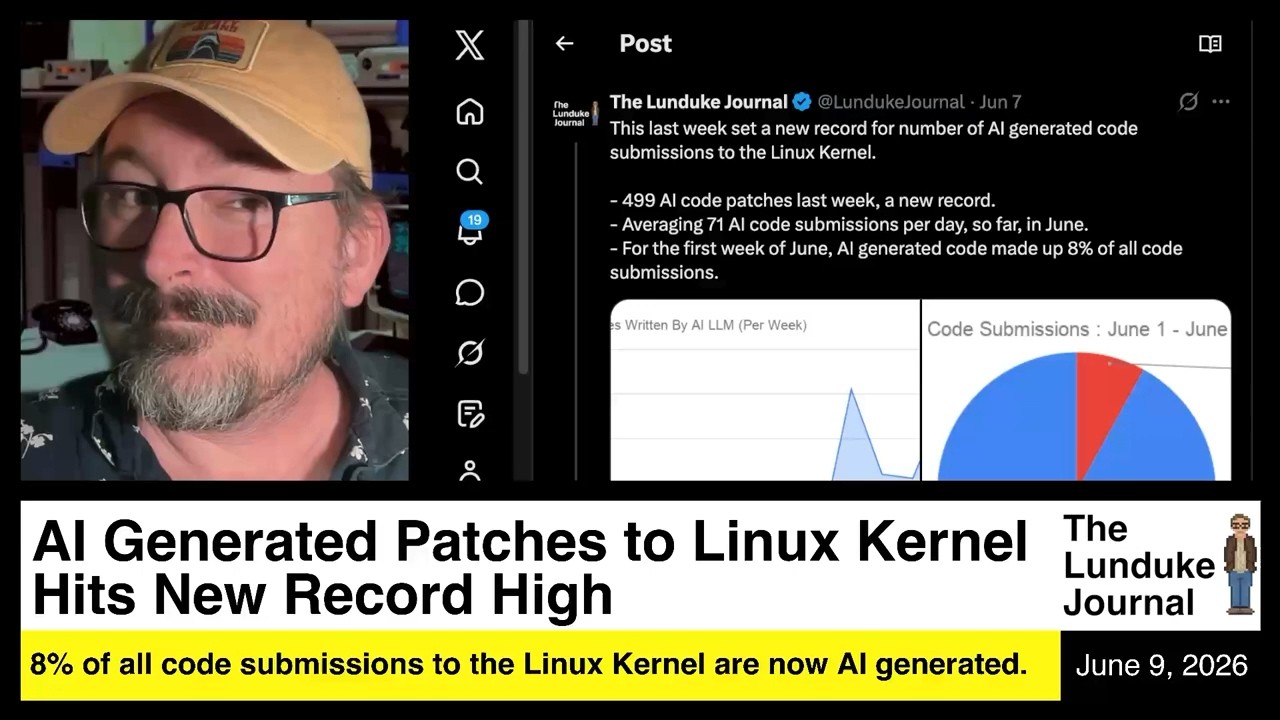
AI-generated code submissions to the Linux kernel have reached a record high, making up about 8% of all patches and expected to exceed 11% by the end of June, with core maintainers and the Linux Foundation actively embracing AI in development. This rapid growth signals a transformative shift in Linux kernel development, prompting the community to consider how to integrate or regulate AI contributions to maintain code quality and integrity.
Last week marked a record high for AI-generated code submissions to the Linux kernel, with 499 patches submitted in just seven days. This number, which only accounts for self-declared AI contributions, is likely an underestimate of the true volume. The trend has been steadily increasing since February, with June on track to surpass all previous months. Currently, AI-generated patches make up about 8% of all submissions, averaging 71 per day, and this percentage is expected to rise to over 11% by the end of June.
The growth of AI-generated code in the Linux kernel is not limited to peripheral contributors; even core maintainers like Greg Kroah-Hartman are submitting AI-assisted patches. The Linux Foundation is actively embracing AI, investing heavily in AI-related initiatives and partnerships, signaling that AI will play a significant role in the future of Linux development. This shift is reshaping how code is produced and integrated into one of the world’s most critical open-source projects.
Looking ahead, there is a strong possibility that AI-generated code could constitute over 50% of Linux kernel submissions by the end of the year, effectively making the kernel “vibe-coded.” While opinions vary on whether this is positive or negative, the trend is undeniable and demands attention. The community must consider how to respond—whether by embracing AI tools, implementing safeguards, or resisting their use—to ensure the kernel’s integrity and quality.
The presenter also took time to thank subscribers of The Lunduke Journal, highlighting the popularity of lifetime subscription walls themed around classic operating systems like Windows 2000 and Mac System 1. Due to high demand, a new TempleOS wall has been added, honoring the legacy of its creator Terry Davis. Subscribers can have their names displayed on these walls, and a discounted lifetime subscription offer is available through the end of June.
In closing, the presenter expressed gratitude to the community for supporting independent journalism free from Big Tech influence. This support allows for honest reporting on emerging tech trends like AI in Linux development. The ongoing tracking of AI-generated code submissions will continue, with updates expected as the numbers evolve, reflecting a pivotal moment in the intersection of AI and open-source software.