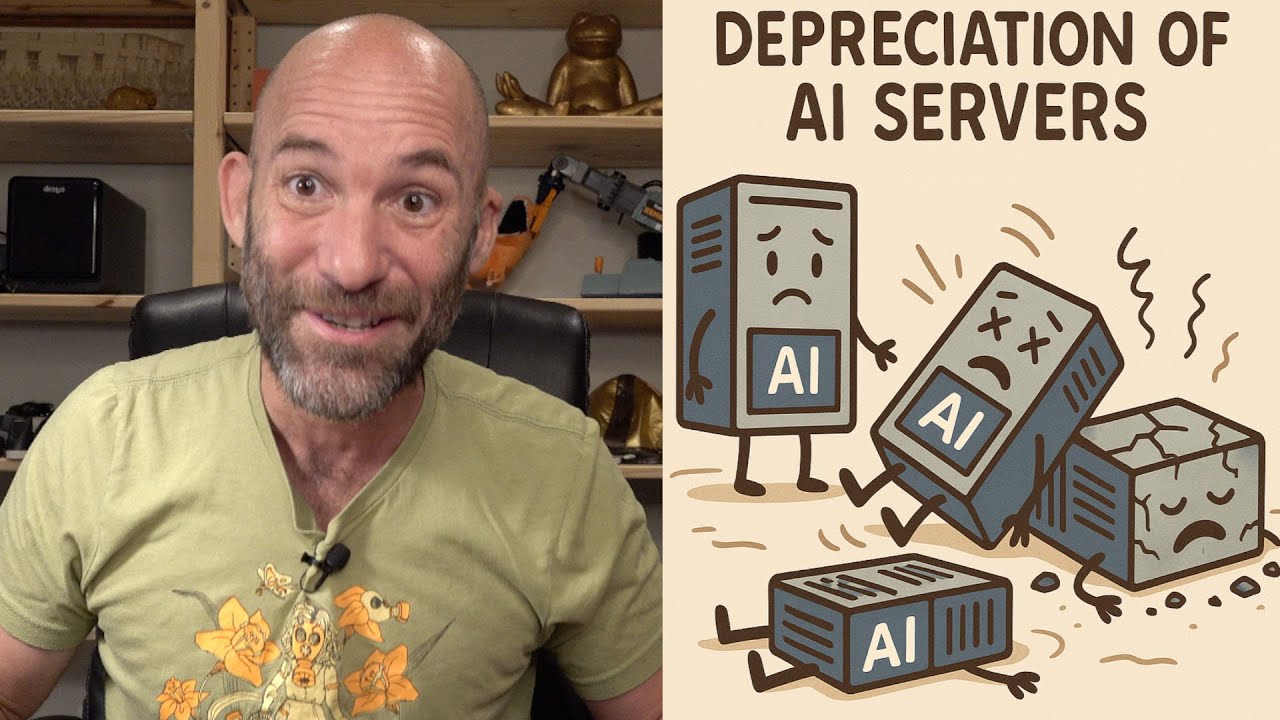
In this video, Eli the Computer Guy discusses the topic of depreciation schedules for technology equipment, particularly focusing on AI GPUs and servers. He explains that depreciation schedules determine how long an asset, like a server or laptop, is considered valuable before it is fully depreciated or worthless. Traditionally, refresh cycles for technology equipment were around three years, but this has been extended over time as hardware has become more durable and capable. Eli shares his experience with older computers, noting that many machines from over a decade ago still perform adequately for most tasks, highlighting that the need for frequent upgrades has diminished.
Eli then delves into the recent trend among major cloud providers like Amazon, Alphabet, and Microsoft to extend their depreciation schedules from three or four years to six years. This change reflects the longer useful life of servers and GPUs, especially in the context of AI data centers, sometimes called “AI factories.” He critiques the terminology, pointing out that these are essentially data centers running AI workloads rather than actual factories. The extension of depreciation schedules also has financial implications, as spreading the cost of expensive equipment over a longer period can improve reported profitability, which some critics view skeptically.
The video further explains the concept of the “value cascade” for GPUs, where high-end GPUs initially used for demanding AI training tasks gradually transition to less demanding but still profitable roles like real-time inference and batch processing over a span of five to six years. This extended utility supports the rationale for longer depreciation cycles. Eli also discusses the physical constraints of data centers, noting that with massive expansions in data center space, such as Meta’s plans for a facility the size of Manhattan, the traditional need to retire equipment to free up space may be less relevant, allowing hardware to remain in use longer.
Eli emphasizes that while extending depreciation schedules makes sense technically and financially, organizations should reconsider their approach to hardware maintenance. With longer refresh cycles, there may be a greater need for in-house hardware repair skills to maintain aging equipment, a practice that has largely disappeared in many IT departments. He shares an anecdote about a company that employed technicians specifically to repair laptops, suggesting that reviving such skills could be beneficial as hardware lifespans increase and replacement cycles lengthen.
In conclusion, Eli acknowledges the ongoing concerns about the AI industry’s financial practices, labeling some aspects as fraudulent, but he agrees that extending GPU and server depreciation schedules is reasonable given current technology trends. He encourages viewers to reflect on their own organizations’ refresh cycles and maintenance strategies, and invites discussion on the topic. He also promotes Silicon Dojo, his hands-on technology education project, and upcoming classes related to AI and computer vision, encouraging viewers to support the initiative.