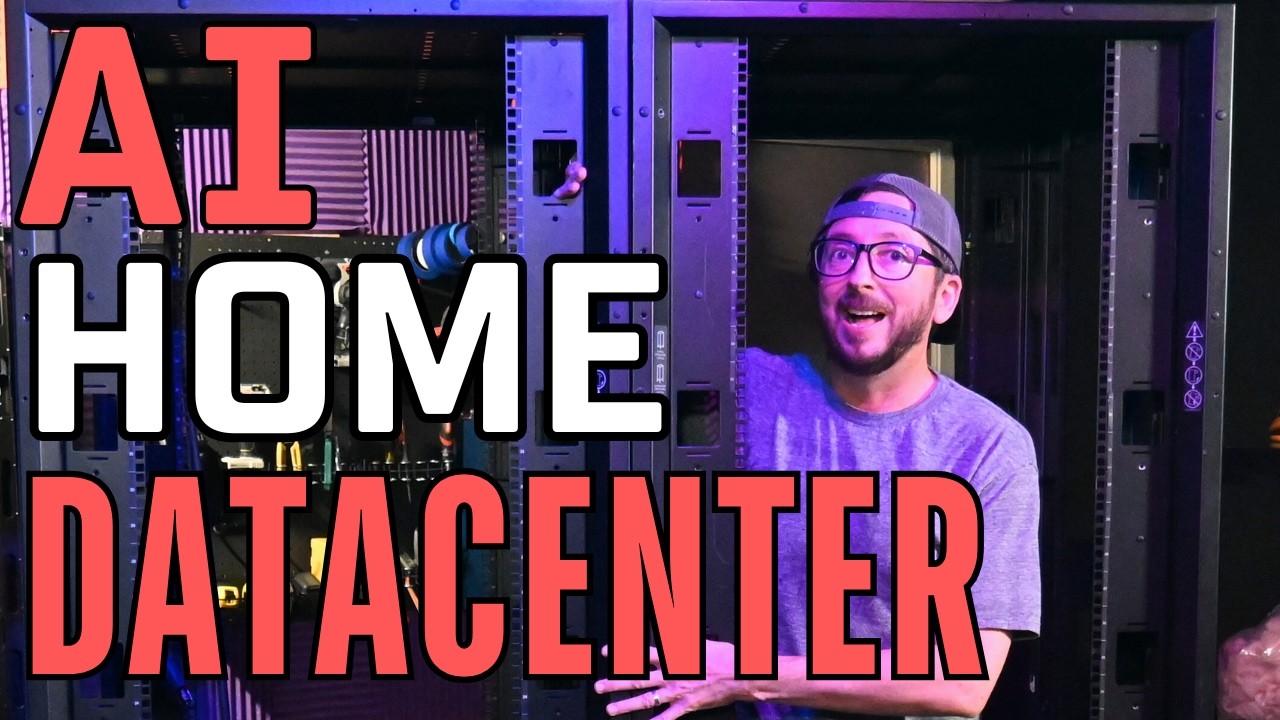
In this video, the creator begins the process of tearing down their existing home AI data center to make way for a new, upgraded setup. The focus of the new build will be on high-performance storage and network-shared storage, which were less emphasized in the previous configuration. The DS4246 storage units will remain a key component, but the older DE6600 units will be removed due to their limitations. The current R720 XD server, which served as the headend, will be replaced with dual R730 XDS servers, which are both powerful and cost-effective.
Several other hardware changes are planned: the R930 servers will be partially retained, with one keeping a terabyte of RAM, while the T620 server will be removed due to a dead motherboard without a direct replacement. The DE6600 units, although excellent for bulk storage, are very heavy and limited by SAS 2 speeds, which restricts their maximum bandwidth. The new setup will instead use 24-drive JBODs capable of achieving much higher data transfer speeds, up to 9 gigabytes per second, compared to the roughly 3 GB/s on the DE6600s. One DE6600 will be kept for defragmentation purposes, which is important for managing ZFS storage.
The tape library, an MSL 8096, will be retained and integrated into the Proxmox backup server. The existing UPS system, an E 9PX11K, will be upgraded with an additional battery module to extend runtime, while the networking equipment will be powered by a dedicated APC 1500 RM2 UPS. The creator also expresses relief at retiring the old, dull server racks and replacing them with high-quality APC NetShelter racks, specifically the 3350 and 3150 models, which offer much better accessibility and workspace.
Throughout the video, the creator emphasizes the importance of tailoring hardware choices to the specific needs of an AI-focused data center, noting that general-purpose storage setups do not perform well for high-performance networking and GPU-centric clusters. The new racks provide ample space and improved organization, making the build process more enjoyable and efficient. The video also encourages viewers interested in building their own local AI data centers to subscribe and follow along with the upcoming series of videos covering assembly, powering up, and testing.
Finally, the creator thanks their supporters, including channel members, coffee buyers, and Patreons, and invites viewers to check out previous videos that document the original build and provide helpful FAQs about rack setups. The video sets the stage for an exciting week of content focused on constructing a cutting-edge home AI data center, promising detailed insights and practical advice for enthusiasts and professionals alike.