The video discusses the transformative impact AI is expected to have on coding and software engineering by 2026, highlighting the recent release of Anthropic’s Opus 4.5 model. Opus 4.5 has set new benchmarks in AI coding performance, outperforming previous models by 4-5% across various coding tasks. This improvement, while seemingly modest, is significant given Anthropic’s focused investment in coding capabilities. The model’s ability to handle ambiguity and reason about trade-offs autonomously for extended periods marks a major leap in AI’s coding proficiency, suggesting that AI could soon take over much of the mechanical coding work traditionally done by humans.
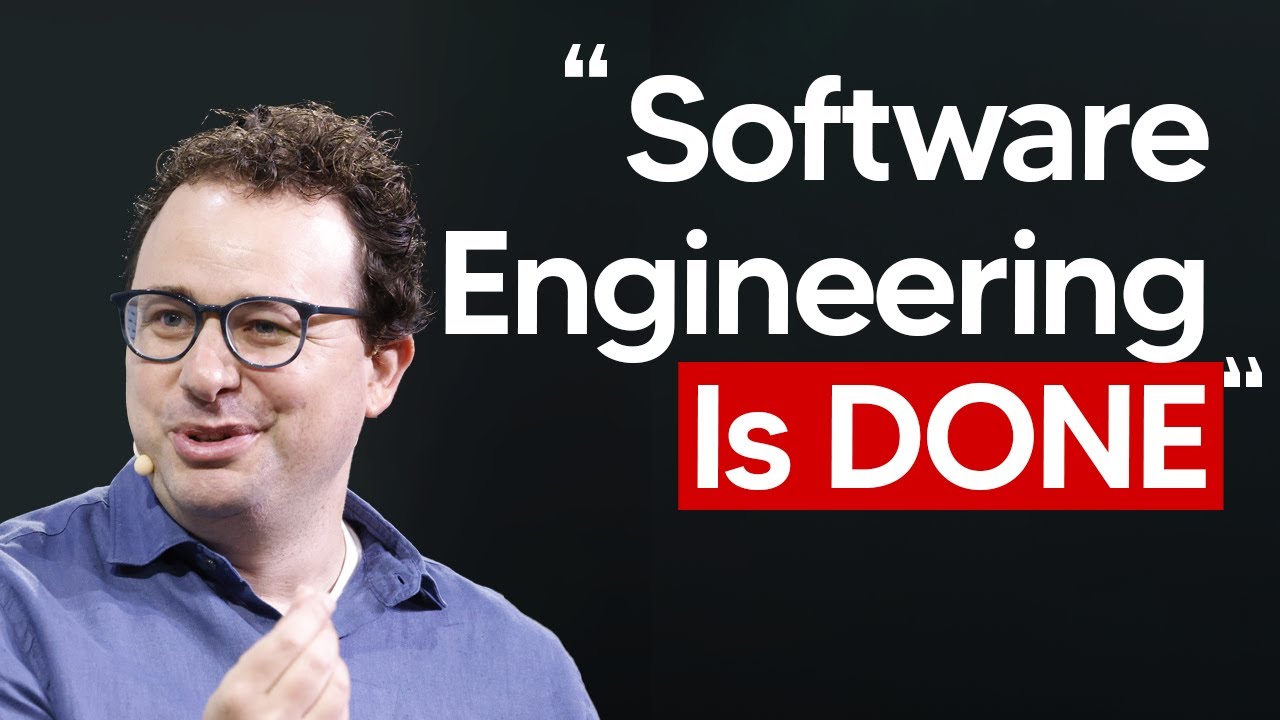
A key figure in the discussion is Adam Morph, a senior engineer at Anthropic working on Claude Code, a tool that integrates AI directly into local codebases via natural language. Morph made a striking statement that “software engineering is done,” implying that by early 2026, AI-generated code will be as reliable and unquestioned as compiler output. While this claim initially caused concern, Morph clarified that he was specifically referring to the coding aspect of software engineering, not the entire discipline. He emphasized that the conceptual parts of engineering—such as defining requirements, system design, and user understanding—will remain human-driven, while AI will handle the mechanical translation of ideas into code.
The video also presents data from the SWE Bench, a benchmark measuring AI coding performance on real-world software engineering tasks. The data shows a rapid increase in AI capability, from near zero in late 2023 to around 80% automation by late 2025, with projections reaching 90-95% by the end of 2026. This exponential growth suggests that AI will soon be capable of performing the majority of coding tasks at or above the level of a mid-level human engineer. The acceleration of AI coding performance challenges previous assumptions that such advancements would take a decade, instead showing that the transition is happening within just a few years.
Supporting this outlook, other industry leaders have made similar predictions. AWS CEO Matt Garin indicated in a leaked internal meeting that most developers might stop coding within two years, shifting their focus to innovation and product thinking. Nvidia’s Jensen Huang has stated that AI lowers the barrier to programming, enabling anyone to code through natural language instructions. Meta’s Mark Zuckerberg also predicted that AI would automate the work of mid-level engineers by 2025. These statements collectively underscore a broad industry consensus that AI will drastically reshape the software development landscape, making coding more accessible and automating routine tasks.
Finally, the video touches on the broader implications for the software engineering profession. While AI will automate much of the coding, the human role will evolve toward higher-level tasks such as architecture, system design, and coordination. Experts like Dario Amodei acknowledge concerns about job displacement but also highlight the productivity gains and new opportunities AI will create. The consensus is that by 2026-2027, AI will write the vast majority of code, fundamentally changing how software is built and who builds it, with humans focusing more on defining intent and less on manual coding.