The video discusses the rapid advancement of artificial intelligence (AI) and its growing impact on the scientific community. Over the past two years, the speaker has speculated about AI’s potential to transform science, and now clear evidence is emerging that AI is being widely adopted by researchers. Notably, OpenAI’s recent hiring of a “head of preparedness” and statements from industry leaders like Nvidia’s Jensen Huang, who claims intelligence is becoming a commodity, highlight the seriousness of these developments. Many scientists, especially in fields like mathematics and physics, are now using large language models for tasks such as brainstorming, calculations, and even generating new proofs.
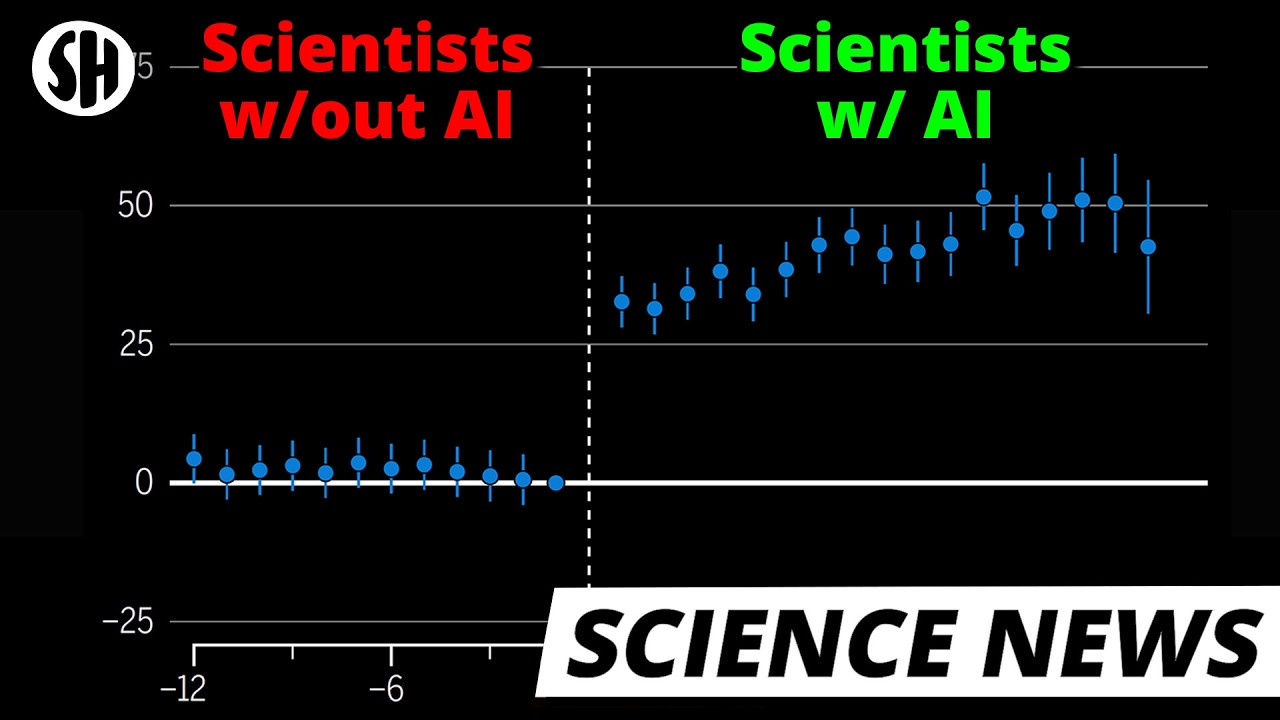
AI’s influence extends beyond research and writing. A recent survey found that 53% of peer reviewers use AI tools during the review process, and it’s likely that AI is also being used to write and evaluate grant proposals. The productivity boost is significant: a new study shows that researchers using large language models increased their paper output by 40% on average, and up to 80% for non-native English speakers. This trend is expected to accelerate, leading to a surge in scientific publications, which will strain the peer review system.
Universities are also embracing AI at an institutional level. Prestigious institutions like MIT and the University of Oxford have secured ChatGPT Pro subscriptions for their entire staff through OpenAI’s NextG AI program, which currently includes 15 top universities. OpenAI is investing $50 million to provide free access to advanced AI tools for these universities. However, this could widen the gap between well-resourced and less-resourced institutions, potentially increasing inequality in scientific research.
The speaker notes that AI-driven startups are proliferating, often combining large language models with specialized solvers for specific scientific tasks. Major companies like Anthropic are also developing AI tools tailored for life sciences. The speaker predicts that within three years, the traditional model of scientific research will be fundamentally altered, with AI replacing much of the work previously done by students and postdocs, especially in fields reliant on coding and mathematics. In ten years, theoretical physics research by humans may become obsolete, as AI will be able to perform these tasks more efficiently and cheaply.
Governments are also investing heavily in AI-driven science. The U.S. government’s Genesis mission, launching in late 2025, aims to create a national AI-driven discovery platform in partnership with industry and academia. Google DeepMind is providing early access to its frontier AI tools for this initiative. The speaker warns that countries or regions that fail to keep up with these developments risk falling irreversibly behind. While some skeptics believe AI will never match human creativity, the speaker argues that the commoditization of intelligence is real and urges viewers to develop AI skills to remain relevant in the coming years.