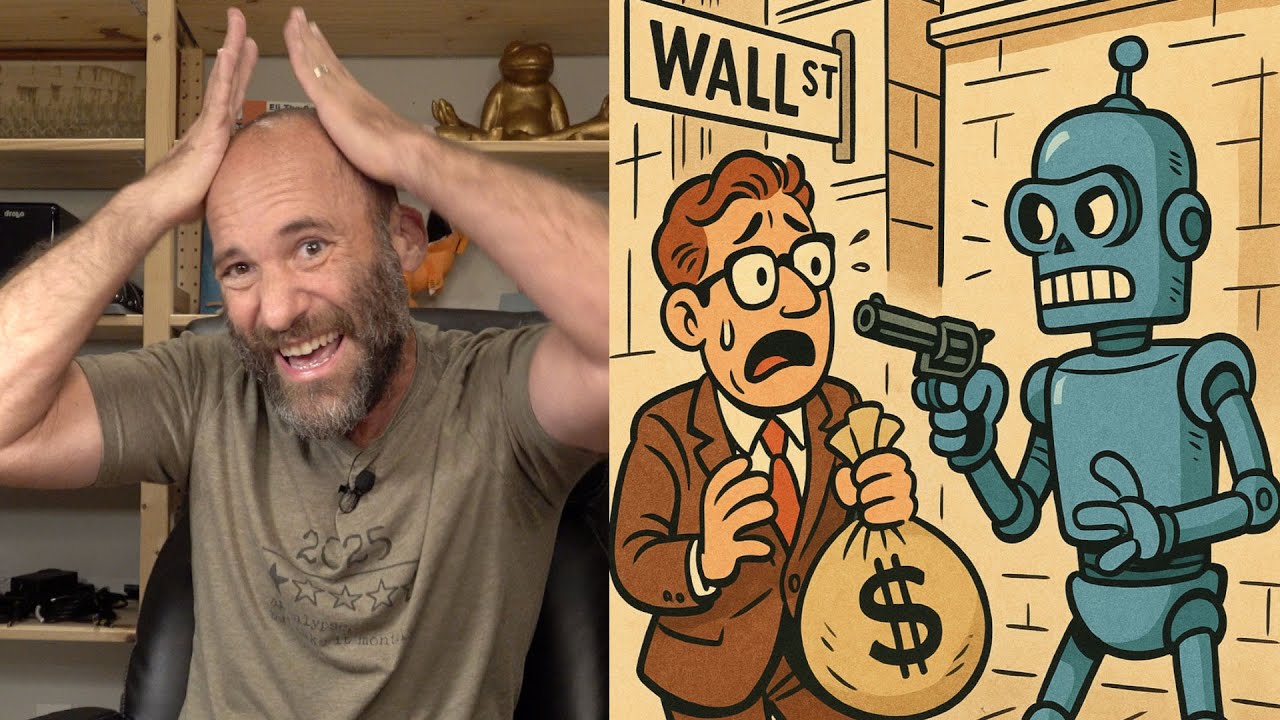
In this video, Eli, the computer guy from the Daily Blog, discusses the growing impact of artificial intelligence (AI) on the stock market, particularly focusing on how AI is distorting hedge funds and the broader economy. He begins by highlighting the absurdity of the current AI hype, noting that big tech companies like Microsoft are stockpiling GPUs that are not even being used, signaling an impending AI bubble burst. Eli emphasizes that this bubble is not just a tech issue but is skewing major economic indicators like the U.S. GDP, with AI deployments projected to increase GDP by over 1% in 2025. He also references Sam Altman’s claim that OpenAI might spend $1 trillion annually on capital expenditures, which Eli finds unrealistic and indicative of the hype surrounding AI investments.
Eli explains how the AI bubble is affecting the stock market, particularly the S&P 500 index. Traditionally, the S&P 500 offers a diversified portfolio across various sectors, allowing investors to hedge risks by balancing gains and losses in different industries. However, the current market is heavily dominated by tech companies, especially those involved in AI, which now make up about 40% of the index. This concentration creates a scenario where the top 10% of companies disproportionately influence the market, undermining the diversification that hedge funds rely on to protect investors from sector-specific downturns.
The video delves into the challenges hedge funds face in this AI-driven market. Because AI is now integrated into many sectors beyond just tech—such as electricity providers, construction, cement, steel, and logistics—hedge funds find it increasingly difficult to create effective hedges. The interconnectedness means that when AI stocks like Nvidia fluctuate, related industries also move in tandem, causing hedge funds to correlate more closely with the overall stock market. This correlation reduces the protective benefit of hedge funds, which traditionally aim to provide returns that are less tied to market swings, thereby cushioning investors during downturns.
Eli warns about the broader economic risks if the AI bubble bursts. Unlike the dot-com bust, which mainly affected the tech sector, an AI crash could have widespread consequences across multiple industries, potentially triggering a liquidity crisis for institutional investors such as retirement funds and university endowments. These investors rely on hedge funds to manage risk and maintain liquidity, but if hedge funds fail to hedge effectively, it could lead to significant financial distress for millions of people depending on these funds for their retirement and other financial needs.
In conclusion, Eli expresses skepticism about the sustainability of the AI hype and its impact on the financial markets. He cautions that while large hedge funds might have the resources to navigate this environment, smaller funds may be complacent and overly exposed to AI-driven stocks, increasing the risk of a market shock. He encourages viewers to consider the broader implications of AI’s influence on the economy and investment strategies, and he invites them to share their thoughts. Finally, he promotes his upcoming AI-related classes at Silicon Dojo, emphasizing practical technology education to empower individuals in this rapidly evolving landscape.