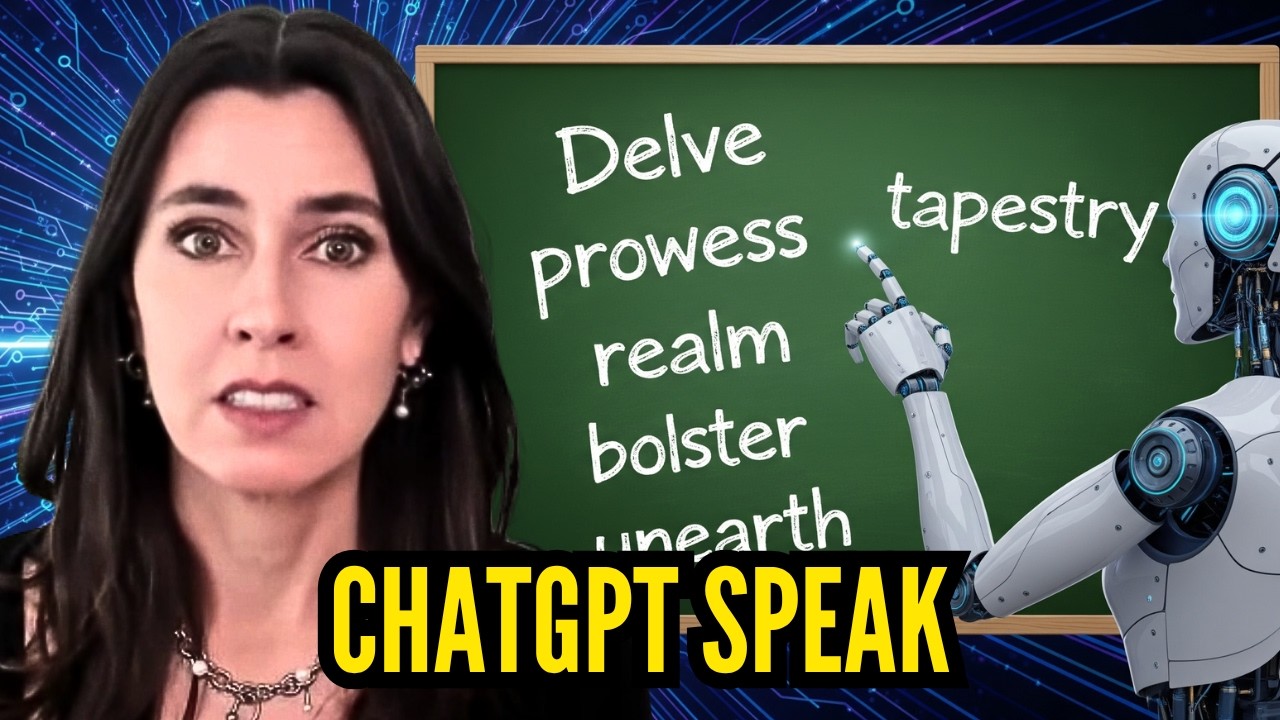
The video explores how AI, particularly large language models like ChatGPT, is influencing human language and communication. Since ChatGPT’s launch in 2022, there has been a significant increase in the use of certain words commonly associated with AI-generated text, such as “delve,” “commendable,” and the frequent use of the em dash. Researchers analyzed hundreds of thousands of YouTube videos and podcasts, finding that AI-influenced vocabulary has permeated not only formal writing but also spontaneous speech. This phenomenon creates a feedback loop where AI models trained on human language output text that humans then mimic, subtly reshaping everyday communication and potentially culture itself.
Adam Alexa, an etymologist and author of the book “Algo Speak,” discusses how AI and algorithms are reshaping language. He notes that the rise of AI-generated content has led to both the adoption of AI-like language patterns and a counter-movement where people deliberately avoid AI-associated words to not sound robotic. This avoidance speech reflects a cultural sensitivity to sounding like AI, especially in academic and educational contexts. Alexa also highlights that language has always evolved alongside technology, citing examples like the telephone popularizing “hello” and how spellcheck has altered spelling habits, suggesting AI’s influence is a continuation of this trend.
The conversation touches on concerns about AI potentially homogenizing language and limiting creativity. Since AI models predict the most likely word or phrase, they may reduce the randomness and lateral thinking that fuel human creativity and unique expression. This could lead to a feedback cycle where academic papers and articles become increasingly uniform, limiting exposure to diverse ideas. However, Alexa remains optimistic, comparing AI’s impact to past technological shifts in writing mediums, emphasizing that language is a flexible tool humans will continue to adapt for authentic communication.
The video also addresses how AI affects not just language but broader communication, including visual media and social interactions. The rise of AI-generated “slop” content—low-quality, algorithm-driven posts—creates challenges in distinguishing authentic human voices online. This has led to a desire for more genuine, imperfect communication, such as including natural speech fillers (“ums”) or embracing unique, artisanal writing styles as a form of resistance against AI homogenization. Additionally, people are increasingly anthropomorphizing AI, treating it like a conversational partner, which influences how they interact with these tools and how AI responds.
Finally, the discussion highlights social and cultural implications, including biases embedded in AI training data that affect language use across different regions and communities. For example, certain words like “delve” are more common in AI outputs due to the geographic origins of training data, which can unfairly label some speakers as sounding “AI-like.” Despite concerns about losing autonomy over language and thought, Alexa suggests that AI can also enhance self-expression when used as a tool for guidance rather than replacement. Overall, the video presents a nuanced view of AI’s role in shaping language, emphasizing both challenges and opportunities for human communication in the AI era.