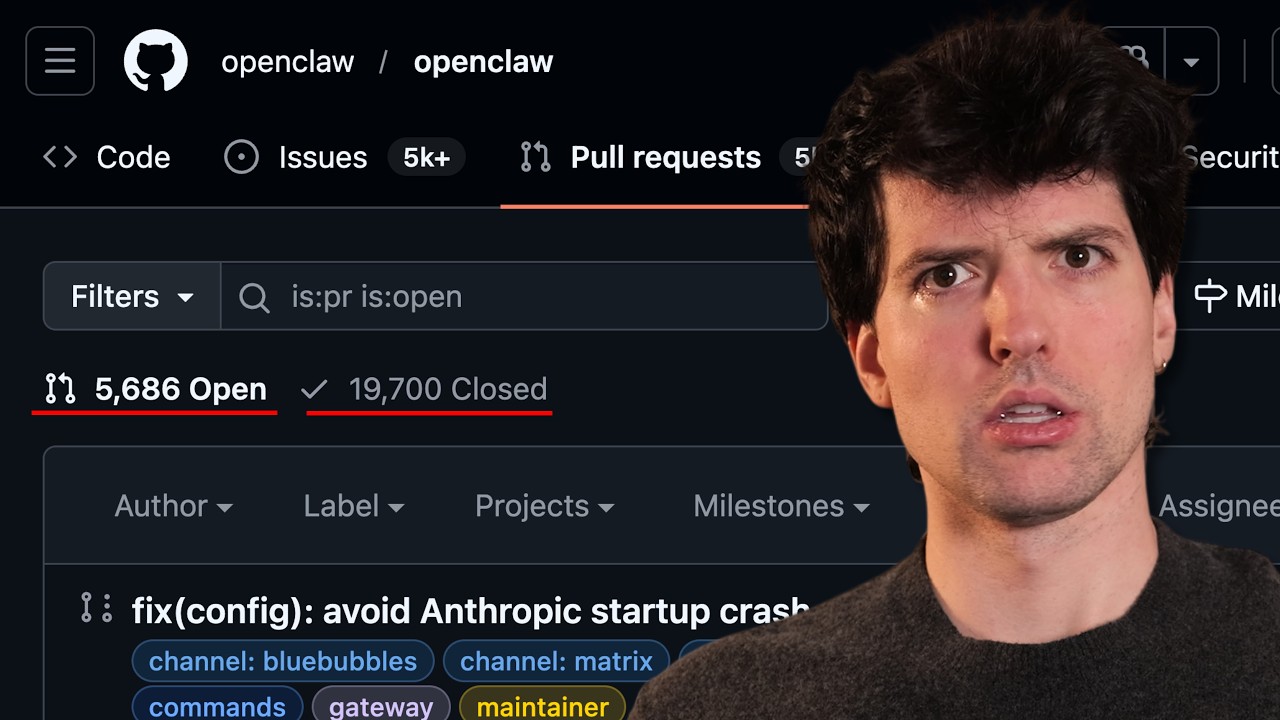
The video argues that AI-generated contributions are overwhelming open source projects with low-quality spam, making it harder for maintainers to manage code and leading to burnout. It warns that without better moderation tools, funding, and community support, the future of open source—and by extension, the software industry—is at risk.
The video discusses the growing negative impact of AI on open source software and its community. The creator expresses deep concern about how AI-generated contributions are overwhelming maintainers with spammy pull requests (PRs), making it difficult to manage projects effectively. Examples include projects like TLDraw automatically closing external PRs and Node.js increasing bug reporting requirements due to AI spam. The speaker emphasizes that open source is foundational to the software industry, and if AI continues to erode its collaborative spirit and maintainability, it could threaten the future of software development as a whole.
A major issue highlighted is the sheer volume of low-quality or irrelevant PRs, many of which are generated or assisted by AI tools. This influx makes it nearly impossible for small teams to review and maintain control over their codebases. The speaker shares personal experiences with their own project, T3 Code, which received an overwhelming number of PRs shortly after launch, despite not actively seeking contributions. This leads to burnout and forces maintainers to spend excessive time triaging and managing contributions, often at the expense of their own well-being.
Another problem is the decline in the quality of user interactions and questions. The video notes that AI has enabled less-experienced users to engage with open source projects, but often without a solid understanding of the systems involved. This results in more confused, entitled, or even toxic interactions, which further demoralize maintainers. The speaker draws parallels to infamous incidents like the XZ backdoor, warning that increased spam and social engineering attacks are now easier to execute, putting critical open source infrastructure at risk.
The lack of effective moderation and support tools from platforms like GitHub exacerbates these challenges. The speaker criticizes GitHub for being slow to implement basic anti-spam and moderation features, forcing the community to develop their own solutions. Tools like PR Stats and Vouch are mentioned as promising ways to filter and manage trustworthy contributors, but these solutions are still evolving and may inadvertently make it harder for new developers to participate in open source.
Finally, the video addresses the worsening funding situation for open source maintainers. Traditional incentives like sponsorships, paid courses, or premium features are becoming less effective as AI makes it easier for users to replicate or bypass open source projects. The speaker advocates for initiatives like the Open Source Pledge, which encourages companies to financially support the projects they rely on. Above all, the creator urges viewers to be kind and appreciative toward open source maintainers, emphasizing that gratitude and support—both financial and emotional—are essential to sustaining the open source ecosystem in the face of mounting AI-driven challenges.