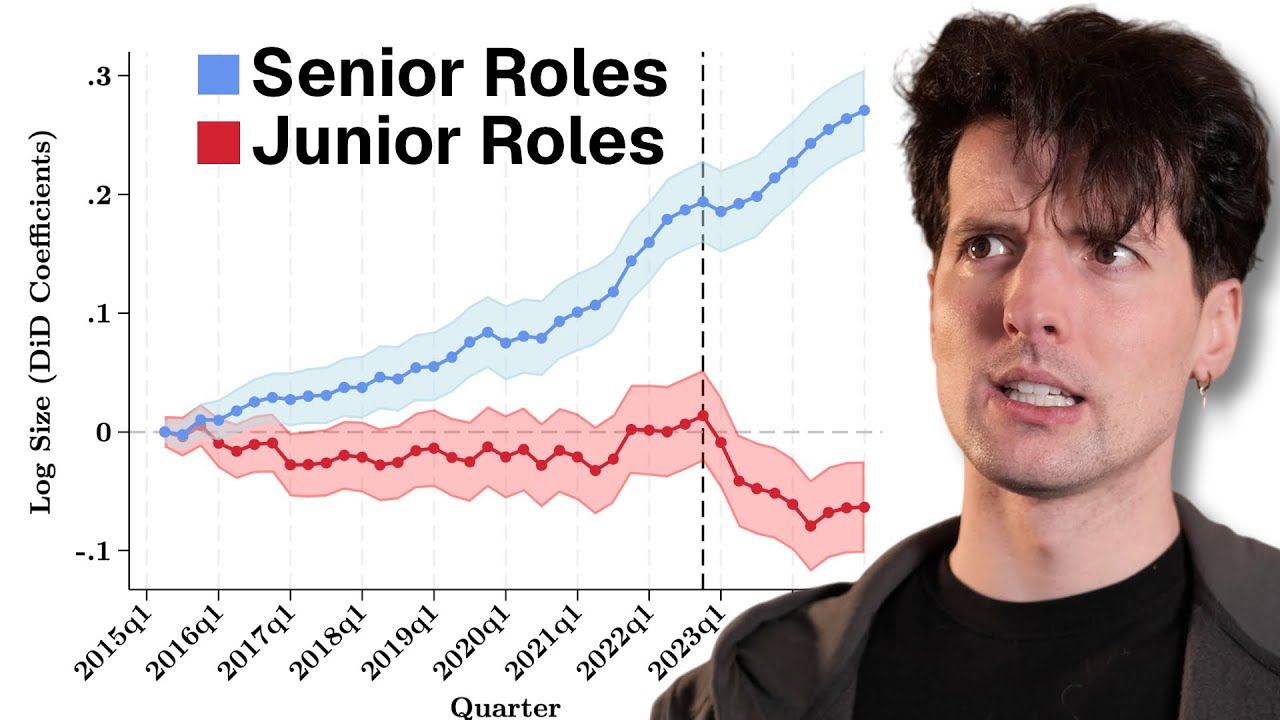
The video explains how AI is causing a decline in junior roles and a rise in senior positions across industries, as companies anticipate automation replacing entry-level tasks and prefer experienced professionals who require less management. It highlights the challenges juniors face in gaining mentorship and growth opportunities, urging early-career workers to build strong industry relationships and networks to succeed amid these shifting job market dynamics.
The video discusses the significant impact AI is having on the job market, particularly highlighting a recent Harvard study that shows a clear decline in junior roles and a steady increase in senior roles across 250,000 firms. This trend is not anecdotal but backed by data, revealing that companies are reducing junior positions as they anticipate automation will replace many entry-level tasks. The speaker emphasizes that this shift is not about companies trying to save money or discriminate against juniors but rather a strategic adjustment to future workforce needs. Compensation levels for senior roles are actually increasing, while the number of junior roles is shrinking, indicating a change in hiring patterns rather than pay cuts.
Further data from ADP payroll systems shows that the number of early-career software developers (ages 22-25) has been consistently declining since the rise of AI, while mid-career and senior developers continue to grow in number. This suggests that AI proliferation is reshaping the workforce by favoring experienced professionals. The speaker also debunks common misconceptions, clarifying that immigration and senior engineers blocking juniors are not the causes of this shift. Instead, the industry is facing a real shortage of senior engineers, leading to intense competition and poaching among companies to secure experienced talent.
The video delves into the reasons companies hire juniors, explaining that juniors are not hired primarily to save money but because they are more available and represent a long-term investment. Junior engineers require significant mentorship and management, which can slow down productivity initially, but the hope is that some will grow into highly skilled seniors. However, managing juniors is challenging, and many managers are not equipped to handle this effectively. AI tools like Claude can sometimes outperform junior teams, especially under less capable management, which further discourages companies from taking risks on less experienced hires.
A critical concern raised is the diminishing opportunities for juniors to learn and grow by working alongside more experienced engineers. The traditional path of leveling up through mentorship and collaboration is becoming harder as fewer senior roles are available and companies rely more on AI. The speaker stresses the importance of surrounding oneself with smarter peers and mentors to improve, which is increasingly difficult in the current environment. College programs are criticized for not adequately preparing students for real-world work, leaving many graduates without the practical skills or networks needed to succeed.
In conclusion, the speaker urges juniors and early-career professionals to focus on building genuine relationships and trust within the industry rather than relying solely on resumes or online applications. Networking, contributing to open source, and engaging with communities are vital for gaining trust and job opportunities. The video ends on a cautionary note about the future of the industry, warning that if the trend continues, fewer senior engineers will be available to mentor the next generation, potentially leading to a decline in overall industry expertise. The speaker encourages viewers to subscribe and stay engaged to navigate these challenging changes together.