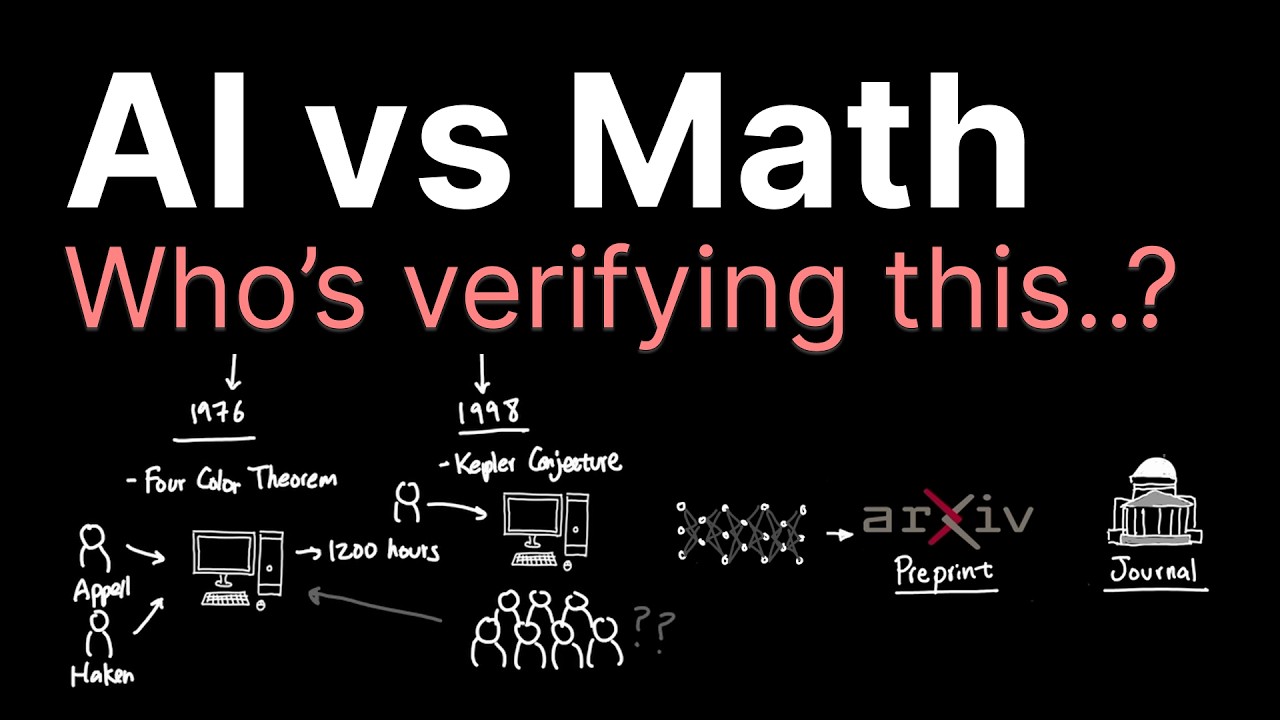
The video discusses the rapid increase in AI-driven research submissions, highlighting a surge in academic papers, especially in AI-related fields. In September alone, over 40,000 submissions were made, with AI categories seeing a sixfold increase in just two years. This flood of research has overwhelmed traditional academic systems, which rely on lengthy peer review processes. As a result, some institutions have imposed limits on the number of submissions per researcher, while others, like OpenAI, have opted to publish large volumes of work on platforms like GitHub, bypassing traditional vetting to encourage broader scrutiny.
This shift represents a significant paradigm change in how scientific research is disseminated and validated. Historically, computers have aided mathematical proofs and scientific progress, such as the four color theorem and Thomas Hales’ work, which required extensive human verification despite computational assistance. Today, AI accelerates discovery but creates a bottleneck in human verification, as the volume and speed of AI-generated research outpace the capacity for thorough review. This tension challenges the existing academic structures that legitimize and validate scientific contributions.
The video emphasizes the crucial role of preprints and formal publications in the scientific process. Preprints allow early feedback, reduce duplication, and provide proof of work, while peer-reviewed publications ensure meticulous validation. However, these systems are optional and do not guarantee correctness. With AI’s involvement, the traditional processes struggle to keep up, raising questions about how to maintain scientific integrity and credit in an era where anyone can claim breakthroughs, and AI can generate vast amounts of research rapidly.
The presenter also highlights the evolving role of humans in this new landscape. While AI can explore and generate discoveries at unprecedented speeds, humans must decide which findings are meaningful and worth pursuing. This bifurcation creates two parallel worlds: AI-driven exploration and human-led validation and application. The current academic system is ill-equipped for this dynamic, necessitating new frameworks that can integrate AI’s capabilities while preserving rigorous evaluation standards.
Finally, the video touches on the controversy surrounding AI’s impact on research culture, including calls to boycott AI-driven publications and debates about the power dynamics in science. Until new systems are developed to bridge the gap between rapid AI innovation and careful human review, the tension between these approaches will persist. The challenge moving forward is not just discovering new knowledge but discerning which discoveries truly advance human understanding and innovation in a world increasingly shaped by AI.