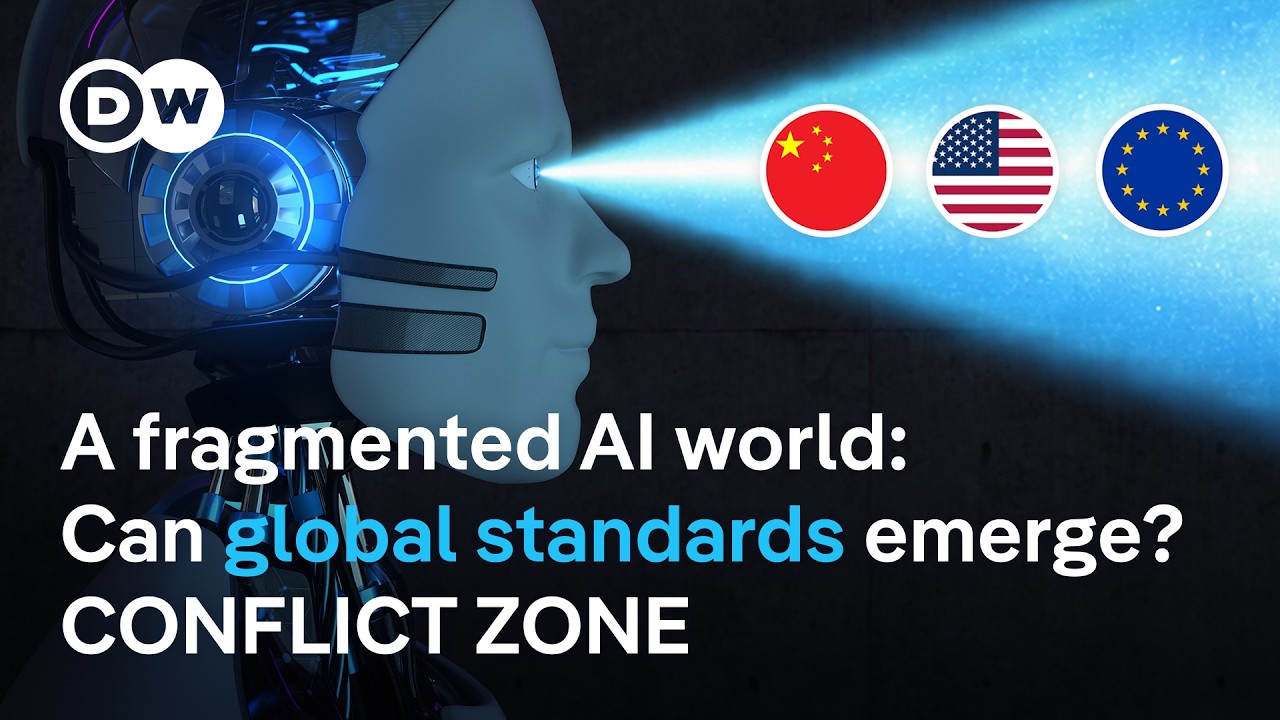
In this special edition of Conflict Zone from the Berlin Global Dialogue, global business leaders discussed the rapid innovation and fragmented regulation of artificial intelligence (AI) across different regions. The United States leads in investment and powerful AI models, China focuses on practical applications, India emphasizes accessibility, and Europe prioritizes regulation and trust. Companies like Bayer, Booking.com, and Chinese data infrastructure firms are navigating these diverse landscapes, leveraging AI for breakthroughs in drug discovery, customer service, and operational efficiency, while also facing challenges posed by differing regulatory environments.
The conversation highlighted the tension between innovation and risk management. European regulations, such as the EU AI Act, aim to balance safety and innovation but risk slowing progress if overly cautious. Meanwhile, U.S. executives call for regulation to address serious risks, including legal liability for AI-related harms. China, while less focused on new AI-specific regulations, operates within existing regulatory frameworks and is still in early stages of addressing data and model limitations. Panelists emphasized the need for global coordination, including China’s involvement, to avoid AI becoming a geopolitical battleground.
Social implications of AI were also discussed, particularly concerns about job displacement and social unrest. Companies recognize the importance of upskilling employees and creating new roles to manage AI risks. There is optimism about AI-driven job creation, but governments must play a role in moderating societal impacts. The panelists stressed the importance of including diverse voices in AI governance, noting disparities in AI adoption between large and small businesses and public skepticism, such as opposition to new data centers in the U.S.
Fragmentation in AI regulation and infrastructure was acknowledged as a current reality that can both challenge and catalyze innovation. Companies face increased complexity and costs when operating across multiple jurisdictions with differing standards, especially regarding data privacy and AI model usage. However, fragmentation can also enhance resilience by encouraging redundancy and diverse approaches. Trust, safety, and cybersecurity were identified as critical competitive advantages for businesses deploying AI, with AI tools also playing a role in preventing cybercrime and fraud.
Looking ahead, the panelists called for global agreements on key AI issues, including security standards, cooperation between authorities, and ethical boundaries for AI development. Biosecurity and clear liability frameworks were highlighted as urgent topics, especially in life sciences where AI intersects with sensitive biological data. Ultimately, the discussion underscored the necessity of balancing innovation with responsibility, fostering international collaboration, and preparing society for the profound transformations AI will bring.
Useful Links