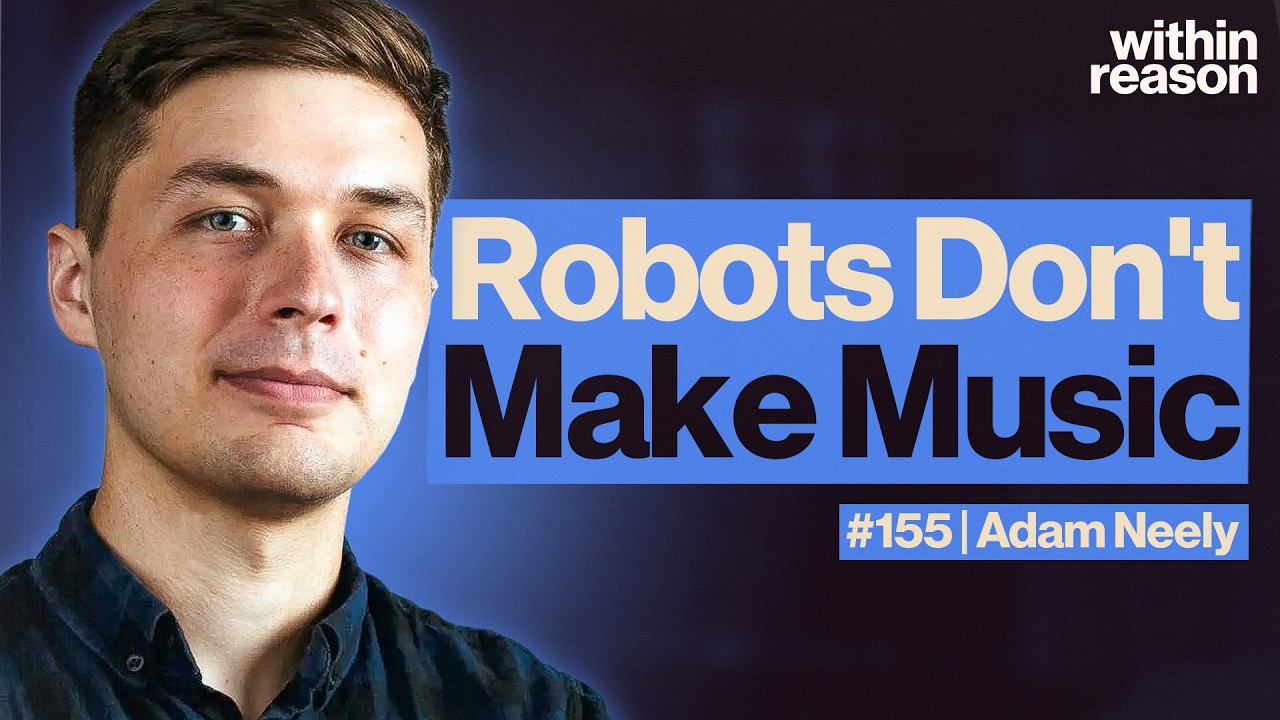
In this insightful conversation, Adam Neely, a professional musician and amateur philosopher, discusses the profound impact of artificial intelligence (AI) on music both as an industry and an art form. He expresses concern about AI’s potential to “deskill” musicians by automating the creative process, particularly the generation of musical ideas, which is fundamental to music-making. Drawing parallels with historical technological disruptions like recorded music, synthesizers, and drum machines, Neely highlights that while industry disruption is not new, the threat AI poses to the artistic craft and communal nature of music is unprecedented.
Neely challenges the notion of “cheating” in music, arguing that music is fundamentally a form of self-expression and community building rather than a competition. However, he critiques AI tools like Suno, which generate music by training on vast amounts of existing recordings without artists’ consent, labeling this practice unethical and unmusical. Unlike traditional musical learning, which involves embodied skill development and emotional communication, AI-generated music relies on brute-force pattern recognition and lacks the human element of craft, responsibility, and genuine interaction.
The discussion also explores the dual nature of AI music tools. While Neely acknowledges their utility as demoing tools or aids for those lacking technical skills, he emphasizes that these tools often bypass the essential musical learning process. He contrasts AI-generated music with traditional digital audio workstations and sampling, which involve intentionality and skill. Neely worries that AI encourages a shift from craft to taste, where users merely customize outputs without developing musical abilities, potentially leading to a fragmented, narcissistic music culture focused on personalized consumption rather than shared communal experiences.
A significant concern raised is the cultural impact of AI music fostering hyper-personalized listening experiences, which could lead to cultural isolation. Neely stresses that music is more than sound; it is a social and emotional connector that thrives on shared experiences and stories. AI music, lacking context and human backstory, risks reducing music to mere sound waves devoid of deeper meaning or connection. He contrasts this with live music and improvisational genres like jazz, which embody spontaneity, community, and imperfection—qualities that AI-generated music cannot replicate.
Looking forward, Neely is cautiously optimistic but advocates for ethical reforms in AI music development, such as compensating original artists and focusing AI tools on music education rather than mere production. He highlights generational divides in AI acceptance and foresees a future where human-generated music may become a premium, class-signifying experience akin to “organic” products. Ultimately, Neely underscores that while AI can produce technically proficient sounds, true musical artistry remains a profoundly human endeavor rooted in emotional communication, craft, and communal connection.