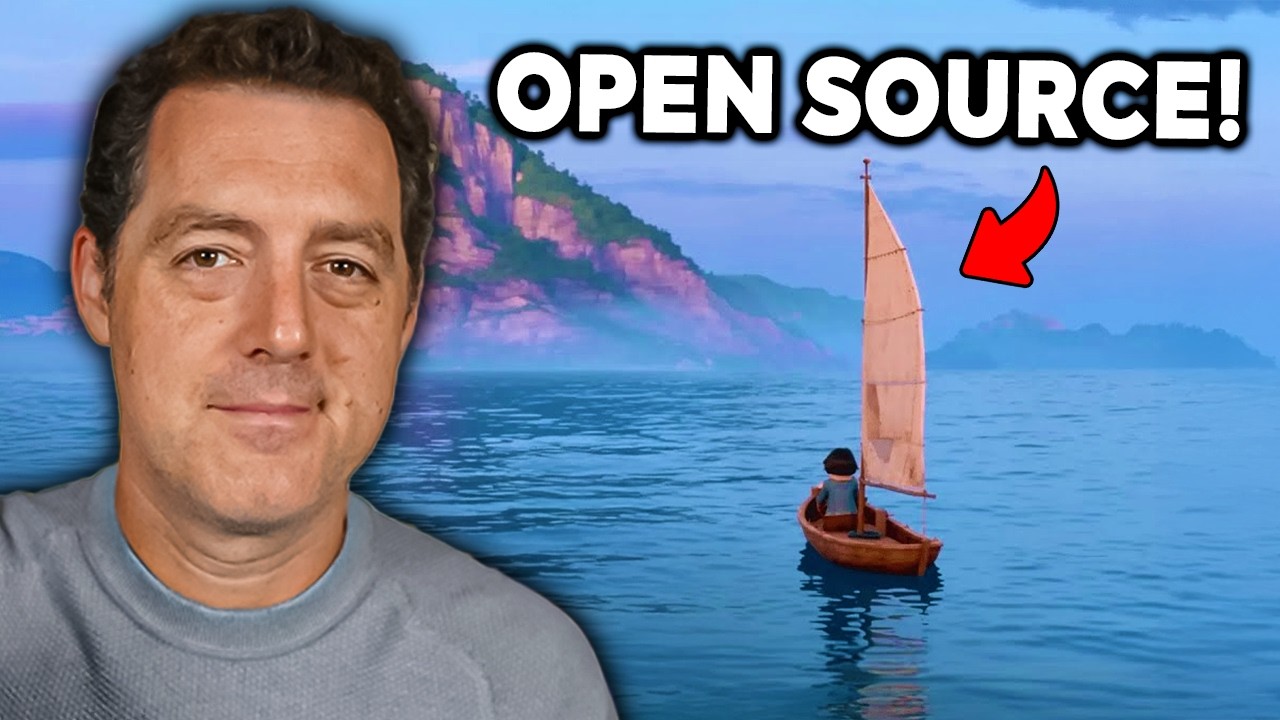
The video covers several major developments in the AI and tech world, starting with the release of LTX-2, a fully open-source, open-weights text-to-video model. LTX-2 is now available for anyone to download and run locally, offering both the main and distilled model weights, as well as a modular training framework with multi-GPU support and evaluation tools. The model is optimized for Nvidia hardware, particularly the RTX 5090, and allows for high-quality, 20-second 4K video generations with advanced features like accurate lip sync, storyboard-like control, and multi-modal inputs. The release also includes LoRA adapters for customization and a detailed research paper, making it a significant milestone for open-source video AI.
Next, the video recaps Nvidia’s announcements at CES, highlighting the introduction of the Rubin supercomputer architecture. Rubin is designed for hyperscalers and major AI model providers, offering up to a 10x reduction in inference costs and a 4x reduction in GPU requirements for training mixture-of-experts models compared to the previous Blackwell platform. The system is highly power-efficient, using hot water cooling at 45°C, and features a simplified design with no cables, hoses, or fans. Rubin is already in production and will be available to Nvidia’s partners later in the year.
The video also discusses OpenAI’s new ChatGPT Health feature, which integrates users’ health data from devices and wellness apps into ChatGPT for personalized health recommendations. Users can connect medical records and health apps, allowing ChatGPT to provide proactive advice and help interpret medical results. While the feature raises privacy concerns, especially regarding sharing sensitive health data with OpenAI, it is designed with privacy in mind and will not use health data to train models. The feature is rolling out to all ChatGPT plans except in Europe due to regulatory restrictions.
A significant topic covered is the potential increase in GPU prices, particularly for the RTX 5090, due to memory shortages. Rumors suggest prices could rise to as much as $5,000, although neither Nvidia nor AMD has officially confirmed this. During a CES Q&A, Nvidia’s Jensen Huang acknowledged the issue and mentioned possible solutions, such as increasing production of older generation GPUs or bringing new AI technology to previous generations. The industry-wide memory shortage is expected to impact GPU availability and pricing in the near future.
Finally, the video highlights Nvidia’s AlpaMeo, an open-source, full-stack AI architecture for autonomous vehicles. Unlike Tesla and Waymo, which rely on massive amounts of real-world driving data, AlpaMeo uses synthetic data for training and is available for any car company to implement. The system is a vision-reasoning model capable of perceiving, reasoning, and acting with human-like judgment, and was demonstrated in partnership with Mercedes. The video concludes with news that Anthropic has raised $10 billion at a $350 billion valuation, reflecting the ongoing investment and competition in the AI sector.