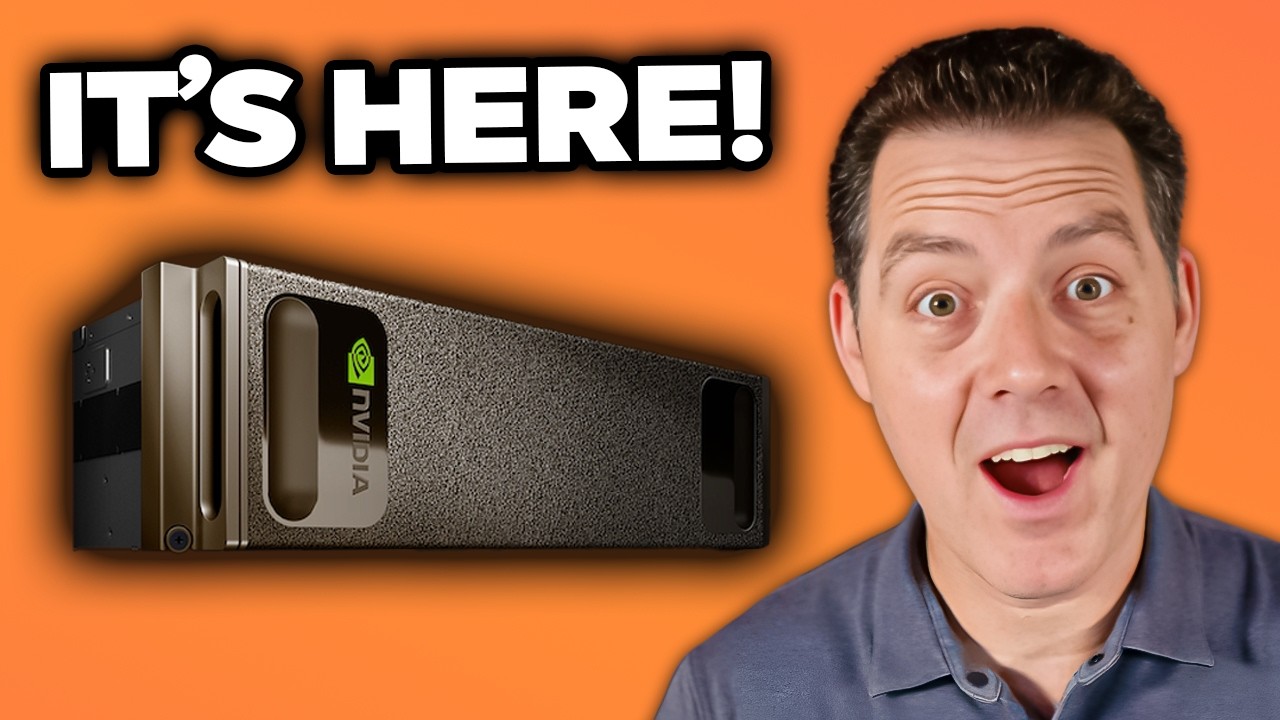
The video begins with a discussion about the potential release of GPT-6 by the end of 2025, based on a claim from a Silicon Valley insider. However, the presenter expresses skepticism about this timeline, noting that GPT-5 was a significant unifying model launch and it would be unusual to replace it so soon. The video then shifts to Nvidia’s latest AI supercomputer, the DGX Spark, which boasts five times the computational power of the original DGX-1 from 2016. Jensen Huang, Nvidia’s CEO, is shown personally delivering these machines to top AI companies, including OpenAI, highlighting the rapid advancements in AI hardware over the past decade.
Next, the video covers Anthropic’s new feature called Claude Skills, which allows users to package specialized knowledge into reusable capabilities that Claude can load on demand. This innovation enables Claude to access extensive context without bloating its memory, making it easier for users to customize the AI with specific instructions, resources, and code. The presenter likens this to a scene from The Matrix where new skills are uploaded directly into the brain, emphasizing the simplicity and power of this approach. The video also promotes Stack AI, a platform for building secure AI agents, as a sponsor.
The video then touches on various AI-related news, including a viral story about a US Army general using ChatGPT to assist in command decisions, highlighting the importance of human judgment alongside AI assistance. OpenAI is also promoting a “Sign in with ChatGPT” button for websites, which could shift the cost of AI usage to end-users and raise platform dependency concerns. A humorous incident involving 50 autonomous delivery robots getting stuck on a dead-end street in San Francisco is shared, illustrating some real-world challenges of AI deployment.
Further updates include the release of VO3.1, a video generation model with enhanced features like audio integration, longer video creation, and object insertion/removal. Sora, another video AI tool, has also improved with storyboard features and longer video generation for pro users. The video highlights exciting scientific progress where Google’s AI model, developed with Yale, generated a novel cancer hypothesis validated experimentally, showcasing AI’s potential in advancing medical research.
Finally, the video discusses futuristic military technology with Androll’s Eagle Eye helmet, which provides augmented reality battlefield visualization resembling video game interfaces. Jeff Bezos is mentioned for predicting that data centers might move to orbit within the next two decades, leveraging constant solar power and natural cooling in space. The video concludes with a visualization of Cloud Code navigating a codebase and a new paper proposing a comprehensive, testable definition of AGI, measuring progress through multiple cognitive dimensions, suggesting that GPT-5 is already over halfway to achieving AGI. The presenter invites viewers to engage with the content and thanks the sponsor Stack AI.