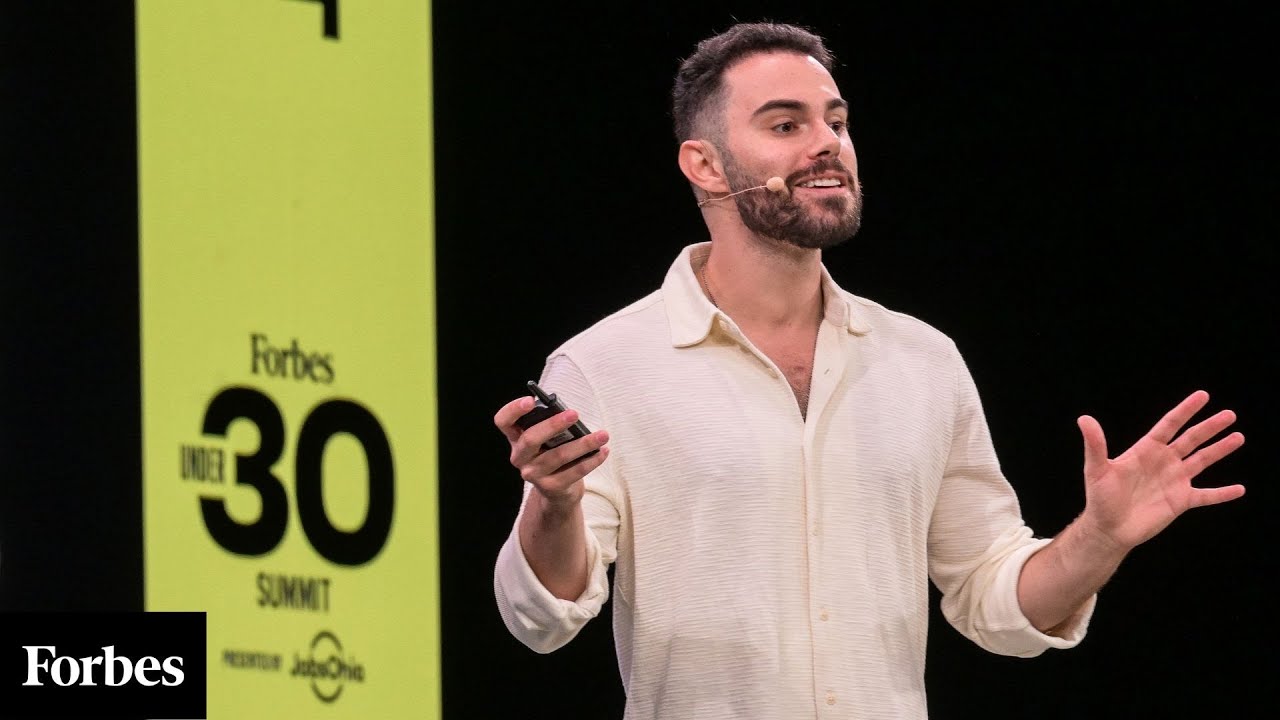
In this inspiring talk, Serio highlights the transformative power of AI for creators and predicts that by 2027, the next generation of billionaires will be creatives who leverage AI to solve problems and build innovative systems. He emphasizes that unlike previous eras where wealth was dominated by landowners or engineers, the future belongs to creative generalists—individuals who are multi-talented and able to synthesize diverse skills and knowledge. Serio argues that AI rewards these generalists with taste and versatility rather than narrow specialists, making creators uniquely positioned to thrive in the evolving economy.
Serio shares his personal journey as a multi-disciplinary creator who struggled to fit into traditional job roles because of his broad skill set. He compares creators to original GPTs (Generative Pre-trained Transformers), absorbing culture, fashion, technology, language, and behavior, and synthesizing these elements into new ideas. This broadness, once seen as a disadvantage in the old economy, is now a superpower amplified by AI. Creators who use AI to ideate, build, and adapt become superhuman, capable of achieving unprecedented leverage and impact.
The speaker recounts how, just four months after embracing generative AI, he launched the fastest-growing bootstrapped AI creative platform, generating $240,000 per month without investors, ads, or traditional funding. This success was possible because AI leveled the playing field, allowing him to build and scale his business organically by solving his own creative challenges. Serio’s story exemplifies how AI empowers creators to believe in their potential and build for themselves, bypassing traditional gatekeepers and limitations.
Serio also highlights that AI does not replace creators but augments human potential. While AI can generate content, it cannot originate ideas or creativity. This distinction is crucial because it means creators remain at the center of innovation, using AI as a tool to enhance their skills and output. He points out that creators no longer need coding skills, large budgets, or external permission to launch ventures, thanks to AI’s accessibility and scalability, which democratizes entrepreneurship.
In conclusion, Serio encourages creators to embrace AI fearlessly and build the most ambitious ideas they have ever imagined, especially those that others might have dismissed. The real magic of AI lies in its ability to empower creators to create without limits, unlocking new possibilities for innovation and success. His message is clear: the future belongs to creators who harness AI as leverage, and anyone with creative passion can become a founder and build impactful businesses in this new era.