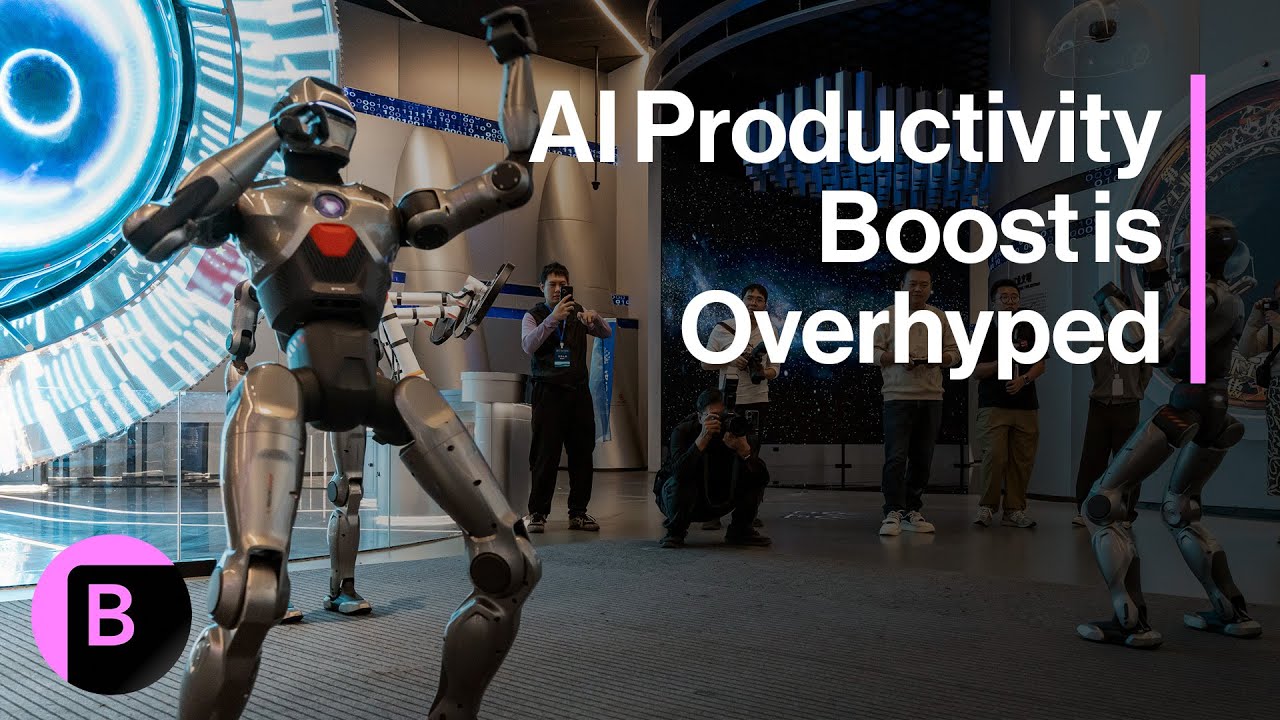
The video cautions that the current excitement around AI-driven productivity gains is likely overhyped, with inflated company valuations and a fragile, interconnected tech investment ecosystem vulnerable to market shocks and rising debt. Additionally, significant concerns about high energy consumption and costs, alongside potential inflationary pressures, suggest that the true economic benefits of AI remain uncertain and investors should be wary of an impending market correction.
The discussion centers on the hype surrounding AI-driven productivity gains, questioning whether the current excitement is justified. While acknowledging that AI may indeed bring a productivity boost, the speaker is skeptical about the scale and speed of this impact. They caution against overpricing AI companies based on overly optimistic projections that assume extraordinary profits across overlapping sectors dominated by firms like Anthropic, ChatGPT, and Gemini. The key uncertainty lies in how much real value AI will add versus simply increasing output without corresponding economic benefit.
The speaker highlights the complexity of the AI investment ecosystem, noting that many large tech companies are interlinked through co-investments and financing arrangements. This interconnectedness inflates reported profits, as gains in one company’s share value can boost another’s earnings. This creates a fragile system vulnerable to shocks, especially given the rising debt levels among major tech firms, which contrasts with their historically strong financial positions post-GFC (Global Financial Crisis). The concern is that this precarious setup could unravel if market conditions worsen.
There is also a growing sense of market complacency and euphoria around AI, with investors continuing to pour money into data centers and infrastructure despite the high costs and risks involved. The speaker suggests that this enthusiasm may be masking underlying vulnerabilities, and that the current momentum might only sustain for a limited time—perhaps a few more earnings seasons—before a correction occurs. The risk is that the market is ignoring the potential for a significant earnings “rug pull” when reality fails to meet inflated expectations.
Energy consumption is another critical issue raised, particularly the massive power demands of data centers supporting AI operations. These facilities consume energy comparable to small cities, and with oil prices hovering around $94 a barrel, the cost and environmental impact are significant concerns. The speaker links rising energy prices to inflationary pressures, emphasizing that the high cost of oil, especially for future contracts, represents a major economic challenge that could further complicate the AI growth story.
In conclusion, while AI holds promise for productivity improvements, the current market exuberance appears overhyped and fraught with risks. The intertwined nature of tech investments, rising debt, inflated valuations, and external factors like energy costs all contribute to an uncertain outlook. The speaker urges caution, suggesting that the true impact of AI on productivity and profits remains to be seen, and investors should be wary of the potential for a market correction as the hype meets reality.