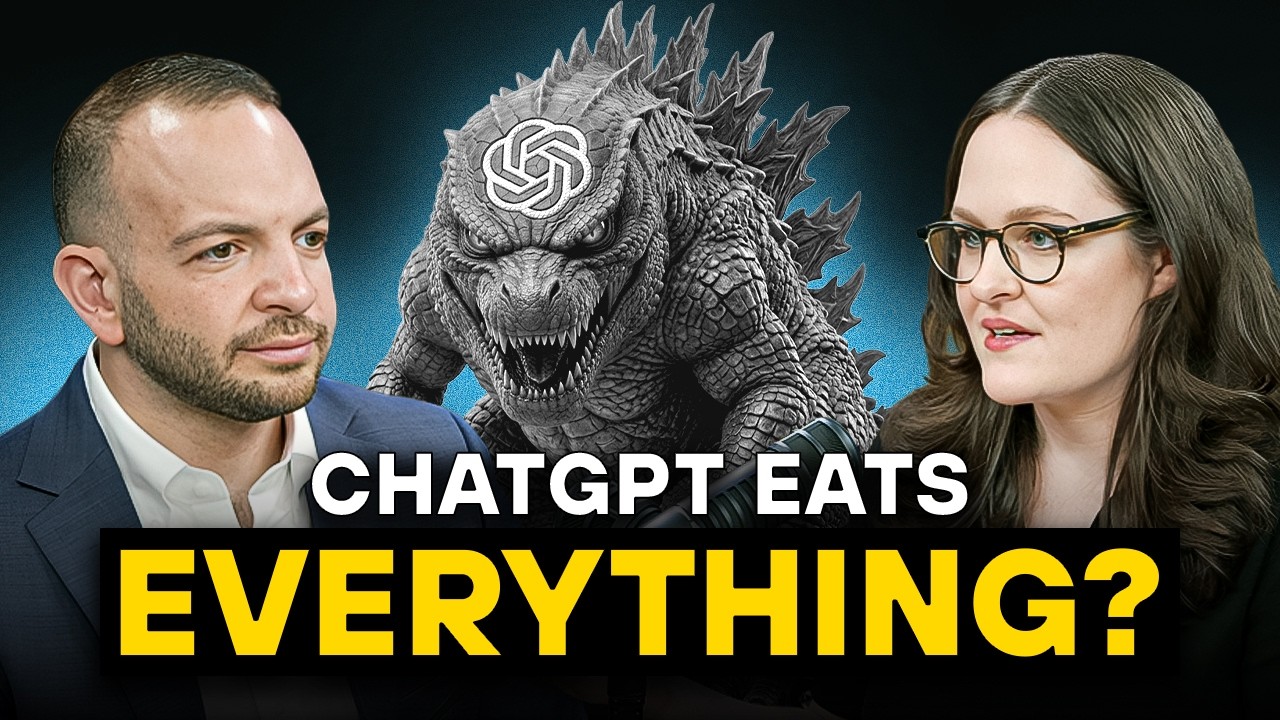
The podcast features Olivia Moore, an AI partner at Andreessen Horowitz, discussing the current landscape of AI chatbots, public sentiment towards AI, and the potential for startups to compete with major players like ChatGPT, Gemini, and Claude. The conversation begins by addressing the surprisingly negative perception of AI in the United States, with polls showing that a majority of Americans believe the risks outweigh the benefits. Moore attributes this to media coverage focusing on AI’s environmental impact and job displacement, as well as anxiety about the unknown effects of AI on creative and white-collar work. Despite these fears, she notes that actual adoption often leads to more positive experiences, and that companies using AI are often growing and hiring more, not less.
The discussion then shifts to the competitive landscape for AI applications. Moore argues that while the big labs (OpenAI, Anthropic, Google) have significant resources and distribution advantages, there is still room for startups, especially in vertical or highly specialized applications where the big players may not prioritize development. She cites examples like ElevenLabs, which has excelled in audio models despite competition from larger companies, and highlights the importance of building products that go beyond what a generic chatbot interface can offer. However, she acknowledges that for broad, horizontal applications like email or calendar management, it is increasingly difficult for startups to compete with the foundational models.
Moore and the host also explore the evolution of AI agents and tools like OpenAI’s OpenAI Claw (OpenClaw), which can autonomously execute tasks across applications. While these agentic products are powerful, Moore believes their primary users are currently developers and power users, as mainstream consumers may not have enough complex workflows to justify their use. She predicts that the architecture behind these agents will be integrated into more focused consumer products rather than becoming a ubiquitous, standalone tool for everyone. The conversation also touches on the rapid pace of change in the AI space, with trends and dominant products shifting quickly as foundational models absorb more capabilities.
Another key topic is the differentiation between the major chatbots. ChatGPT remains the dominant player in terms of user base and mainstream adoption, but competitors like Gemini and Claude are carving out niches—Gemini focusing on creative models and Claude targeting premium data sets for specialized fields. The podcast also delves into the emerging trend of AI companions and the psychological implications of bots designed to be personable or even flirtatious, raising questions about the ethics and societal readiness for such technology.
Finally, Moore discusses the impact of AI on work and business. She agrees with the view that AI intensifies rather than reduces work, enabling individuals to accomplish more but not necessarily leading to less overall labor. The rise of AI-first startups is expanding the pool of founders and shifting the archetype of successful entrepreneurs towards those who can rapidly adapt and leverage new tools. Incumbent companies are beginning to respond by integrating AI features, but Moore suggests that true disruption will come from products built ground-up with AI, rather than those with AI bolted on. Looking ahead, she expects the proliferation of agentic products and a continued evolution in how AI is integrated into both consumer and enterprise software.