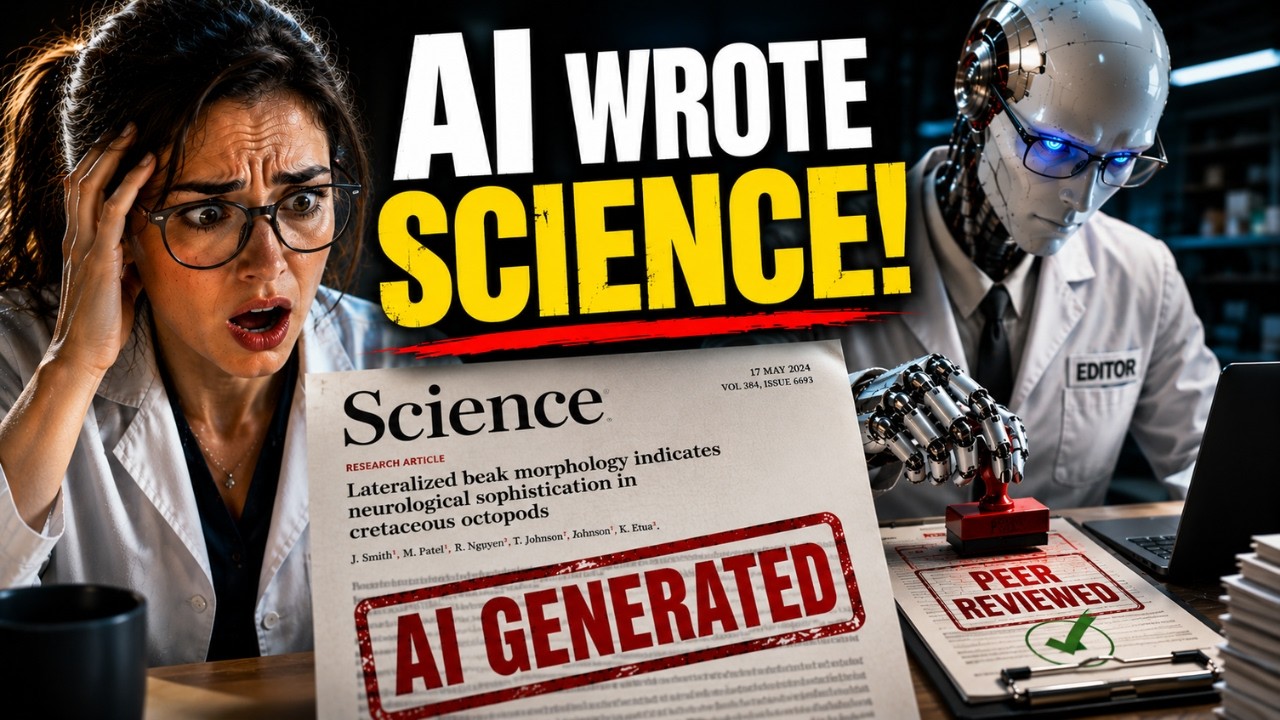
The discussion opens with concerns about the infiltration of AI-generated content, or “AI slop,” into academic research, exemplified by a recent article on Cretaceous octopuses that contained glaring factual errors and nonsensical claims likely produced by language models. This raises alarms about the integrity of scientific literature, as such AI-generated inaccuracies can mislead researchers and students alike. The problem is compounded by the fact that peer reviewers themselves increasingly rely on AI tools, creating a feedback loop where AI-generated papers are vetted by AI-assisted reviews, undermining the reliability of academic publishing.
The conversation then delves into the broader crisis in academia, highlighting systemic issues such as the “publish or perish” culture that incentivizes quantity over quality. This environment encourages researchers to use AI to rapidly produce papers, often at the expense of rigor and originality. The peer review process, largely unpaid and staffed by less experienced academics, struggles to keep up with the surge in submissions, many of which are AI-generated. This situation not only wastes valuable human resources but also dilutes the overall quality of scientific output, threatening the future of genuine innovation and knowledge advancement.
Beyond academia, the speakers explore the societal ramifications of AI and digital culture on younger generations. They note a decline in critical thinking, literacy, and social skills, exacerbated by the ease of outsourcing cognitive tasks to AI and the pervasive influence of social media. The pandemic and subsequent lockdowns intensified these trends, leading to increased social isolation and performative behaviors online. The erosion of traditional social structures and the rise of digital dependency have created a generation grappling with mental health challenges and a distorted sense of reality, further complicating their transition into adulthood and the workforce.
The discussion also touches on the corporate and economic landscape, critiquing the role of middle management and the disconnect between corporate incentives and genuine productivity or innovation. The speakers express skepticism about the lofty valuations of tech companies like SpaceX and the promises of AI replacing human labor, emphasizing that much of the hype is driven by marketing rather than substantive technological breakthroughs. They argue that current corporate structures often prioritize short-term gains and internal politics over long-term value creation, contributing to a broader societal malaise.
In conclusion, the speakers offer a sobering outlook on education and career prospects, advising students to carefully consider the value of a university degree in an era where credentials are increasingly devalued by cheating and AI assistance. They stress the importance of genuine passion and skill development over mere credential accumulation. The conversation ends with a cautionary note about the unchecked hype surrounding AI, urging vigilance and critical assessment of its purported benefits, while acknowledging the complex challenges facing academia, industry, and society at large in adapting to this rapidly evolving technological landscape.