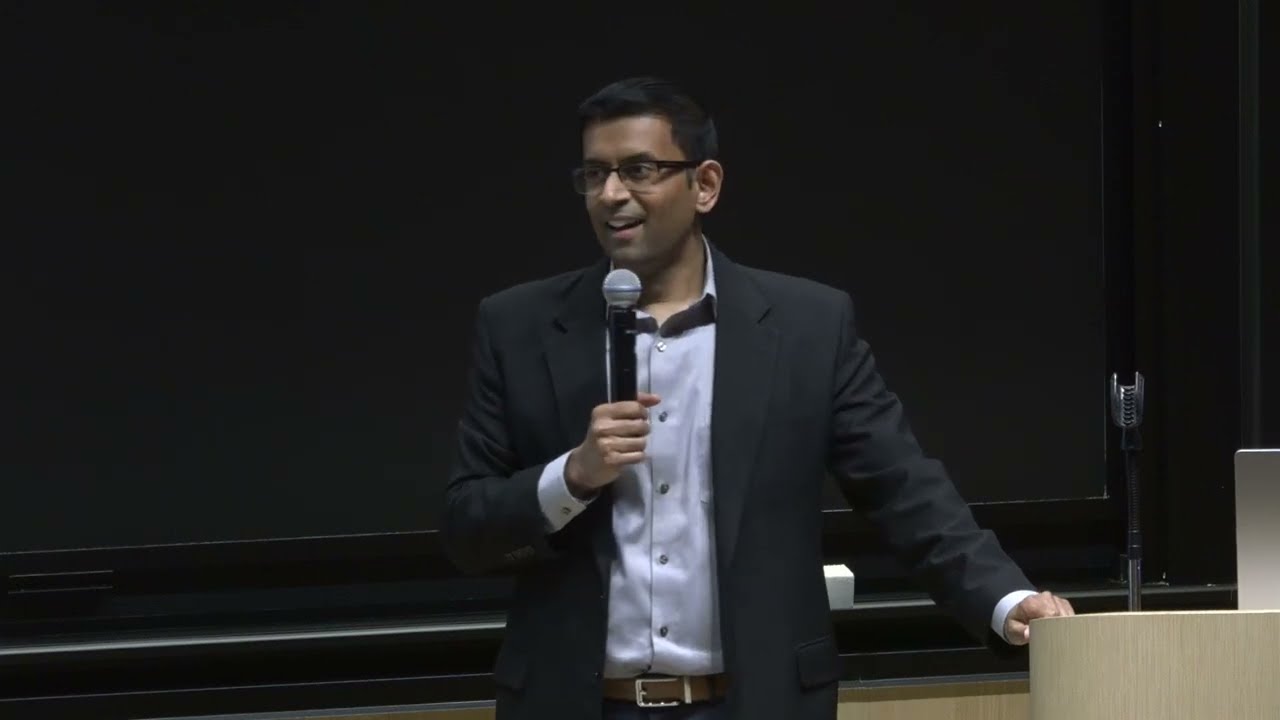
The talk, featuring Professor Arvin Narayan from Princeton, centered on his book “AI Snake Oil,” which critically examines the promises and limitations of artificial intelligence. The event, co-hosted by MIT’s Shaping the Future of Work initiative and the Schwarzman College of Computing, emphasized the importance of a balanced and evidence-based perspective on AI, especially amidst widespread hype and concerns about existential risks. Professor Narayan draws a parallel between misleading AI claims and historical “snake oil” sales, highlighting the need to distinguish between AI applications that genuinely work and those that are ineffective or harmful, particularly in high-stakes areas like hiring, healthcare, and justice.
A significant portion of the discussion focused on predictive AI, which uses data-driven models to make consequential decisions about individuals, such as predicting job performance, credit risk, or criminal behavior. Narayan expressed skepticism about the accuracy and ethical implications of these systems, citing studies showing their limited predictive power and potential for bias, especially racial bias in criminal justice algorithms. He argued that the fundamental challenge lies in the inherent difficulty of predicting human behavior and questioned the morality of making critical decisions based on such uncertain predictions.
In contrast, generative AI, exemplified by technologies like ChatGPT, was acknowledged for its broad utility and potential to assist knowledge workers and enhance creativity. Narayan shared personal anecdotes about using AI to create educational tools for his children, illustrating its practical benefits. However, he also warned about the irresponsible deployment of generative AI, including issues like hallucinations (false information generation), harmful content, and privacy violations such as AI-generated non-consensual explicit images. He stressed the need for better regulation and labor protections for the human workers involved in training these AI systems, who often face precarious and traumatic working conditions.
The conversation also addressed the broader societal and economic implications of AI, including concerns about the direction of AI research and investment. Narayan highlighted the tendency of the AI industry to focus on hype-driven, general-purpose models rather than specialized, reliable applications that could more effectively augment human capabilities and improve productivity. He advocated for a more diversified and socially conscious approach to AI development, emphasizing the importance of transparency, ethical considerations, and public interest-driven innovation to ensure AI benefits are equitably distributed and aligned with societal needs.
Finally, Narayan proposed a nuanced framework for evaluating AI applications based on their effectiveness and potential harm, urging caution against both overhyping and dismissing AI. He rejected extreme narratives of AI as either an imminent utopia or existential threat, instead envisioning AI as a “normal technology” that will evolve gradually over decades, much like past technological revolutions. The talk concluded with a call for improved communication between AI developers, policymakers, and the public to foster realistic expectations and responsible AI deployment, ultimately shaping AI to serve the common good while mitigating its risks.