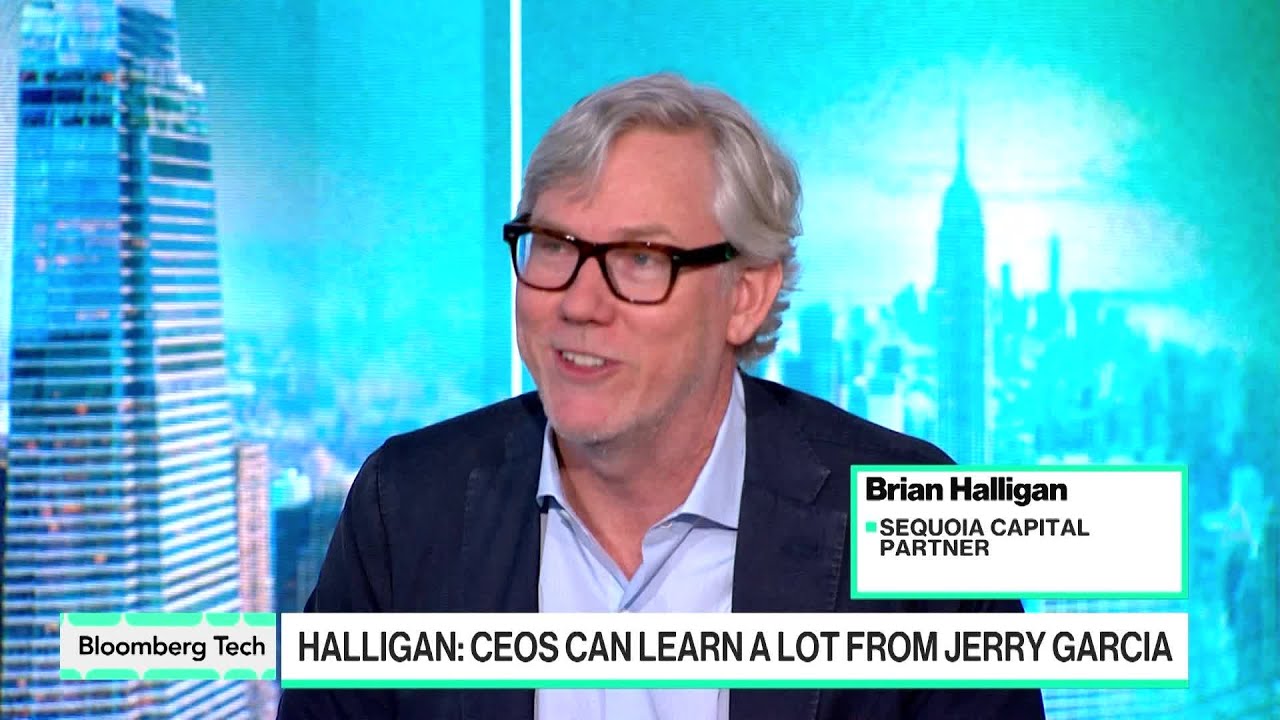
Sequoia’s Halligan advises AI startups to raise more capital now to ensure sufficient runway amid high valuations and market uncertainties, highlighting the unique growth driven by strong AI adoption and innovation. He also emphasizes the importance of community-building and original thinking, citing examples of AI startups boosting productivity and hiring aggressively, which signals a promising future beyond fears of an AI bubble.
In the discussion about the current state of private markets and AI startups, Sequoia’s Halligan reflects on the similarities and differences between today’s environment and the last tech bubble. While valuations are high early on, unlike the 1999 bubble, there is extraordinary growth and demand in startups, especially at the application level. This growth is driven by strong adoption and innovation in AI infrastructure and applications, making the current moment unique and promising despite some market anxieties.
Halligan advises founders who might be worried about a potential bubble to take a cautious yet proactive approach. He suggests that founders should consider taking some money off the table in their next funding round while also raising more capital than initially planned. This strategy is meant to ensure that companies have enough runway to survive any market downturns and come out stronger, learning from past bubbles where many promising companies failed due to insufficient funding.
Drawing an analogy from the Grateful Dead, Halligan highlights the importance of community and innovative marketing for startups. He praises Jerry Garcia for pioneering viral marketing by allowing fans to record and share concerts, creating a dedicated following without traditional marketing channels. Garcia also disrupted the ticketing industry by selling tickets directly to fans, bypassing scalpers and intermediaries. This approach exemplifies original, first-principles thinking that founders can emulate to build strong, loyal communities around their products.
Regarding the venture capital landscape, Halligan expresses confidence in Sequoia’s current leadership and positioning. He notes that Sequoia has strong investments across the AI stack, particularly in application-level startups in New York City, which is emerging as a significant hub for AI innovation. Companies like Rogo, Basis, Crosby, and Harvey are examples of AI applications targeting specific professional sectors, signaling a broader trend of AI driving productivity gains in various industries.
Finally, Halligan emphasizes that despite fears AI might reduce the need for human workers, many AI startups are aggressively hiring and growing. The mindset among these companies is to empower users and enhance productivity rather than replace humans. He points to examples like HubSpot, which uses AI to boost efficiency in customer support and research and development, illustrating the tangible productivity benefits AI can bring to enterprises. This growing productivity is expected to be a key factor in moving beyond the narrative of an AI bubble toward sustained market confidence.