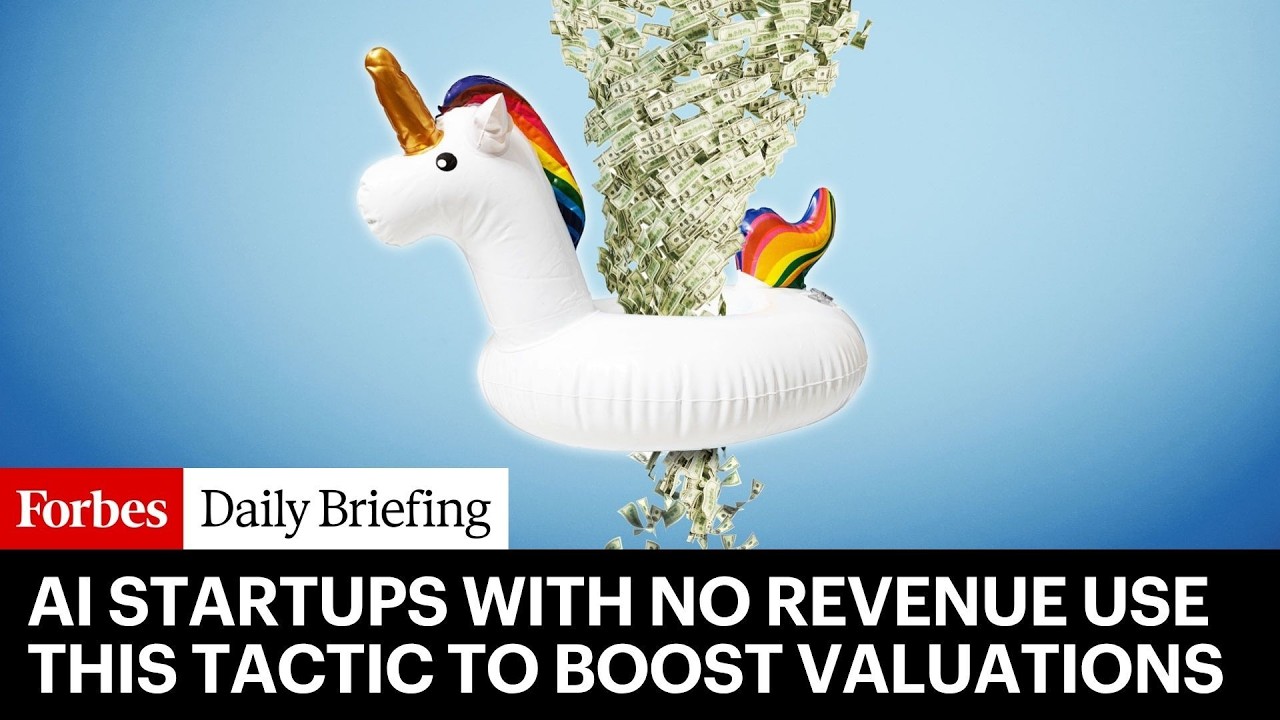
AI startups with no revenue are increasingly using tranche rounds—raising funds in multiple stages with rapidly escalating valuations—to significantly boost their market value and attract future investments and talent. This tactic, popular among frontier research labs and AI infrastructure companies, leverages the current hype in the AI market to generate impressive headlines and secure massive capital despite uncertain long-term sustainability.
AI startups with no revenue are increasingly using a funding tactic known as tranche rounds to significantly boost their valuations. A notable example is Ineffable Intelligence, founded by former Google DeepMind scientist David Silver. Despite having no immediate product or revenue plans, Silver managed to raise $1.1 billion in seed funding, leading to headlines touting a $5.1 billion valuation. However, the funding was actually raised in two separate tranches: an initial $11 million at a $55 million valuation, followed shortly by a much larger $1.1 billion round at a $4 billion pre-money valuation, representing a dramatic increase in valuation within weeks.
This approach has become common among AI startups, especially those focused on frontier research rather than product development. These “Neo Labs” require massive capital upfront to build AI infrastructure, such as GPUs, to conduct serious research. Investors are willing to accept these high valuations and tranche rounds because the AI market is extremely hot, and they want exposure to promising companies despite the risks. However, some VCs anticipate eventual pushback as valuations continue to soar.
Tranche rounds are not limited to frontier research labs but are also prevalent among AI infrastructure and application startups. For instance, Base 10, which provides AI infrastructure, raised $1.5 billion across two tranches with valuations rising from $11 billion to $13 billion. Other startups like Aru and Serval have also adopted this funding strategy. This method is seen as a way for founders to maximize valuations and generate buzz, which can help attract future investments and top talent.
The inflated valuations benefit both startups and investors in several ways. High valuations create impressive headlines that can help startups close future funding rounds and compete for skilled employees, whose compensation often includes equity. Founders can also become paper billionaires based on these valuations, although they may have to wait years for their equity to fully vest. In a market driven by sentiment and hype, a billion-dollar valuation headline carries significant weight beyond its accuracy.
Overall, the AI funding frenzy has led to a surge in massive investments in early-stage companies, with Neo Labs alone valued at over $300 billion and raising around $48 billion recently. These funds represent a substantial portion of the total startup investment outside of major players like OpenAI and Anthropic. While the long-term sustainability of these valuations remains uncertain, tranche rounds have become a popular tactic for startups seeking to supersize their market value in a highly competitive and rapidly evolving AI landscape.