The video discusses the recent crash in AI infrastructure stocks, particularly focusing on a subset of companies called Neoclouds that rent compute power to serve AI models. These companies, including CoreWeave, IREN, Cipher Digital, and Nebius, have seen their stock prices drop by over 50% in the past month. The core issue lies in the financing of the AI infrastructure layer, which requires billions of dollars and years of development, making it a high-risk investment. Unlike the application and model layers, where innovation costs are in the millions and progress is rapid, infrastructure demands massive capital and long-term commitments, often funded through a mix of equity and debt.
Big tech hyperscalers like Google, Meta, Amazon, Microsoft, and Oracle have historically funded their data center expansions through operational cash flow rather than debt. However, the growing demand for data centers is outpacing their capital expenditure capacity, creating a funding gap that private capital, private equity, banks, and competing Neoclouds are trying to fill. These deals are complex and often structured off balance sheet, as exemplified by Meta’s arrangement with Blue Capital, where Meta holds a minority equity stake and leases data center capacity while the majority of debt is borne by Blue Capital. This structure allows Meta to avoid showing the full debt on its balance sheet but exposes it to financial risks if the data center’s market value declines.
Lenders financing these infrastructure projects seek certainty, which big tech companies can provide due to their strong creditworthiness and track records. In contrast, companies like OpenAI and Anthropic, operating in the model and application layers, lack investment-grade status and must accept longer, less flexible leases to secure funding. For example, OpenAI has a 20-year lease on an 8-gigawatt data center in Ohio, with Nvidia co-signing and potentially guaranteeing up to $105 billion in case of default. The financial arrangements for data centers vary widely, making transparency and risk assessment challenging.
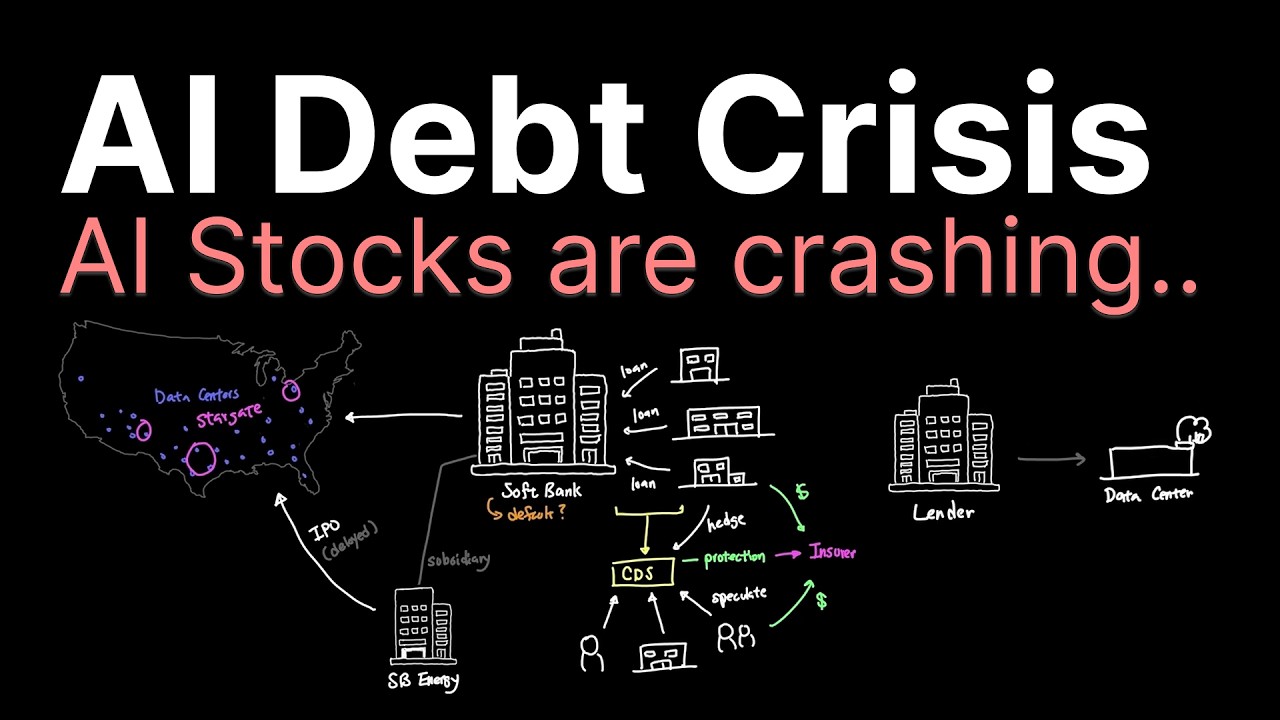
The video also highlights the broader market implications, noting that the rise in credit default swap (CDS) premiums for SoftBank, a major funder of AI data centers, signals growing investor skepticism about debt risk in this sector. SoftBank’s recent struggles, including rumored defaults on turbine orders and a delayed IPO for its energy subsidiary, underscore the financial pressures facing large investors. This environment is particularly tough for Neoclouds, which rely heavily on debt financing and lack the financial resilience of hyperscalers. Political factors, such as new data center restrictions proposed in Texas, add further uncertainty to the infrastructure landscape.
In conclusion, while AI technology and adoption continue to advance rapidly, the financial and operational risks in the infrastructure layer are intensifying. The cost of AI intelligence is dropping, and applications are growing, but the rising costs of GPU rentals and the complex, risky financing of data centers create a challenging environment for companies supporting AI infrastructure. This divergence suggests that while AI as a field may thrive, many infrastructure providers could face significant financial struggles, reflecting a nuanced and evolving AI ecosystem.