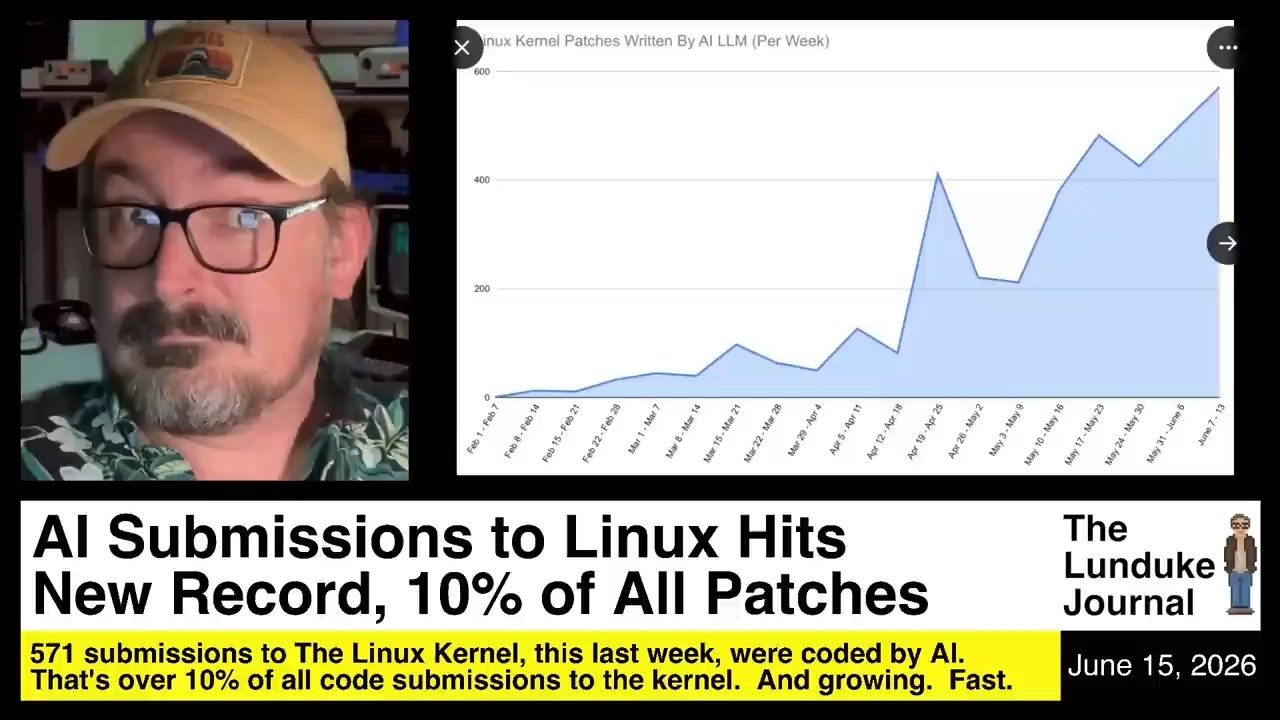
AI-generated code submissions to the Linux kernel have surged to over 10% of all patches in early June, raising concerns about code quality, maintainability, and the ability of human developers to fully understand and review these contributions. The Lunduke Journal is actively tracking this trend, emphasizing the importance of transparency and community awareness as AI’s role in Linux development continues to grow rapidly.
AI-generated code submissions to the Linux kernel have reached a new milestone, with over 10% of all patches submitted in the week of June 7th to June 13th being labeled as AI-generated or AI-assisted. This marks a rapid increase from earlier in the year when the percentage was negligible in January, rising to 0.33% in February, 0.83% in March, and then jumping dramatically to 4.07% in April following a collaboration between the Linux Foundation and Anthropic. The upward trend continued through May and into June, with projections suggesting the percentage could reach 20% or more by August if the current growth rate persists.
This surge in AI-generated contributions raises significant questions about the future of Linux kernel development. One major concern is the impact on human developers and the review process. Historically, only a small fraction of submitted code is thoroughly reviewed due to the sheer volume of patches. With AI contributing an increasing share, the total volume of code grows, potentially reducing the depth and quality of human review even further. There is also skepticism about how well developers understand AI-generated code, as many may submit patches without fully grasping the intricacies of the code they did not write themselves.
The speaker highlights a critical issue: a substantial portion of new Linux kernel code may not be fully understood by any human, especially given that the AI-generated patches are self-reported and likely undercounted. This lack of understanding could have long-term ramifications for code quality, maintainability, and security. While AI coding tools are impressive and offer exciting possibilities, the rapid integration of AI-generated code into such a critical project as the Linux kernel is causing unease among seasoned developers.
Despite these concerns, the speaker acknowledges the importance of documenting and tracking this trend, noting that the Lunduke Journal is currently the only outlet providing detailed analysis and charts on AI’s growing role in Linux kernel development. This transparency is vital for the community to understand the trajectory and implications of AI involvement in open-source software development. The speaker expresses a commitment to continue monitoring and reporting on these developments, emphasizing the need for awareness regardless of whether the outcome is positive or negative.
Finally, the speaker takes a moment to thank subscribers of the Lunduke Journal for their support, which enables this kind of in-depth coverage. They also promote lifetime subscriptions, which come with perks such as having subscribers’ names displayed on retro-themed walls, noting that some of these walls are nearly full. The speaker encourages interested viewers to subscribe soon to secure their place and expresses gratitude for the community’s ongoing support, which makes this independent reporting possible.