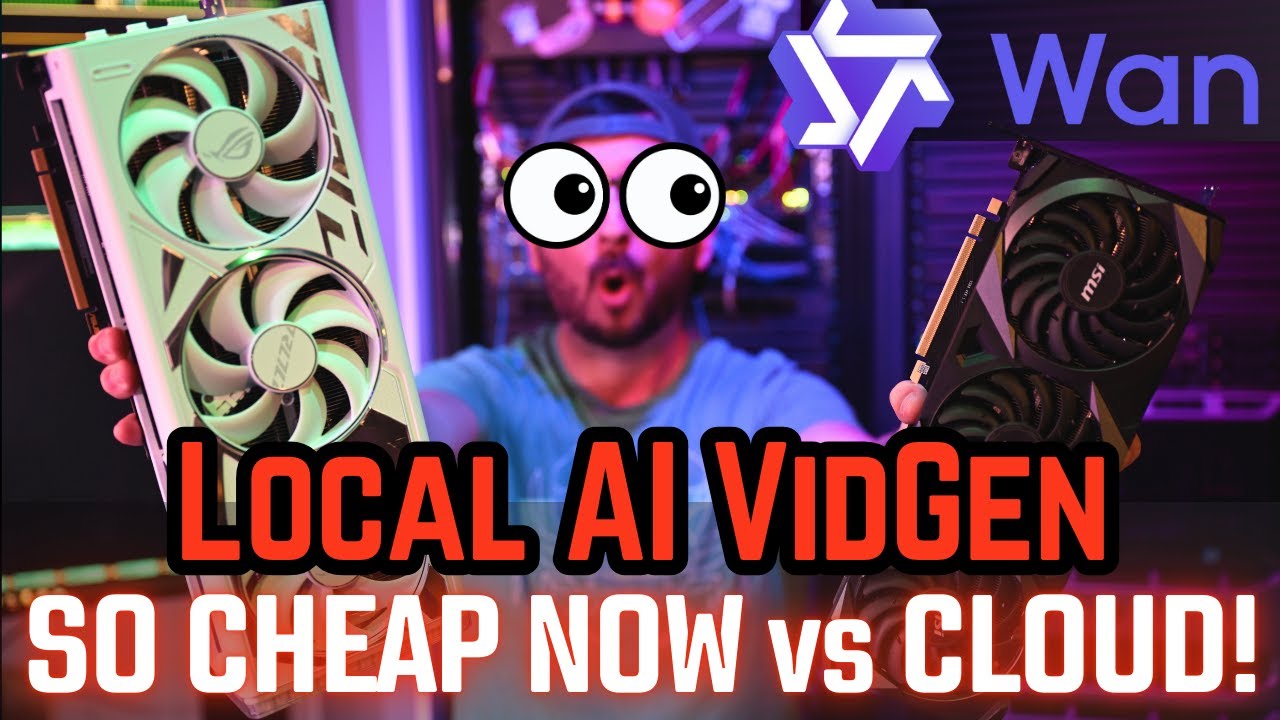
In the video, the host explores the capabilities of the WAN 2.1 AI video generator, focusing on its performance when run locally on various GPUs compared to cloud-based solutions. The testing involves multiple GPUs, including the powerful 4090, the 3090, a 12GB 3060, and a 3070, to assess their video generation times and quality. The host emphasizes that even GPUs with as little as 6GB of VRAM can produce quality video, showcasing the advancements in AI video generation technology.
The video begins with the host setting up the testing environment, running a Python server to access the WAN 2.1 model. They detail the configurations used for each GPU, including VRAM optimizations and resolution settings. The host explains the importance of selecting the right profiles and optimizations to maximize performance while minimizing VRAM usage. As the tests commence, the host monitors GPU utilization and RAM demands, noting that the generation speed improves significantly after an initial slow start.
Throughout the testing process, the host generates clips using both the 14B and 1.3B models, comparing the quality and speed of the outputs. The 4090 demonstrates impressive performance, producing high-quality video in a reasonable timeframe, while the 3090 also delivers solid results but with longer generation times. The 3060, despite its lower VRAM, manages to complete tasks, although the quality of the generated videos varies significantly based on the complexity of the prompts used.
As the host continues testing, they highlight the differences in quality between the generated videos, noting that while some outputs are visually appealing, others fall short of expectations. The 3070 surprises the host with its efficiency, generating decent quality videos despite its 8GB VRAM limitation. The video also discusses the implications of using local hardware versus cloud services, emphasizing the cost-effectiveness of local rendering, especially for users with high electricity rates.
In conclusion, the host summarizes the findings, comparing the cost per generated second of local GPU rendering to cloud services like Google Veo. They highlight the efficiency of the 4090 and the surprising performance of the 3070, while also noting the limitations of the 3060. The video serves as an informative exploration of AI video generation capabilities, encouraging viewers to consider local solutions for their video rendering needs while acknowledging the ongoing advancements in the field. The host expresses gratitude to their supporters and invites viewers to share their thoughts in the comments.