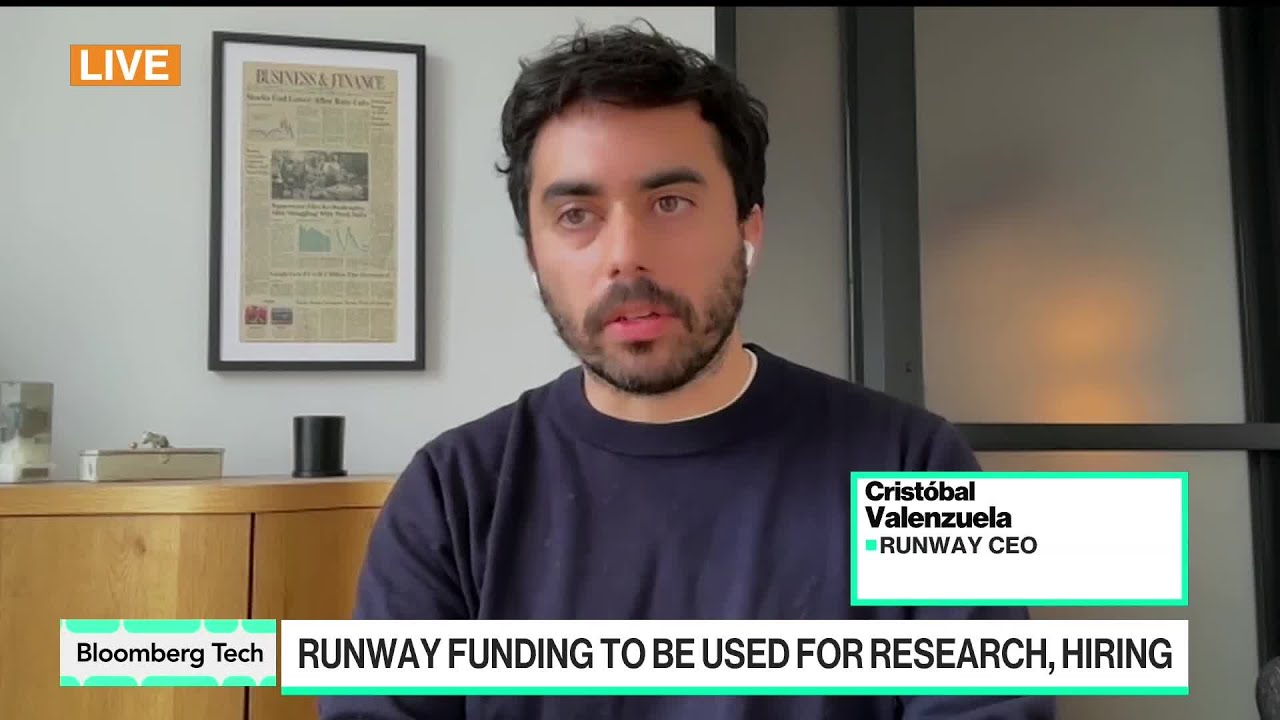
The video discusses the rapid rise in valuation of Runway, an AI video startup now valued at $5.3 billion after a major funding round. The conversation begins by highlighting the growing need for AI models that are more useful and capable, particularly those that can understand and simulate the world—so-called “world models.” The guest, Christopher, emphasizes that while language models have made significant progress, the next frontier for AI lies in video and world simulation, which Runway is focusing on with its new funding.
Christopher explains that the fresh capital will be allocated to both compute resources and talent acquisition. Runway has maintained a lean and efficient team, but with the new investment, the company plans to scale up by hiring more researchers and increasing its computing power. This is essential for advancing their models and staying at the forefront of AI development. The company’s impact has been significant despite its small size, and the new funding will help accelerate its growth and innovation.
The discussion then shifts to the types of customers Runway serves. While often categorized as an AI video generation company, Runway’s technology has broader applications, including robotics, avatars, and world simulation. Their models are used not only in media and entertainment—such as advertising, marketing, and Hollywood—but also in industries like robotics and autonomous vehicles. The company is now creating videos and media not just for human consumption, but also as training data for robots, expanding the potential uses of their technology.
Addressing the implications for the labor market, Christopher acknowledges concerns about AI-generated content and its impact on jobs. He notes that industries like advertising and Hollywood are adapting well, with many companies establishing AI departments and creating new roles that didn’t exist before. While some traditional tasks may be automated, new opportunities are emerging, and the industry is evolving to accommodate these changes. This trend is also visible in gaming, software engineering, and other sectors, where automation is simplifying entry-level tasks and creating space for more specialized work.
Finally, the conversation touches on Runway’s future, including the possibility of going public. Christopher suggests that remaining private allows the company more freedom to pursue frontier research without the constraints of public reporting. He also discusses the societal impact of AI-generated content, suggesting that people should start assuming most content is AI-generated and focus on verifying real, camera-recorded material. As AI-generated media becomes more prevalent, he predicts a cultural adjustment period but believes society is adapting quickly to this new reality.