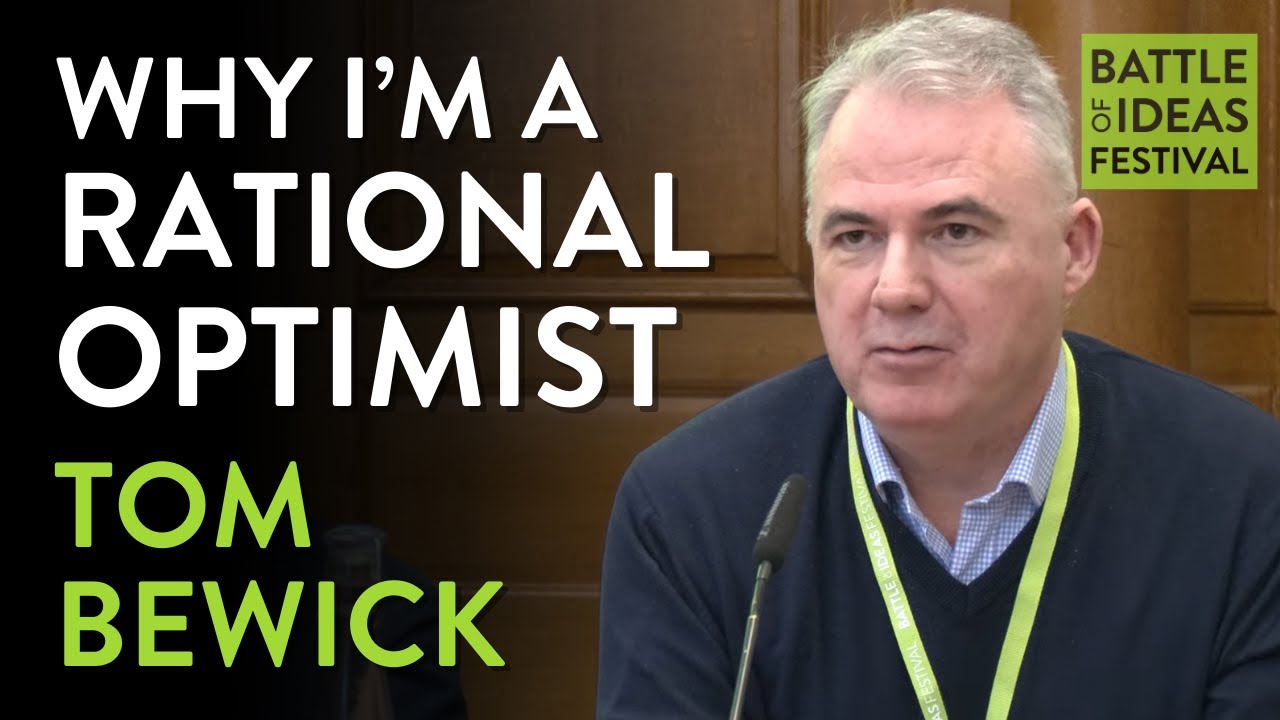
In his talk at the Battle of Ideas 2024, Tom Bewick presents a rationally optimistic view on the impact of AI on employment, arguing that historical technological advancements have typically led to new job creation rather than widespread unemployment. He critiques both utopian and pessimistic perspectives, emphasizing the importance of adaptability and forward-thinking policies in navigating the future of work shaped by AI.
In his talk at the Battle of Ideas 2024, Tom Bewick presents a nuanced perspective on the impact of artificial intelligence (AI) on employment and productivity. He categorizes the debate into three main viewpoints: utopians, technology pessimists, and rational optimists. Bewick identifies himself as a rational optimist, arguing that while the conversation around AI and job displacement is complex, it is essential to consider the historical context of technological advancements and their effects on labor.
Bewick begins by discussing the utopian perspective, which envisions a future where technology eliminates the need for physical labor entirely. He references Thomas More’s concept of utopia and highlights John Maynard Keynes’s 1930 essay, where Keynes predicted that advancements in productivity would lead to a significant reduction in working hours by 2030. However, he notes that Keynes also expressed concern about the potential societal implications of having too much leisure time and not enough work.
In contrast, Bewick addresses the views of technology pessimists, exemplified by Daniel Susskind’s book “A World Without Work.” Susskind argues that AI and automation will fundamentally transform the job market, necessitating policies like universal basic income to address the resulting unemployment. Bewick critiques this perspective, suggesting that it overlooks the historical resilience of labor markets in adapting to technological changes.
As a rational optimist, Bewick emphasizes that fears of technological unemployment are not new and have been present throughout history. He cites examples from the past, such as the introduction of the stocking frame and the microprocessor, which were initially met with resistance but ultimately led to new job creation and economic growth. Bewick believes that each major technological transition has historically resulted in the emergence of new industries and job opportunities, rather than widespread unemployment.
In conclusion, Bewick argues that predicting the future of work is inherently uncertain, as demonstrated by past predictions that failed to foresee the rise of social media and digital marketing jobs. He asserts that technology should not be viewed as a threat to employment but rather as a catalyst for innovation and new opportunities. By embracing a rational and optimistic outlook, Bewick encourages a balanced discussion on the role of AI in shaping the future of work, advocating for adaptability and forward-thinking policies.