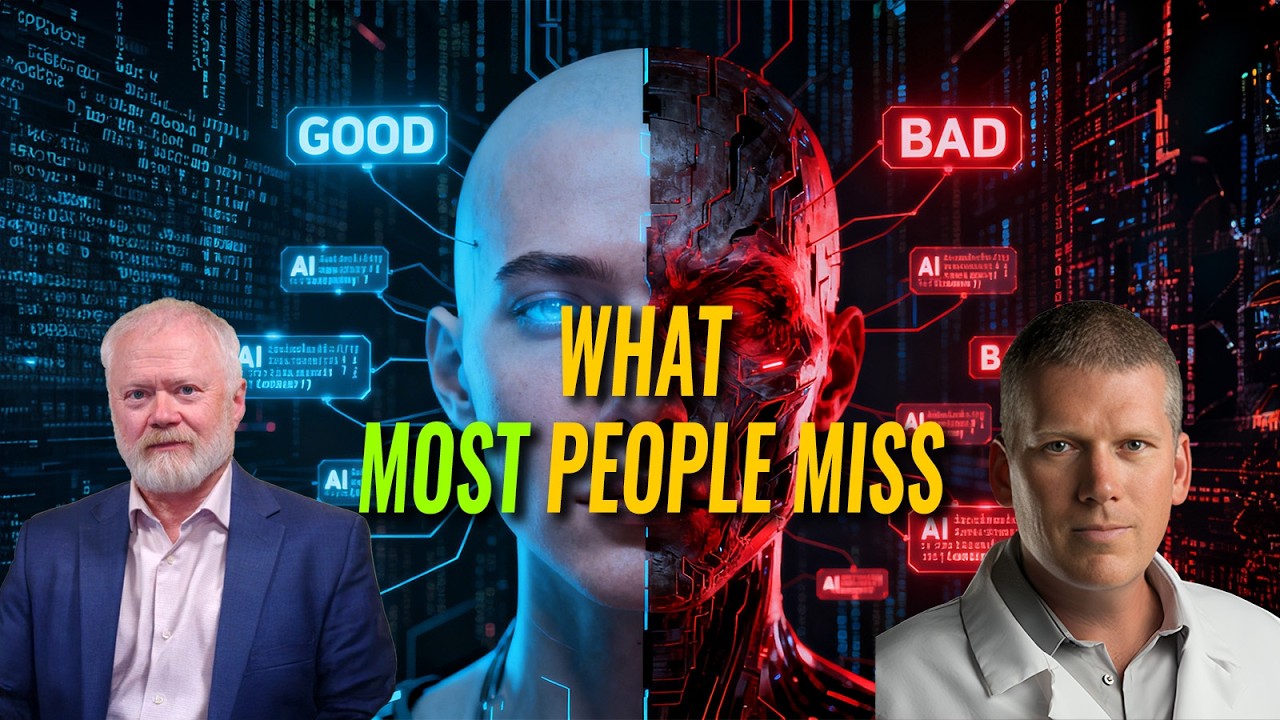
In this conversation, Chris Martenson of Peak Prosperity interviews Mike Adams of Natural News about the rapid evolution and impact of artificial intelligence (AI) on society, business, and the global economy. Adams, who has hands-on experience building AI systems and platforms, argues that AI is advancing at a geometric pace, far outstripping previous expectations. He points to recent events, such as Jack Dorsey’s decision to replace 40% of his workforce at Block with AI, as evidence that mass automation is already underway. Adams emphasizes that AI doesn’t need to be perfect to replace humans—it just needs to be better, which is increasingly the case for many white-collar and middle-management roles.
The discussion highlights how AI’s capabilities have moved far beyond simple word prediction. Adams describes how modern large language models (LLMs) can analyze complex codebases, provide business logistics solutions, and generate high-quality, research-backed content with minimal human intervention. He shares his own experience building Brightlearn.ai, an open-source book publishing platform powered entirely by AI, which has produced tens of thousands of well-researched books. This demonstrates that AI is not just a curiosity but a transformative force capable of performing tasks that previously required significant human expertise and time.
Martenson and Adams explore the economic implications of rapid AI adoption, particularly the “doom loop” where job losses among high-income workers lead to reduced discretionary spending, which in turn causes further business contractions and more layoffs. Adams warns that this cycle is accelerating too quickly for society and the economy to adapt smoothly, potentially leading to widespread disruption. He notes that while some companies may use AI to augment their existing workforce, many will inevitably use it to replace employees, fundamentally altering the job market and the nature of work.
The conversation also delves into the geopolitical dimension, with Adams asserting that China has surpassed the United States in many areas of technology, including AI. He credits China’s merit-based education system and massive output of STEM graduates for its technological leadership. Unlike the U.S., which often relies on proprietary, subscription-based AI models, China is releasing powerful open-source models that are free, customizable, and increasingly superior. This could disrupt the global AI landscape, especially as U.S. companies face restrictions on using certain domestic AI providers for military or surveillance applications.
Finally, both speakers reflect on the broader societal impacts of AI, including its potential to revolutionize education and raise expectations for human cognition and productivity. Adams observes that working with AI can make individuals less tolerant of inefficiency and poor reasoning in others, as AI raises the bar for what is possible. They agree that learning to use AI is now the most important skill for anyone wishing to remain relevant in the workforce. The conversation ends with a call to action: embrace AI, experiment with its tools, and stay curious, as those who fail to adapt risk being left behind in a rapidly changing world.