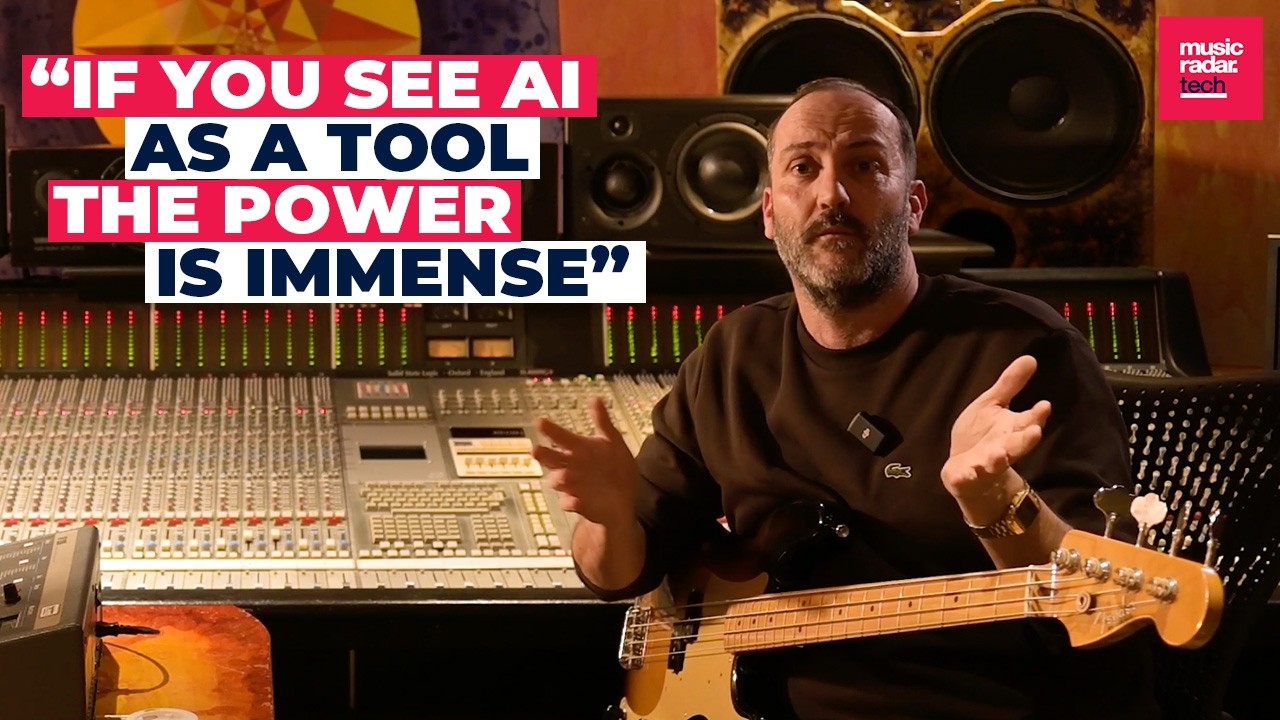
Alan Braxe and Fred Falke discuss how their initial skepticism about AI in music shifted to excitement after experimenting with tools like Suno, which they now use to enhance creativity and streamline production. They highlight the power of AI for tasks like sound isolation and rearrangement, viewing it as a valuable complement to traditional techniques rather than a replacement.
Alan Braxe and Fred Falke discuss their experiences with new music technology, particularly focusing on AI tools like Suno. Initially, Braxe admits he was skeptical about AI in music, seeing it as a potential replacement rather than a creative tool. However, after seeing a friend use Suno in a studio setting, his perspective shifted. He realized that, when approached with a clear creative vision, AI can be a powerful asset, much like how producers in the 1960s would direct musicians with written charts.
Braxe compares using AI tools to searching for a specific restaurant when you know exactly what you want to eat, as opposed to aimlessly browsing. He emphasizes that AI is most effective when the user has a precise idea of the desired outcome, such as a particular snare sound. In these cases, AI can instantly provide the needed element, saving time that would otherwise be spent sampling or searching for sounds.
He also highlights recent advancements in AI music technology, such as the ability to isolate a dry vocal from a wet vocal track by removing reverb and delay. This kind of feature, he notes, is extremely useful and demonstrates the immense power of these tools. Braxe sees the combination of cutting-edge AI and vintage gear as an exciting development in music production.
Fred Falke shares a similar enthusiasm for Suno, having started to use it about six months ago. He often inputs his own instrumentals into the AI and asks it to rearrange them, finding that even if the results aren’t perfect, there are always interesting elements to extract and resample. This process allows for creative experimentation and the discovery of new ideas that might not have emerged otherwise.
Both artists reflect on the evolution of music technology, noting that while sampling began as a tangible process involving physical media, AI-generated sounds now emerge from “nowhere,” without the need for traditional sampling. They find this leap both fascinating and exciting, though they use AI tools selectively—perhaps for 15 to 20 percent of their work—balancing innovation with traditional methods.