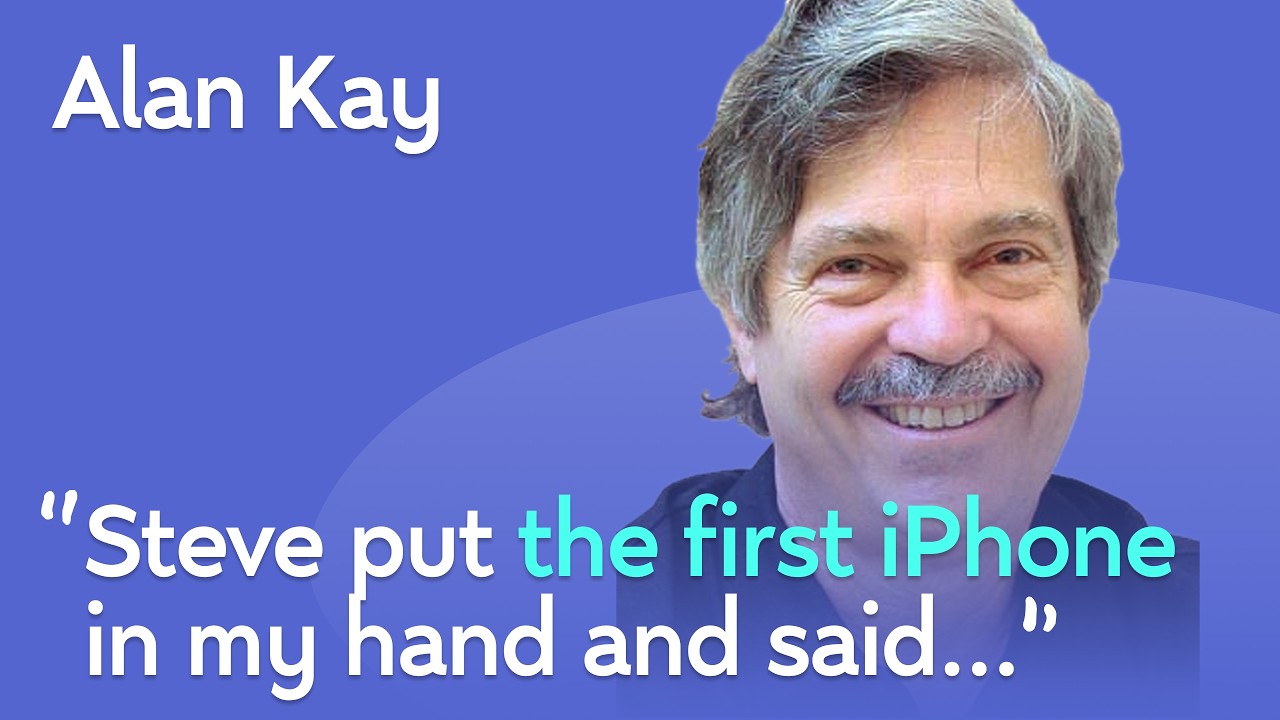
Alan Kay, a Turing Award-winning pioneer in personal computing, shares insightful stories from his career, highlighting the groundbreaking work done at Xerox PARC and his interactions with Steve Jobs. Kay recounts how he once told Jobs that the Macintosh was the first personal computer “good enough to be criticized,” a remark that Jobs remembered for decades. He reflects on the culture at Xerox PARC, emphasizing the importance of hiring only great people, fostering synergy over rivalry, and maintaining a flat organizational structure. The lab’s unique environment included weekly meetings with Chinese food and bean bags to encourage relaxed yet productive discussions, and a rigorous vetting process for new hires to ensure excellence.
Kay explains the origins of Xerox PARC’s success, tracing it back to the ARPA community’s vision of computers as “intellectual interactive amplifiers” networked worldwide. This vision led to simultaneous inventions of personal computers, networking technologies like Ethernet, and graphical user interfaces (GUIs). He describes how Xerox’s history as a copier company influenced its investment in long-term research, with Jack Goldman establishing PARC far from corporate headquarters to allow freedom and innovation. The lab’s culture encouraged problem finding rather than just problem solving, with a significant portion of funding dedicated to exploratory research and graduate student development.
The interview delves into Steve Jobs’ 1979 visit to Xerox PARC, where he saw the Alto computer and its GUI, which heavily influenced Apple’s future products. Although Jobs was not a technical expert, he had a keen sense of design and user experience, which helped Apple flourish. Kay praises Jobs’ understanding of desire and taste, contrasting him with other tech leaders like Bill Gates. He also recounts Jobs’ later involvement with Pixar, highlighting Jobs’ patience and commitment to long-term innovation in computer animation, which was a remarkable period distinct from his Apple years.
Kay touches on the broader computing culture of the time, including the use of marijuana and psychedelic experiences in the Bay Area, though he notes that such drug use was not prevalent at Xerox PARC. He shares personal anecdotes about his own limited experience with marijuana and his lifelong passion for playing guitar. The conversation also covers influential thinkers like Bertrand Russell and Jerome Bruner, whose writings and ideas deeply impacted Kay’s intellectual development and approach to research and education.
Finally, Kay offers advice to young people interested in computing, cautioning that the current environment is less conducive to fundamental research compared to the past. He encourages broad learning without immediate practical goals and stresses the importance of problem finding over problem solving. Kay reflects on the challenges posed by modern social media and technology, advocating for thoughtful engagement with knowledge and creativity. The interview closes with Kay’s appreciation for the enduring impact of visionary research and the importance of fostering environments that support innovation and intellectual growth.
Useful Links