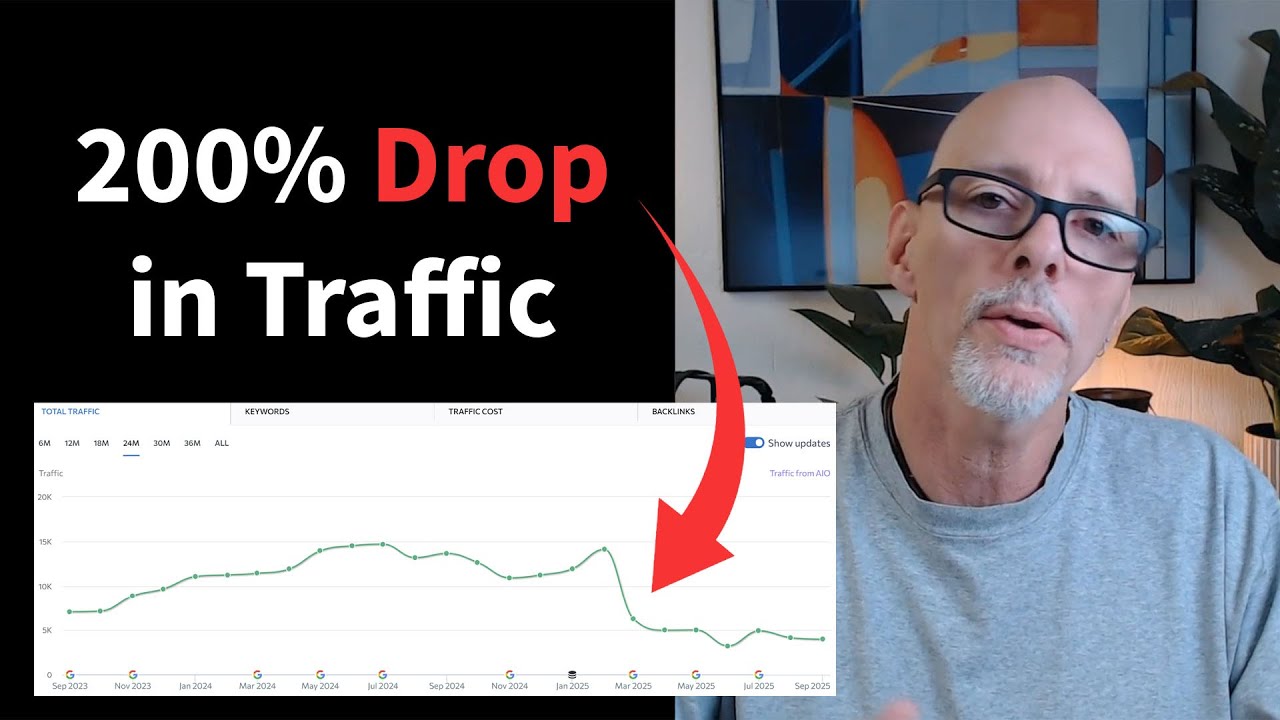
The video discusses a significant decline in website traffic for Alaska tourism websites, attributing this drop to the rise of AI-generated search overviews. These AI overviews provide direct answers to users’ queries at the top of search engine results, reducing the need for users to click through to individual websites. This phenomenon, known as zero-click search, has caused traffic to tourism websites to plummet by 100 to 200% almost overnight. The impact became especially noticeable after Google integrated its AI Gemini with the Chrome browser in April 2025, with reports indicating that 60% of all searches are now answered by AI without users visiting websites.
The presenter highlights specific examples from Alaska, showing how major tourism websites like travelalaska.com and Denali Park Village experienced sharp declines in traffic during months when visitor numbers typically rise. These trends are consistent across the board, affecting large statewide sites, regional tour operators, and small local businesses alike. The loss of website visits directly affects bookings, making it crucial for tourism businesses to adapt to this new search landscape where AI overviews dominate.
To combat these challenges, the video offers practical strategies for tourism businesses to regain visibility and traffic. One key recommendation is to update website content by removing vague, salesy language and instead providing detailed, direct answers to common questions. For example, instead of simply stating that dog mushing tours are available, businesses should specify tour durations, included amenities, and other relevant details. This detailed content helps AI better recognize and feature their offerings in search results.
Another important tactic is to actively collect and diversify customer reviews across multiple platforms such as Google, TripAdvisor, and Yelp. Since AI systems use reviews to recommend businesses, having a broad and positive review base can improve a company’s chances of being featured in AI-generated answers. Additionally, optimizing Google Business Profiles is essential. Businesses should ensure their profiles are complete, accurate, and regularly updated with correct categories, contact information, business hours, and location-specific keywords to enhance their visibility in AI search results.
In conclusion, the video emphasizes that AI-driven search is reshaping how potential customers find tourism services, and while this shift has caused significant traffic losses, businesses can adapt by optimizing their online presence. By implementing detailed content, gathering diverse reviews, and maintaining up-to-date Google Business listings, Alaska tourism operators can improve their chances of being cited in AI overviews and regain lost traffic and bookings. The presenter encourages viewers to stay informed and proactive in this evolving digital landscape to succeed in the new era of AI search.