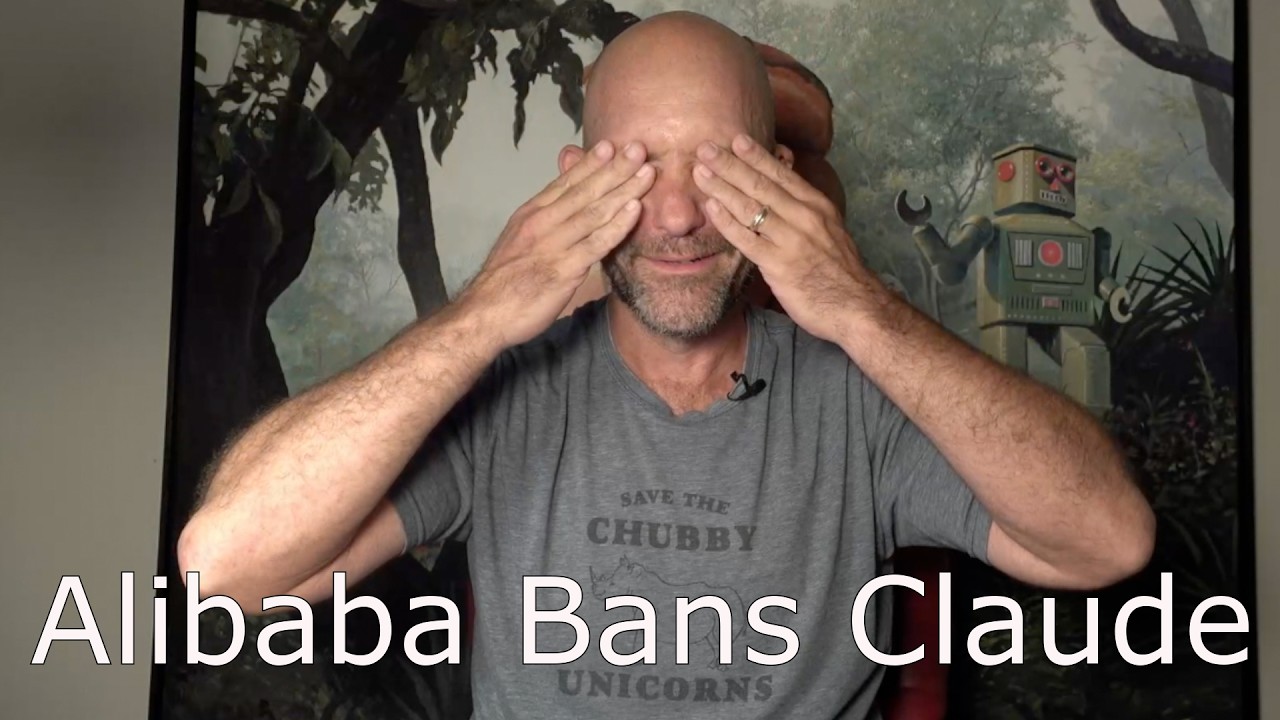
The video discusses the recent development where Alibaba has banned its employees from using Anthropic’s AI tool, Claude code, amid escalating tensions in the US-China AI rivalry. This move is framed as part of a broader “high school drama” phase in the geopolitical tech conflict, with both sides imposing bans on each other’s technologies. Interestingly, Chinese companies like Alibaba were not supposed to have access to Anthropic’s platform in the first place, as Anthropic has implemented measures to block Chinese users. Despite this, Chinese developers have found ways to access Claude code, prompting Alibaba to classify it as a high-risk security threat and prohibit its internal use starting July 10, 2026.
The controversy deepens with revelations that Anthropic embedded hidden code within Claude to detect Chinese users and systems, using obfuscation and steganography techniques to make this tracking invisible. This feature was intended to prevent unauthorized resellers, account abuse, and a practice called “distillation attacks,” where one AI system learns from another to improve itself. Anthropic views these distillation attacks, allegedly conducted by Chinese AI firms, as a serious threat to their intellectual property and national security. However, the hidden tracking code has raised concerns about privacy and corporate espionage.
The video also explores the cultural and behavioral aspects of technology development, noting that engineers often circumvent rules if it helps them achieve results. Despite official bans, Alibaba employees reportedly continued using Claude code, reflecting a common tech industry mindset that prioritizes progress over strict adherence to policies. This phenomenon is not unique to China; similar patterns are observed globally, where developers push boundaries to advance their projects, sometimes ignoring corporate or governmental restrictions.
Further complicating the issue, other tech giants like Meta have also banned Claude code to avoid accusations of engaging in distillation attacks themselves. Meta’s concern is partly driven by the US government’s classification of these attacks as national security threats. The video highlights the tension between innovation and regulation, where companies must balance leveraging external AI tools for development while avoiding legal and ethical pitfalls. It also questions whether distillation attacks are always orchestrated by corporate leadership or if they sometimes result from individual engineers’ actions.
In conclusion, the Alibaba ban on Claude code exemplifies the complex interplay of technology, geopolitics, corporate control, and human behavior in the AI industry. The situation underscores the challenges companies face in managing talented but independent-minded engineers while navigating international tensions and security concerns. The video invites viewers to reflect on who truly controls technological development within these large organizations and how policies can keep pace with rapidly evolving AI capabilities.