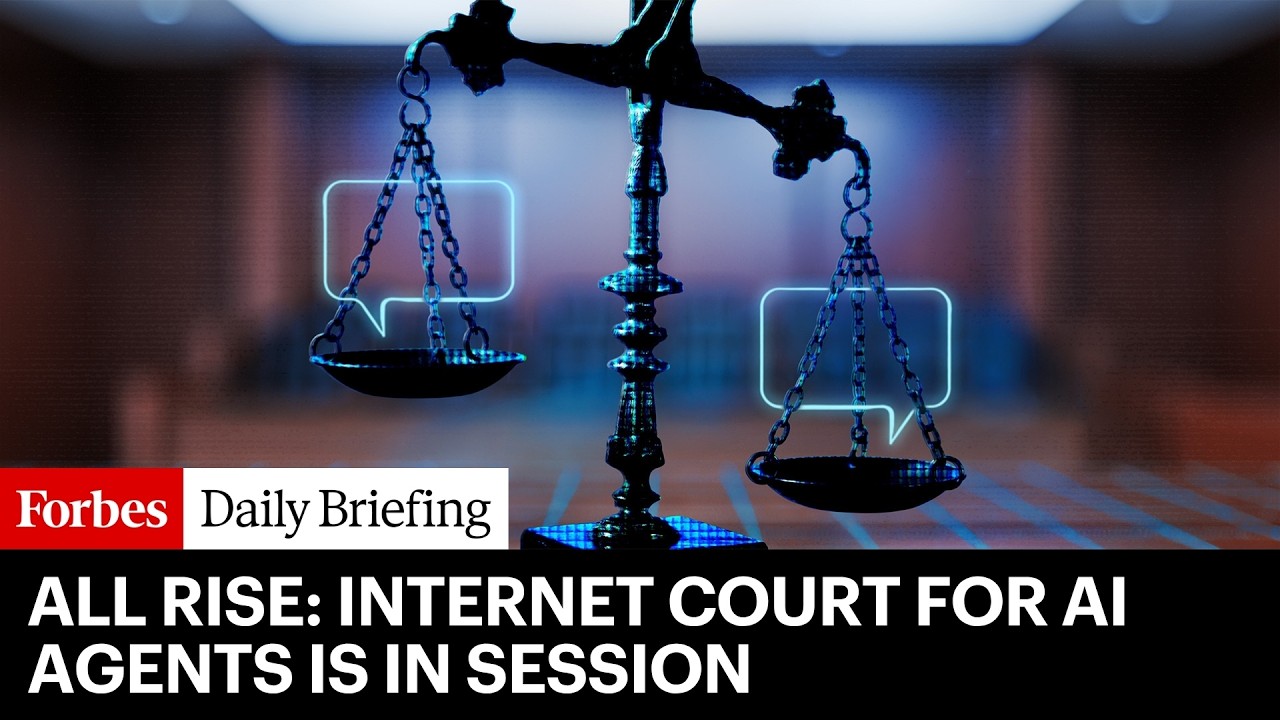
The video discusses the emerging role of AI agents in everyday commerce, highlighting how these cloud-connected assistants will soon handle a wide range of tasks, from managing emails and booking flights to making autonomous stock trades and sourcing inventory for businesses. Companies like Robinhood, SAP, and Amazon are already deploying AI agents to operate at machine speed, negotiating deals and making purchases on behalf of users. Major AI and crypto firms such as Anthropic, OpenAI, Coinbase, and Circle are actively working to bring this vision of agent-driven commerce to life.
However, the video raises concerns about the potential complications that arise when AI agents make mistakes or encounter disputes, such as receiving damaged goods or incorrect orders. Since AI can hallucinate and commerce involves more than just financial transactions, these issues could lead to costly and complex conflicts. To address this, the Gen Layer Foundation, led by CEO David Rudor, has developed a blockchain-based solution called Internet Court, designed to adjudicate disputes between AI agents without human intervention.
Internet Court functions as a system that helps AI agents create contracts with clear terms and, when disagreements occur, uses an AI jury to evaluate evidence and deliver verdicts quickly. This approach is particularly suited for smaller transactions where traditional legal action would be impractical or too expensive. Albert Castellana, CEO of Chain Layer Labs, emphasizes that the goal is not to replace the legal system but to offer an economical alternative for resolving disputes that might otherwise be ignored due to cost.
The potential market for AI-mediated commerce is vast, with AI-driven traffic to retail sites having increased significantly and projections estimating that AI agents could handle trillions of dollars in global consumer commerce by 2030. While most current infrastructure focuses on seamless transactions, Internet Court is already being used in niche applications, such as verifying the authenticity of disputed images on social platforms like Collective Memory, demonstrating its broader utility beyond just commercial disputes.
Ultimately, Internet Court aims to automatically intervene when AI agents disagree, ensuring smoother operations in complex scenarios. For example, if an AI agent commissions a logo design that turns out to be plagiarized, Internet Court can enforce upfront agreements, hold payments in escrow, and resolve disputes efficiently before funds are released. This innovative system represents a crucial step toward managing the inevitable challenges of an AI-driven commercial future.