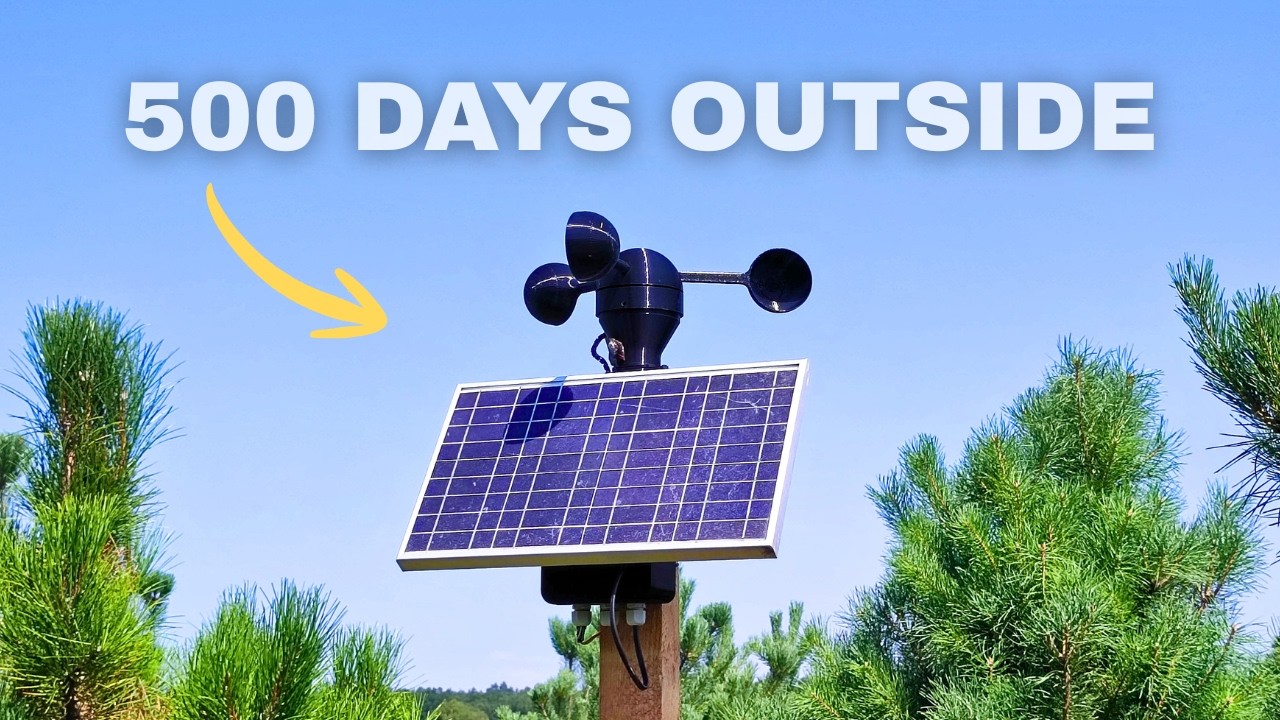
The video documents the creator’s journey with a DIY camera weather station that has been outdoors for over 500 days. Initially confident about the project, the creator inspects the station to evaluate what worked and what didn’t. The 3D printed enclosure made from cheap PETG filament proved durable and waterproof, while some sensors like the temperature sensor showed signs of rust, and the rain sensor was completely destroyed. The wind speed sensor, despite skepticism, performed well with no rust issues. The main problem identified was a failing battery, which was replaced with a new battery pack made from two 18650 cells spot-welded together, paired with a tiny, efficient solar charger module.
The creator highlights the benefits of using a spot welder for battery assembly, emphasizing its safety and ease compared to soldering. After assembling the new battery pack and solar charger, the weather station was tested and successfully charged outdoors. To improve power efficiency, the creator removed the inefficient linear voltage regulator and connected the Raspberry Pi Pico directly to a DC-DC converter on the board. This change, combined with programming improvements using AI-assisted coding and switching to a Raspberry Pi Pico 2W, drastically reduced power consumption from 44mA active to 2.5mA in deep sleep, extending battery life significantly.
The project’s schematic and code are shared openly on GitHub, encouraging others to replicate or improve the weather station. The creator redesigned the enclosure to be smaller and more compact, again using affordable PETG filament and 3D printing. Additional improvements included upgrading the temperature sensor from DHT11 to DHT22 for better accuracy and adding cable glands and protective measures like hot glue and cable wraps to ensure waterproofing and durability. Despite these upgrades, the weather station initially faced Wi-Fi connectivity issues, which were resolved by relocating it closer to the home router.
During a trip to a LAN party in Spain, the creator remotely monitored the weather station but noticed it stopped working after a couple of days. Investigation revealed that the deep sleep mode in MicroPython on the Raspberry Pi Pico was unreliable. To fix this, the code was modified to use light sleep mode with a watchdog timer to reset the device if it stopped responding, greatly improving stability. The weather station has since been running reliably for over a week, providing real-time weather data accessible publicly via a dedicated website.
The video also includes a sponsored segment featuring Anbot’s robotic lawn mower, which uses GPS RTK and vision systems to autonomously mow lawns and collect grass clippings or mulch them. The creator praises the mower’s ease of setup, obstacle avoidance, and time-saving benefits. Overall, the video showcases the iterative process of building and refining a practical DIY weather station, sharing lessons learned, technical details, and encouraging viewers to build their own with freely available resources.