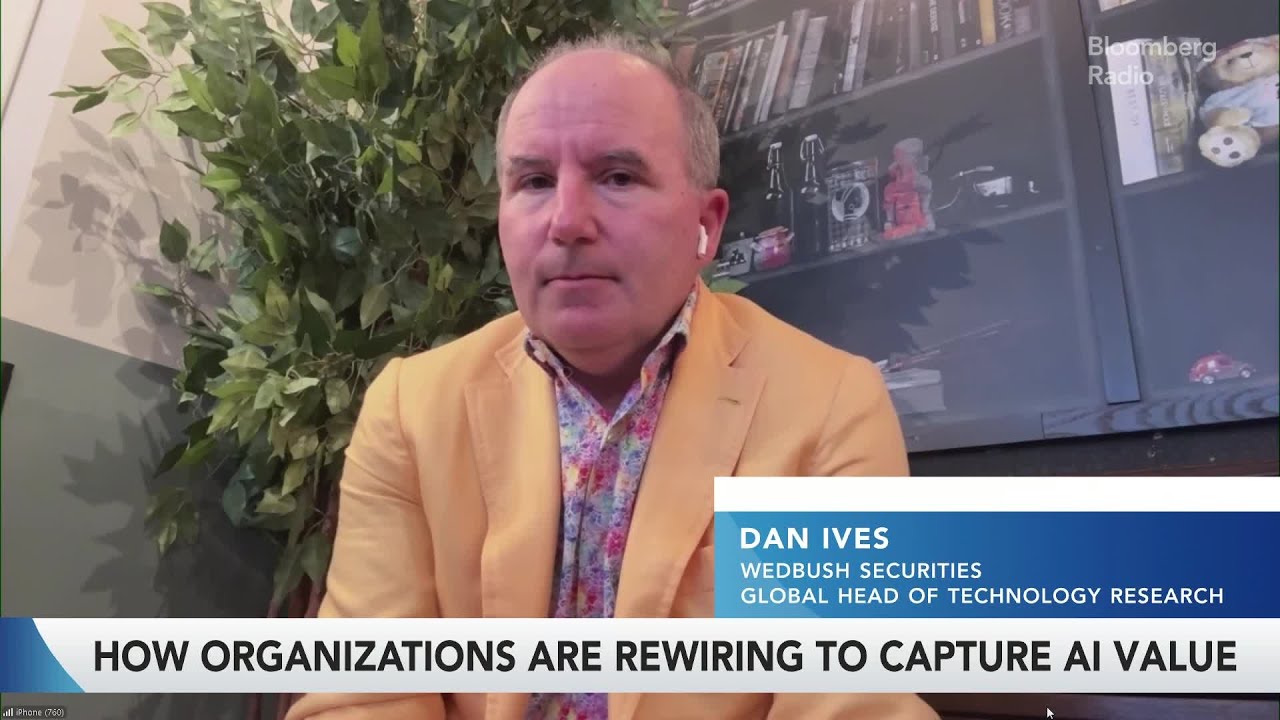
The discussion centers on the recent shift in market capitalization rankings among major tech companies, with Alphabet (Google’s parent company) surpassing Apple to become the second-largest company after Nvidia. The conversation highlights the physical manifestation of the AI revolution, particularly through autonomous robots and platforms, which are seen as the next stage of technological advancement. Nvidia’s role is emphasized, not just as a chip supplier but as a key player in developing end-to-end autonomous platforms that could outperform human drivers, similar to Tesla’s robotaxi ambitions.
Attention then shifts to Microsoft, with analysts noting that the market is underestimating the company’s growth potential, especially in its high-margin cloud business, Azure. The financial community is believed to be overlooking significant incremental growth and cash flow, with the enterprise AI revolution largely centered in Redmond, Microsoft’s headquarters. The conversation suggests that Microsoft’s revenue and cash flow growth are likely to exceed current industry models, making it a strong performer in the ongoing tech boom.
Apple’s position is discussed in the context of its massive installed base, with over 1.5 billion iPhones and 2.4 billion iOS devices worldwide. The next phase for Apple is seen as monetizing this installed base more effectively, which is expected to be crucial for its continued growth. Despite Alphabet overtaking Apple in market cap, Apple remains a top pick for analysts, who believe the company is entering its most important stage yet as it adapts to the AI-driven era.
The conversation also addresses the broader AI landscape, noting that despite high valuations and rapid growth, the AI revolution is still in its early days. Investors are not showing signs of fatigue, as the proliferation of embedded devices and new chip releases continues to drive excitement. The expectation is that the industry will see significant consolidation, with many smaller AI companies likely to be acquired as larger players seek to strengthen their positions in the ongoing arms race.
Finally, the analysts reflect on the evolution of the tech sector, recalling the early days of the internet and the long-term nature of technological buildouts. Current investor concerns focus on valuations, potential overextension, and geopolitical risks such as US-China trade negotiations. However, the consensus is that the tech sector remains robust, with further growth anticipated as companies continue to invest in capital expenditures and innovation, marking just the third year of what could be an eight- to ten-year expansion cycle.