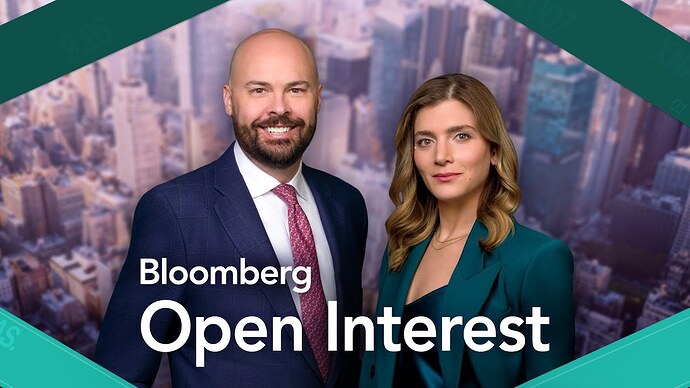
The video covers a major day in financial markets, dominated by Alphabet’s (Google’s parent company) announcement of a massive $185 billion capital expenditure plan focused on artificial intelligence (AI) infrastructure. This figure, which is 55% higher than previous spending and $70 billion above analyst expectations, signals Alphabet’s intent to aggressively compete in the AI arms race, particularly through investments in data centers, servers, and proprietary chips. While Alphabet’s cloud business showed strong growth, the market reacted negatively to the scale of the spending, with Alphabet shares dropping over 6% and dragging down other tech stocks. The discussion highlights how investors are now scrutinizing whether such heavy investments will yield sufficient returns, especially as the AI narrative shifts from pure software to the importance of hardware and infrastructure.
The video also features a live press conference with European Central Bank (ECB) President Christine Lagarde, who addresses questions on monetary policy, inflation, and the international role of the euro. Lagarde emphasizes the ECB’s data-dependent, meeting-by-meeting approach, reiterating that interest rates will remain unchanged for now. She discusses the balanced risk outlook for inflation and economic growth, noting that while some risks have increased and others decreased, the overall situation remains stable. Lagarde also touches on the euro’s exchange rate, clarifying that the ECB does not target exchange rates but monitors them closely due to their impact on inflation and growth.
Labor market data is another focal point, with reports showing January was the worst month for layoffs and hiring since 2009. Challenger job cuts and JOLTS job openings both point to a weakening labor market, which, combined with disappointing tech earnings, contributed to a broad market selloff. Despite this, some analysts argue that a slightly weaker labor market could prompt earlier interest rate cuts from the Federal Reserve, which might ultimately support equities. However, the prevailing sentiment is one of caution, as investors weigh the risks of a slowing economy against the potential for monetary easing.
The program includes interviews with investment strategists and executives, such as Marta Norton from Empower and Mike Arougheti, CEO of Ares Management. They discuss the shifting dynamics in tech and private credit markets, noting that the AI disruption is creating both risks and opportunities. The conversation highlights the importance of distinguishing between companies that can monetize AI investments and those that are simply spending without clear returns. There is also discussion about the broadening of market leadership beyond the “Magnificent Seven” tech stocks, as well as the ongoing consolidation in private markets and the need for scale and adaptability in the face of technological change.
Finally, the video touches on broader economic and policy themes, including testimony from Treasury Secretary Scott Bessent before the Senate Banking Committee, where issues of Federal Reserve independence and credit card policy are debated. The show also features segments on consumer trends, such as the performance of E.L.F. Beauty and the impact of celebrity brands, as well as luxury partnerships like Breitling’s sponsorship of the Aston Martin F1 team. Throughout, the program underscores the volatility and uncertainty in current markets, driven by a combination of tech sector upheaval, macroeconomic data, and evolving policy landscapes.