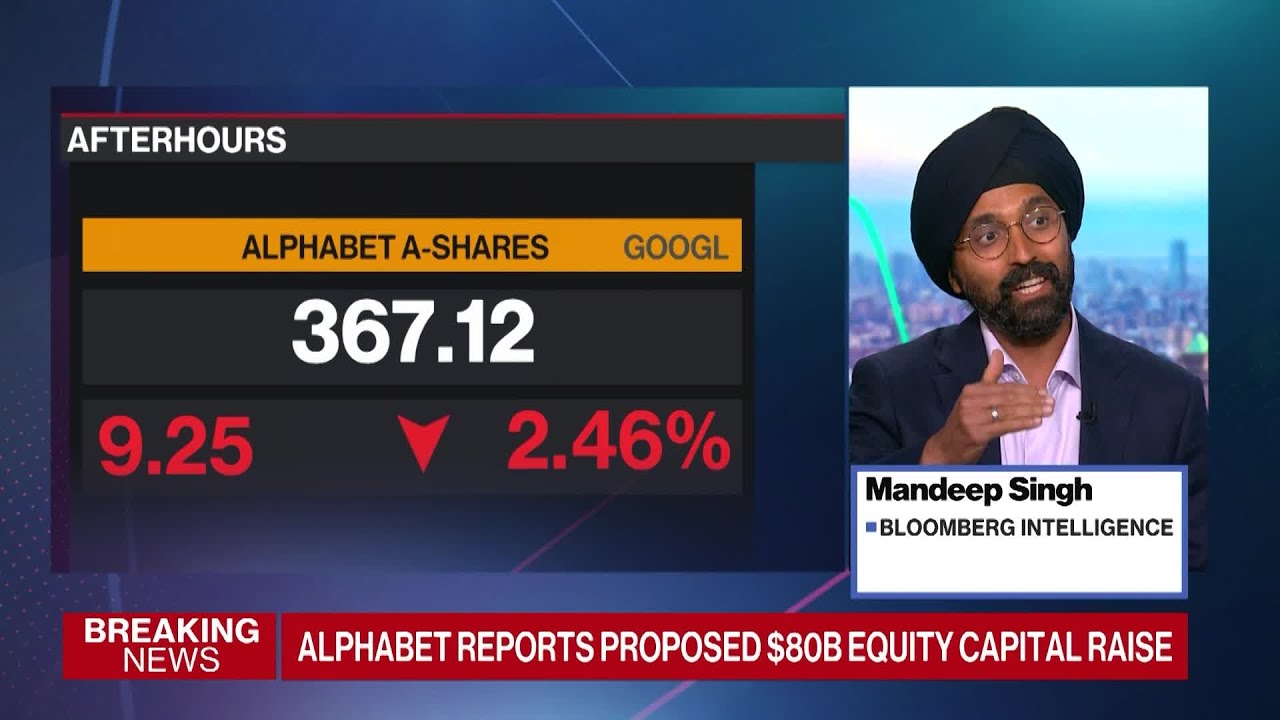
Alphabet plans to raise $80 billion to fund its AI initiatives, focusing on expanding data centers and chip production using its custom Tensor Processing Units, leveraging its vertical integration to compete with rivals like Microsoft and Nvidia. Despite concerns about share dilution, the company aims to scale its AI capabilities and retain top talent by adopting new equity grant tax strategies, reflecting broader industry trends of increased AI investment and evolving software market dynamics.
Alphabet is planning to raise $80 billion to fund its AI spending, a move that has caused a slight dip in Google shares due to concerns about dilution. Despite already holding over $105 billion in cash, Alphabet sees the current market conditions as favorable for raising additional capital. The company aims to significantly increase its capital expenditures (CapEx), leveraging its vertical integration advantage, particularly with its Tensor Processing Units (TPUs), to compete more aggressively with rivals like Microsoft.
The $80 billion investment will primarily be directed towards building data centers and funding chip production through partnerships with manufacturers like TSMC. Unlike competitors such as Microsoft and Meta, which rely on Nvidia chips with high gross margins, Alphabet uses its own custom chips, giving it a strategic edge. This vertical integration extends to AI model training and inferencing, positioning Alphabet as a competitor not only to AI companies like OpenAI and Anthropic but also to chipmakers like Nvidia.
Alphabet’s strong financial position allows it to consider ambitious fundraising strategies, including issuing long-term bonds, to support its AI infrastructure expansion. The company’s efforts to secure more compute capacity reflect the broader industry trend, exemplified by Nvidia’s massive $120 billion deal with TSMC to lock in chip production. Raising additional funds, despite a robust balance sheet, enables Alphabet to scale its AI capabilities and potentially increase its market share in this rapidly evolving sector.
An interesting aspect of Alphabet’s funding plan involves changes to how it handles employee equity grants for tax purposes. The company will adopt a model where it uses corporate cash to cover taxes on vested restricted stock units, ensuring employees receive shares net of taxes. This move is likely aimed at retaining top AI talent amid fierce competition, as other AI companies like OpenAI and Anthropic go public and attract engineers with the promise of fast growth and lucrative equity.
Finally, the broader AI and software market is experiencing dynamic shifts. Nvidia’s CEO Jensen Huang highlighted the growing demand for software engineers despite concerns about the “death of software.” Recent strong earnings from software companies like Datadog, Snowflake, and MongoDB challenge the narrative of a slowdown in software growth. However, the rise of AI models will continue to impact the sector, with some companies benefiting while others face challenges, indicating a complex and evolving landscape for software and AI development.