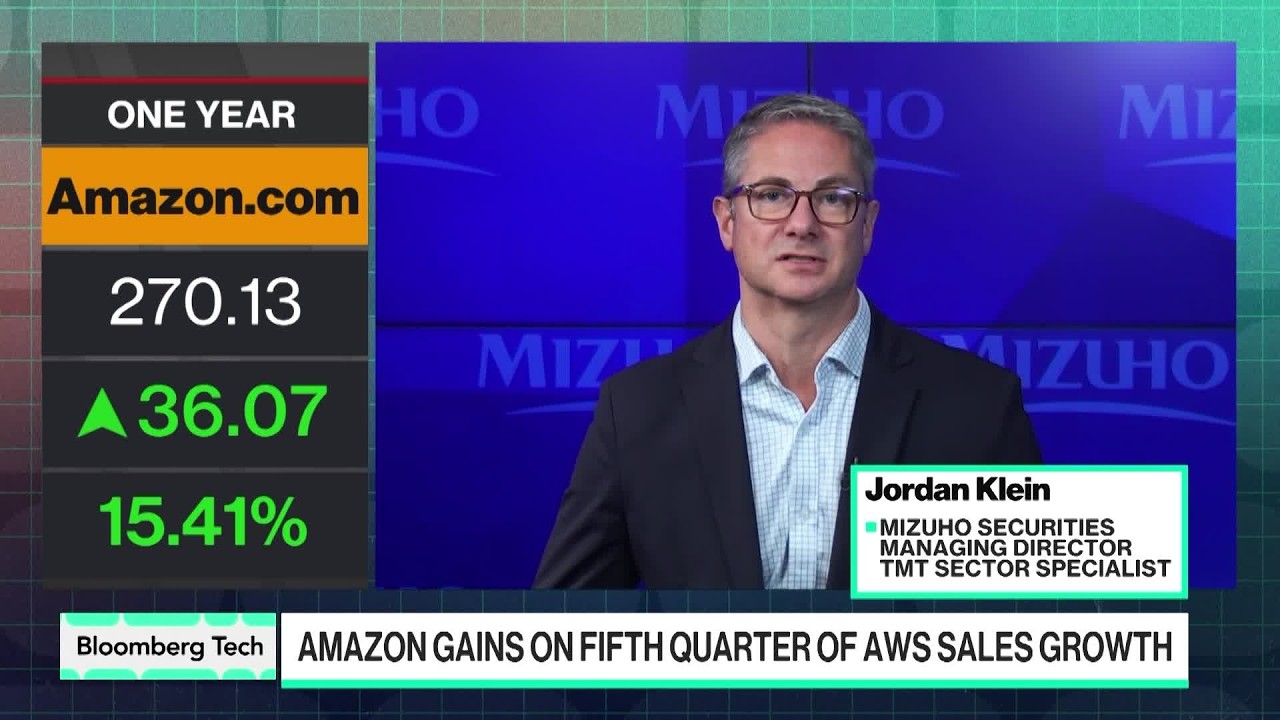
The discussion highlights Amazon’s impressive growth, particularly in its AWS segment, which saw a 37% top-line increase. This acceleration is viewed as a game changer, reinforcing the belief that AI is significantly enhancing Amazon’s overall business. The company’s investment in custom silicon, including graphics and training chips, positions it strongly in the AI and cloud computing space. Positive indicators such as bookings growth, backlog, and optimistic commentary from CEO Andy Jassy suggest that Amazon’s stock is poised for continued outperformance.
Amazon’s chip business, which rents compute capacity based on its in-house silicon, is generating a substantial revenue run rate of $25 billion. This custom chip strategy not only helps Amazon secure supply amid industry shortages, particularly of Nvidia graphics processors, but also allows the company to offer competitive pricing to customers. The result is improved margins in AWS, which is encouraging to investors who worry about margin compression in the tech sector. Despite negative cash flow over the past year, Amazon’s AWS margins are rising healthily, indicating strong operational efficiency.
On the consumer side, Amazon’s Alexa and Prime ecosystem are driving increased customer engagement and spending. Users of Alexa are more likely to subscribe to Prime and have larger basket sizes on Amazon.com, underscoring the synergy between Amazon’s AI-driven devices and its e-commerce platform. While much attention is focused on AWS and AI infrastructure, the e-commerce business remains robust and contributes significantly to Amazon’s overall strength and brand traction, though it tends to receive less spotlight in financial discussions.
The conversation also touches on Apple’s recent stock performance and challenges. Despite a 9% drop following earnings, the decline is seen as an overreaction given Apple’s recent strong run. Concerns center on supply chain issues affecting iPhone production and a slowdown in the services business, which is a key profit driver. The upcoming iPhone 18 launch cycle is viewed with caution due to potential component shortages and higher prices, which may impact consumer demand in the near term.
Finally, the management transition at Apple is noted but not seen as a major cause for concern. Tim Cook’s supply chain expertise has been a cornerstone of Apple’s success, and his successor, Turner, is expected to maintain the status quo. A successful launch of new products, such as a foldable iPhone, could help reinvigorate the brand. However, the key question remains whether consumers will sustain demand at higher price points, especially after the initial launch quarter, leaving Apple’s near-term outlook somewhat uncertain.