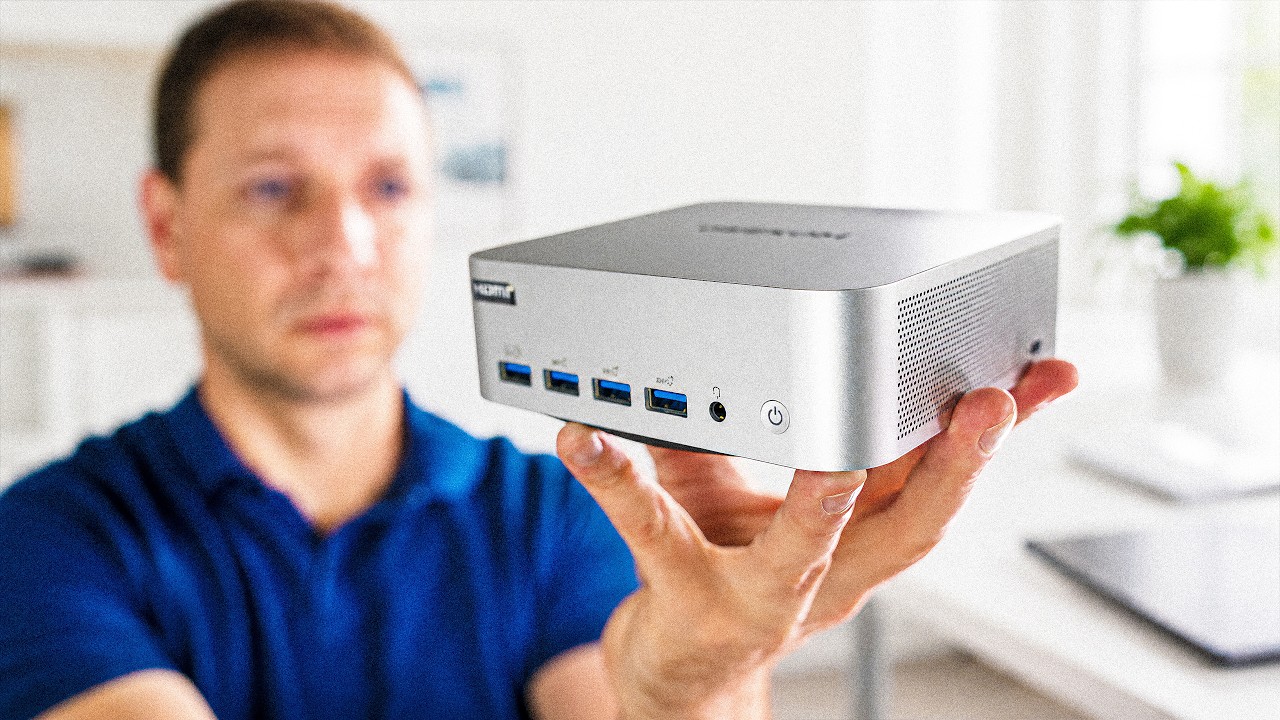
The video reviews the Geekcom A9 Max mini PC equipped with the AMD Ryzen AI 9 HX470, highlighting its specifications such as 12 Zen 5 cores, Radeon 890M iGPU, 50 TOPS NPU, 32GB DDR5 memory, and a 2TB SSD. The focus is on evaluating AI performance across three operating system setups: native Windows, Windows Subsystem for Linux (WSL), and bare metal Linux. The presenter runs benchmarks using various AI models and tools like Olama and Llama CPP to determine which OS delivers the best performance, especially for tasks involving long context prefill.
On Windows, Olama defaults to using 100% CPU while ignoring the AMD GPU, resulting in suboptimal performance. Switching to Llama CPP with Vulkan API enables GPU utilization, yielding about a 10-14% performance gain over CPU-only runs. AMD’s Lemonade Server offers hybrid usage of the NPU and GPU, performing similarly to Llama CPP on decode tasks. However, overall Windows performance falls short of expectations for this chip, prompting exploration of alternative OS options.
Using WSL with Ubuntu provides a Linux environment inside Windows, but initially lacks proper Vulkan GPU support due to missing Mesa drivers. After installing the necessary Mesa Vulkan drivers, GPU utilization improves, though throughput is about one-sixth lower than native Windows GPU performance. Despite this, WSL remains a viable option for those wanting Linux toolchains without leaving Windows, though it still doesn’t fully unlock the chip’s potential.
Bare metal Linux shows the most promise, especially for long prompt prefill tasks critical in AI workflows like retrieval-augmented generation and coding assistants. Linux with the RADV open-source driver achieves roughly three times faster prefill speeds compared to Windows, outperforming even AMD’s proprietary drivers. Decode performance across Linux backends is similar, but the standout advantage is Linux’s superior handling of long context prefill, making it the preferred OS for demanding AI workloads on this hardware.
A key bottleneck identified across all OSes is memory bandwidth, as the reviewed Geekcom A9 Max ships with a single memory stick running in single-channel mode, halving expected throughput. Upgrading to dual-channel memory nearly doubles decode speeds across Windows and Linux, confirming that memory bandwidth, not GPU compute, limits performance. The video concludes by recommending Linux for AI prefill tasks and advising buyers to ensure dual-channel memory configurations for optimal performance, while also noting that the previous A9 Max model with a slightly older chip but dual-channel memory may offer better value.