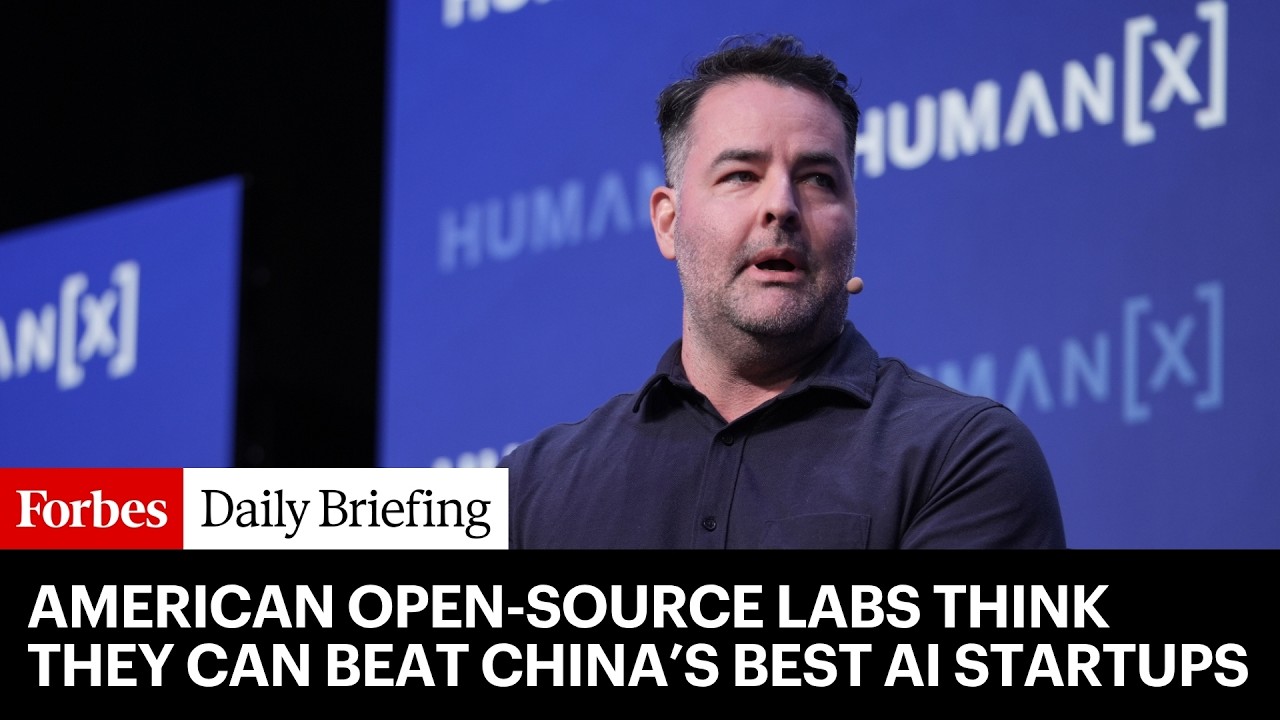
American open-source AI labs in the United States are aiming to compete with leading Chinese AI startups, which have been rapidly advancing in the field. One notable example is Poolside, co-founded by former GitHub CTO Jason Warner. After raising $500 million at a $3 billion valuation in October 2024, Poolside initially gained attention for building coding agents for governments and large companies but then faded from the spotlight for 18 months. The company has now returned with a new AI model called Laguna, which reportedly outperforms many American and Chinese open-source competitors on public benchmarks, except for Chinese lab Moonshot’s latest model, Kimi K3.
Poolside’s co-CEO Jason Warner explains that during their quiet period, the company focused on developing an industrial-scale “model building factory” capable of producing new and improved AI models every five weeks. This approach contrasts with the traditional artisanal method of model development. While Laguna is currently behind the top closed models from OpenAI and Anthropic in terms of capabilities, Poolside plans to scale up its models to compete with larger players like Frontier Labs. The company has also released smaller models earlier in the year, sharing model weights publicly since April to encourage wider use and development.
Chinese AI startups have been making significant strides with large-scale models, often releasing model weights rather than full code or training data. Moonshot’s Kimi K3, for example, is a 2.8 trillion parameter model—about 20 times larger than Poolside’s Laguna. Kimi K3 has demonstrated superior performance on certain coding tasks compared to OpenAI and Anthropic’s top models, while also being significantly more cost-effective. Although Kimi K3 is currently only available on Moonshot’s servers in China, the company plans to release the model weights publicly, enabling broader access and local deployment.
The competitive landscape is heating up as Silicon Valley and other American entities push to develop homegrown open-source AI alternatives to Chinese models. This movement is driven by concerns over the control and costs associated with closed models from companies like OpenAI and Anthropic. Other notable efforts include the Thinking Machines Lab, founded by former OpenAI CTO Mira Murati, which recently released Inkling, an open-weight model designed for flexibility and customization rather than outright strength. Major tech companies like OpenAI, Google, and Nvidia are also participating in the open-weight model space, while Meta has shifted focus from its open Llama model to a closed model called Spark.
Chinese AI models, particularly Moonshot’s Kimi K3, have gained significant traction due to their performance and affordability, causing concern in US markets. According to data from the LLM marketplace OpenRouter, Chinese models from companies like Xiaomi, Tencent, and startups such as ZAI are among the most popular globally. While Kimi K3’s current server-based availability limits its use by US companies, the upcoming release of its model weights could change the competitive dynamics. Overall, the AI industry is witnessing a growing rivalry between American open-source initiatives and powerful Chinese AI startups, each striving to lead in innovation, accessibility, and cost-efficiency.