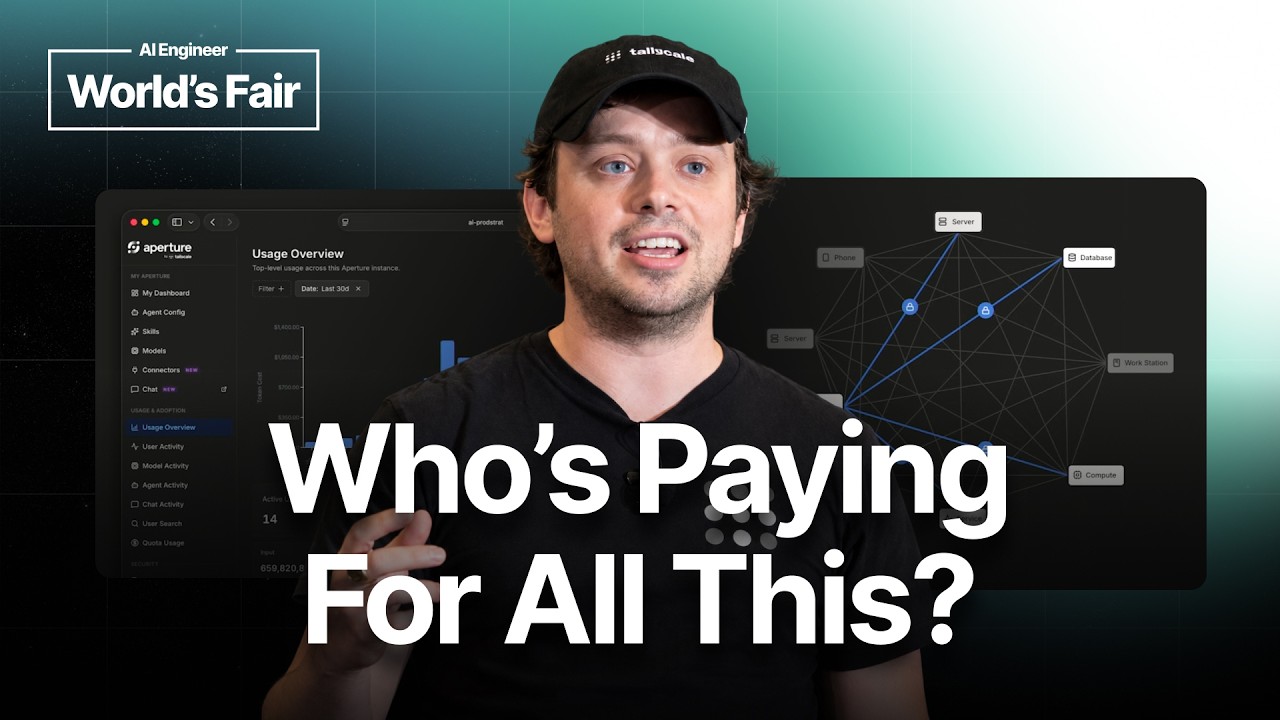
In his talk at the AI Engineer World’s Fair, Remy Guercio from Tailscale discusses the challenges and opportunities in building an AI future free from vendor lock-in. He reflects on the past year in AI development, characterized by “token maxing,” where large context windows and extensive token usage have enabled advanced agentic coding and other AI applications. However, this approach is costly and often leads to inefficient token use, with many sessions running thousands of messages without clearing context, resulting in high expenses and wasted resources.
Remy highlights a common but flawed response to managing AI costs: consolidating AI usage onto one or two vendors to gain control. While this might seem like a straightforward solution, it risks reinforcing lock-in and limiting flexibility. Instead, he advocates for “ROI maxing,” focusing on maximizing the return on investment by enabling choice and flexibility across different AI components. This approach encourages organizations to optimize value rather than merely cutting costs, allowing AI to be used more broadly and effectively within companies.
He breaks down internal AI deployments into four key components: large language models (LLMs), data connectors (such as APIs or command-line interfaces), user interfaces, and sandboxes or environments where agents run. Remy stresses the importance of maintaining flexibility and choice at each of these layers to accommodate diverse team needs and use cases. This modular approach prevents lock-in and supports experimentation and innovation across an organization.
To facilitate this vision, Remy introduces Tailscale’s AI gateway, Aperture, which acts as an intermediary between AI agents and various LLM and data endpoints. Aperture consolidates API keys, manages access control based on user or machine identity, and supports multiple providers and data sources. Built on Tailscale’s identity-based mesh network, it offers enhanced security, cost control, and visibility into AI usage. Aperture also provides a built-in chat interface and supports integration with other tools, making it easier for teams to experiment with different AI workflows without friction.
Finally, Remy emphasizes that an AI gateway like Aperture is not just about avoiding lock-in but also about gaining insight and control over AI operations. It enables organizations and individuals to monitor agent behavior, diagnose issues, and orchestrate sandbox environments effectively. By maximizing choice and transparency, AI gateways empower users to innovate responsibly and sustainably, paving the way for a more open and efficient AI future.
Useful Links