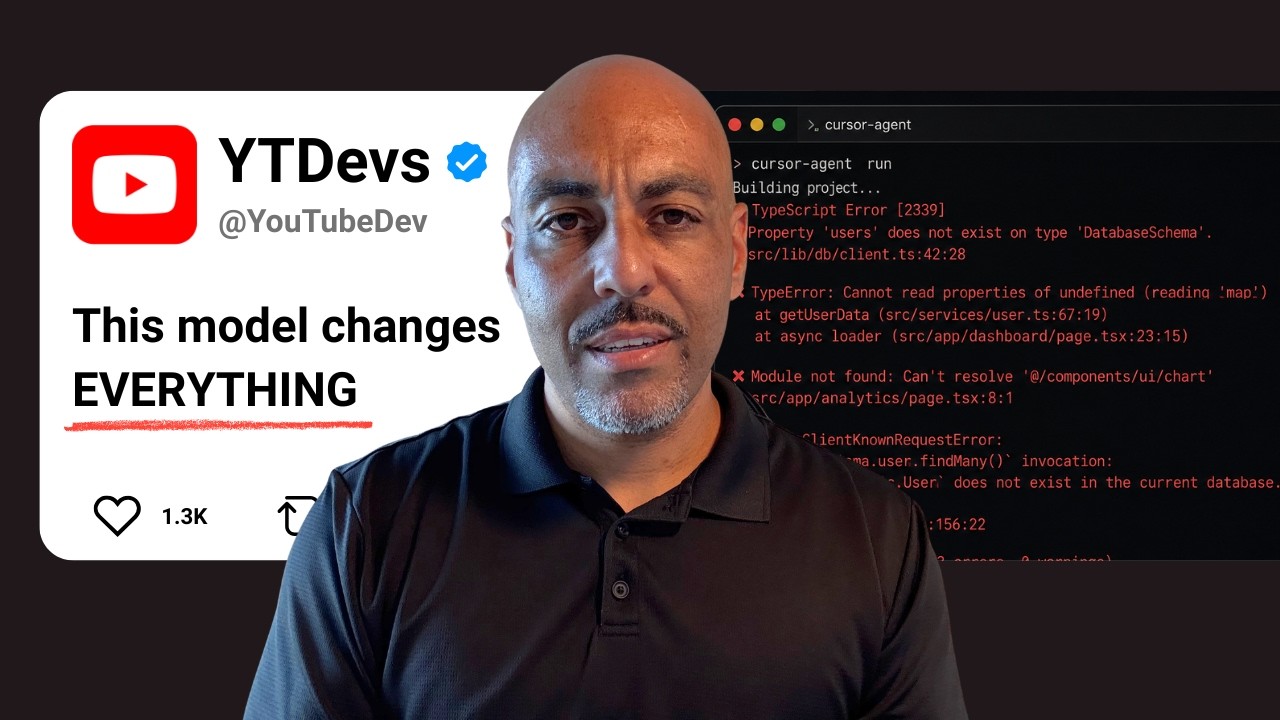
The speaker, a seasoned software developer with over a decade of experience, shares a critical perspective on common AI-related hype phrases circulating in the developer community. Despite using AI to write the majority of their code, they argue that some popular opinions about AI in coding are misleading and harmful, especially to junior developers and newcomers. One major misconception they highlight is the belief that code quality no longer matters because AI can write and review code, and as long as the code works, that’s sufficient. The speaker counters this by emphasizing that poor code quality leads to more bugs, harder-to-maintain code, and ultimately, financial losses for businesses, citing real-world examples like outages at major tech companies.
The speaker also discusses the problematic notion that simply switching to a “better” AI model will revolutionize workflows or solve all coding challenges. They point out that each new model is only incrementally better than the last, and the hype around these models often exaggerates their impact. Instead, they advocate treating AI tools like any other API—learning their strengths and limitations and integrating them thoughtfully into one’s workflow. The speaker warns against chasing a perfect AI-driven workflow or relying on AI as a magic solution, stressing the importance of human understanding and customization in software development.
Another key point is the skepticism around the idea that AI alone can be a business moat or guarantee startup success. The speaker shares a story of a founder who built a telehealth company using AI but also highlights the pitfalls, such as AI hallucinating information and the importance of having a strong underlying business idea. They argue that AI tools accelerate execution but do not replace the need for good ideas and market knowledge. Many people who rely solely on AI tools without understanding their market or product are unlikely to succeed financially.
The speaker also addresses the damaging narrative that AI will imminently replace software developers, leading to widespread job loss. They note the irony that companies like OpenAI, which promote this dystopian vision, are simultaneously hiring large numbers of highly paid engineers. This contradiction suggests that human developers remain essential, even in an AI-driven future. The speaker criticizes the fearmongering around AI and layoffs, calling it harmful to developers’ mental health and morale, especially when it comes from people with limited real-world coding experience.
In conclusion, the speaker expresses frustration with the spread of misinformation and simplistic takes about AI in software development. They emphasize the need for nuanced understanding, responsible use of AI tools, and recognition of the ongoing importance of human expertise in coding. While AI can be a powerful aid, it is not a panacea, and developers should be wary of hype that downplays the complexities of software engineering and the realities of the industry. The speaker hopes their insights help clarify these issues for the community.