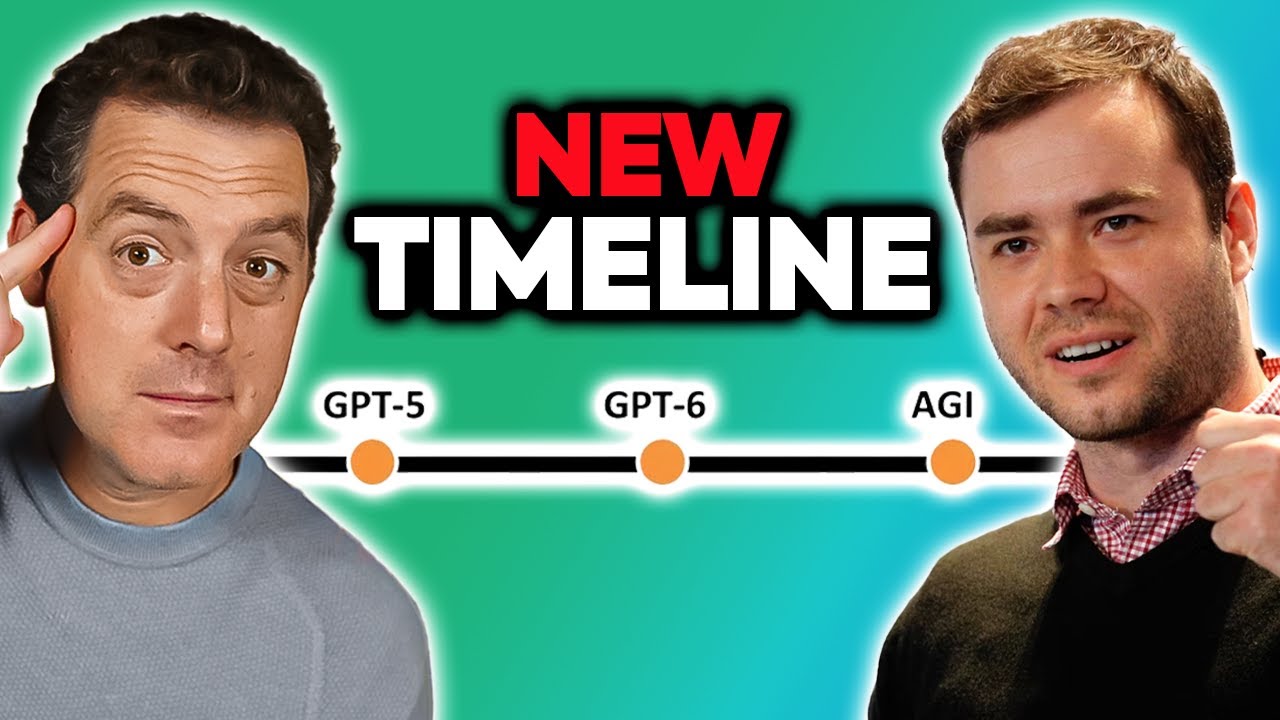
In a recent discussion on Dwaresh’s podcast, Andrej Karpathy, a prominent figure in artificial intelligence, shared his perspective on the timeline for achieving Artificial General Intelligence (AGI), estimating it to be at least 10 years away. He emphasized that while 2025 is often touted as the “year of agents,” he believes we are entering the “decade of agents,” a period spanning 2025 to 2035 during which AI agents will become more usable, valuable, and integrated across the economy. Karpathy highlighted projects like OpenAI’s Operator, which allows AI to control a web browser and perform tasks autonomously, as early examples of this trend. However, he noted that while digital agents will evolve faster due to the lower cost of manipulating digital information compared to physical objects, the physical world still represents a larger market opportunity.
Karpathy clarified his stance on AI progress, positioning himself between the most optimistic and pessimistic views. He acknowledged the significant advancements made with large language models (LLMs) since late 2022 but stressed that much work remains, including integration, safety, security, and societal adaptation. He introduced the concept of “scaffolding,” referring to the infrastructure and tooling needed to fully leverage the core intelligence of AI models, which currently lags behind the models’ raw capabilities. This gap, often called model overhang, means that while the models are powerful, the ecosystem around them is still developing.
A key philosophical point Karpathy made was the distinction between how animals and LLMs learn. He argued that animals are born with a vast amount of prepackaged intelligence shaped by evolution, exemplified by newborn zebras that can walk shortly after birth. In contrast, LLMs learn through predicting the next token in vast amounts of internet text, a process he likened to “ghosts” or “spirits” rather than biological evolution. He emphasized that current LLMs rely heavily on memorization rather than true generalization, which is essential for AGI. Karpathy expressed skepticism about reinforcement learning (RL) as a primary path forward due to its inefficiency and noisiness, advocating instead for agentic interactions—environments where AI agents can experiment and learn dynamically.
Karpathy also introduced the idea of “system prompt learning,” a new paradigm where AI models adapt their behavior through changes in system prompts rather than parameter updates. This approach mimics human learning, where we take notes and adjust strategies based on experience. He pointed out the limitations of current system prompts due to finite context windows but sees promise in expanding this method for more flexible and adaptive AI behavior. Additionally, he discussed the concept of a “cognitive core,” a smaller, more capable model that sacrifices encyclopedic knowledge for better reasoning and adaptability, suggesting that future AI might become more efficient by focusing on capability over memorization.
Finally, Karpathy critiqued the current state of AI agents, cautioning against overestimating their autonomy and effectiveness. He prefers collaborative models where humans and AI work together in manageable chunks rather than fully autonomous agents operating independently for extended periods. He shared insights from his own project, Nano Chat, which was manually coded rather than relying on autonomous AI coding. The video concluded with a lighthearted exchange between Karpathy and Elon Musk about a potential AI coding contest, with Karpathy expressing a preference for collaboration over competition, underscoring his pragmatic and measured approach to AI development.