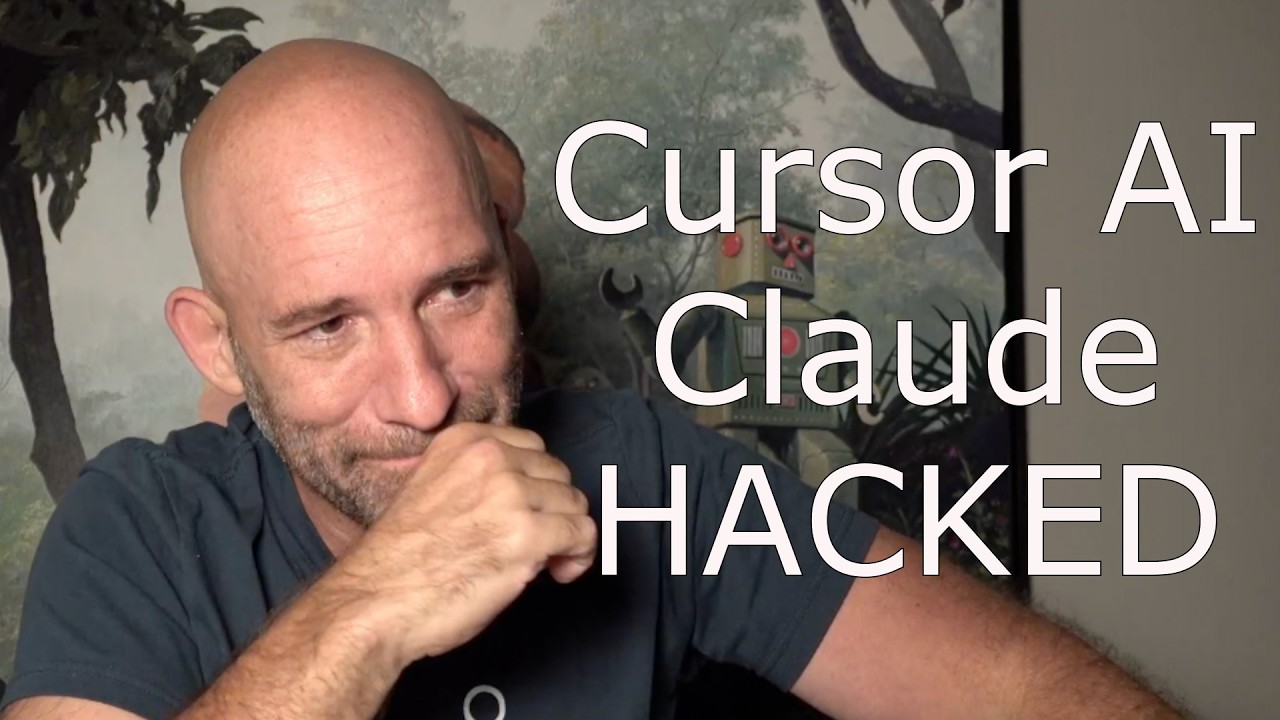
The video discusses a serious cybersecurity incident involving the official Anthropic AI Claude extension on the Cursor platform, which was backdoored for nearly 12 hours. The host, recovering from the flu, expresses frustration and disbelief at the situation, highlighting the irony that Anthropic, a company that warns about the existential dangers of AI, failed to secure its own software supply chain. The compromised extension affected up to 5,000 developer machines, exposing them to a persistent SSH backdoor that allowed attackers remote access with high-level permissions.
Cursor is an AI-assisted coding environment built on a fork of VS Code, allowing users to add extensions like Anthropic’s Claude AI. The malicious version of the Claude extension (version 2.1.313) was distributed through Anthropic’s verified Cursor account, making this a supply chain attack. The extension auto-updated on users’ machines, which meant many developers were compromised without any direct action. Despite the severity, Anthropic has not publicly warned its customers or explained how the breach occurred, raising concerns about transparency and responsibility.
The backdoor installed by the compromised extension enabled attackers to collect sensitive host and user information, add attacker-controlled SSH keys, enable local SSH services, and open reverse SSH tunnels for persistent remote access. This level of access is particularly dangerous given that developer machines often have root-level permissions and access to critical source code and credentials. The attacker could prioritize targets by inventorying cloud credentials and API tokens, potentially leading to further attacks on valuable infrastructure.
The host criticizes both Anthropic and Cursor, noting that Cursor is owned by a $2 trillion company, and Anthropic is considered a major player in AI, yet both failed to implement basic cybersecurity measures. This incident raises broader concerns about the security risks of deploying AI agents and tools in critical infrastructure, especially when these tools auto-update and can be compromised through supply chain attacks. The host questions the wisdom of trusting AI companies with sensitive environments when they cannot secure their own products.
Finally, the host invites viewers to share their thoughts on the incident and the state of developer security knowledge today, expressing concern about the skill levels of current technology professionals. He also mentions upcoming free educational sessions on computer networking and AI security, encouraging viewers to participate. Despite his exhaustion from the flu, he emphasizes the importance of awareness and vigilance in the face of such cybersecurity threats.
Useful Links